Pans and pots: cast iron, stainless steel or non-stick — what's for what and how to care for them
The main materials and how they differ in cooking, why meat sticks to stainless steel and how to avoid it, seasoning cast iron, how long non-stick lasts, a minimal set of cookware for home, and care that doesn't ruin it.
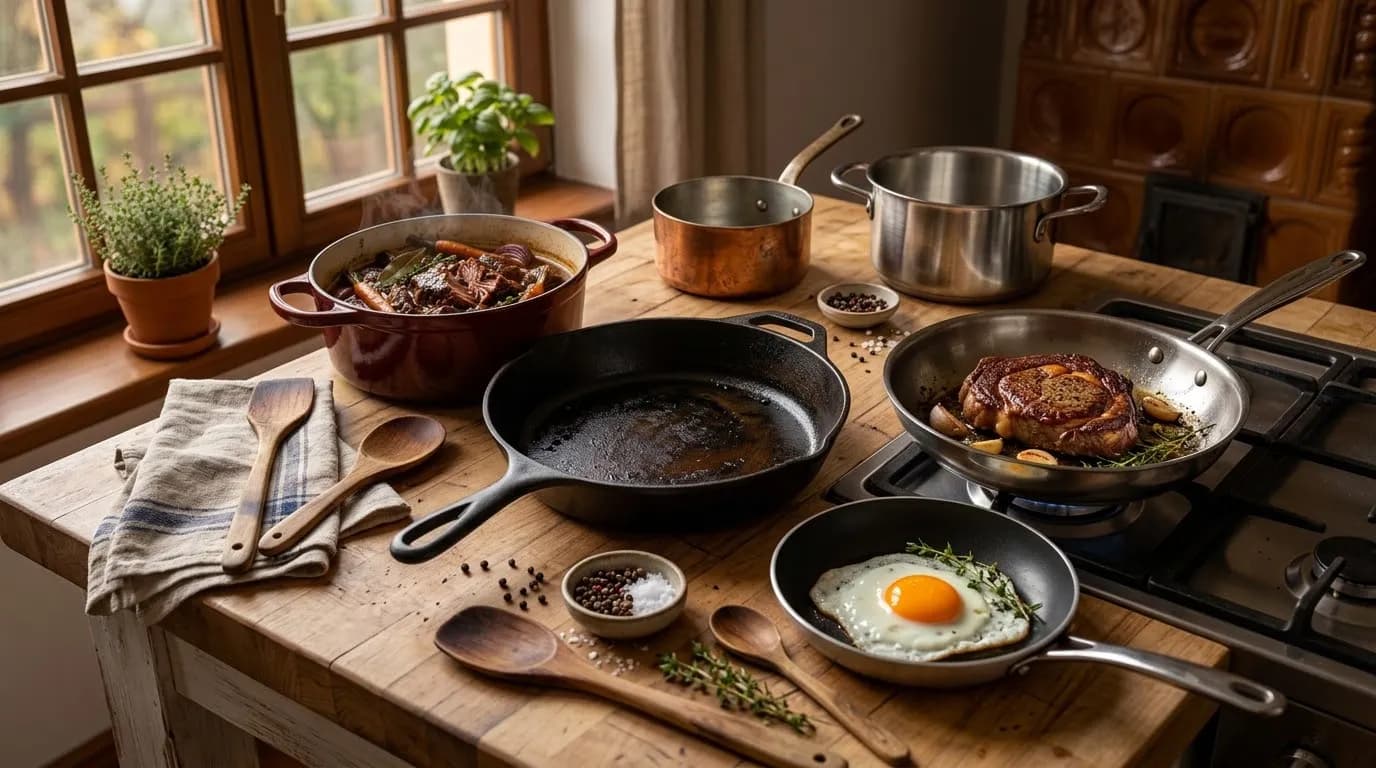
Two properties that matter more than the brand
Any piece of cookware can be described by two qualities: how fast it heats up and passes on heat (conductivity) and how much heat it can store (heat capacity).
A thin aluminium pan heats instantly but cools just as fast when a cold steak goes in. Thick cast iron takes a while to heat but holds it, so the meat sears instead of stewing in its juices. Good cookware means a thick base that spreads heat evenly, without hot spots over the burner.
Non-stick
Best for eggs, pancakes, fritters, fish and anything delicate or sticky. It lets you cook with almost no oil and is easy to clean.
The downsides: the coating dislikes high heat above 250 °C, metal utensils and abrasive scourers, and it browns meat less well than steel or cast iron. Even when treated carefully, the coating wears out in 2–5 years.
- Don't preheat an empty pan on full heat.
- Use wooden or silicone utensils.
- Wash with a soft sponge and keep it out of the dishwasher unless the maker allows it.
- Don't stack pans without a cloth between them.
- Replace the pan once the coating is scratched and food starts to stick.
Cast iron
Cast iron heats slowly but holds heat better than anything else. It's ideal for steaks, fried potatoes, pancakes, oven roasting and dishes that go from hob to oven.
Its non-stick quality is a polymerised layer of oil that builds up with use. The more you cook in it, the better it works. The downsides are weight and a dislike of long contact with water and acidic dishes.
- Seasoning: wash, dry thoroughly, rub on the thinnest layer of oil, wipe it "dry" and put it upside down in the oven at 230–250 °C for an hour. Repeat 2–3 times.
- After cooking, wash with hot water and a brush; a drop of washing-up liquid won't hurt a modern seasoning.
- Dry straight away and heat on the hob for a minute, then rub with a drop of oil.
- Don't leave tomato sauce or wine in cast iron for long — the acid eats the seasoning.
- Scrub off rust with steel wool and season the pan again.
Stainless steel
Stainless steel lasts practically forever and doesn't mind metal utensils, acids or the dishwasher. The best has a clad base or walls with an aluminium or copper core: steel on its own conducts heat poorly.
It's excellent for searing meat, pan sauces built on the browned bits, braising and anything cooked with wine and tomatoes. The main complaint is that "everything sticks", but the right technique solves that.
Why food sticks and how to stop it
In a cold pan, protein bonds chemically with the metal. If the surface is hot and the food is dry, a thin layer of steam and crust forms instantly between them — and nothing sticks.
- Preheat the dry pan for 2–3 minutes. Test: a drop of water should bead up and skate around rather than hiss and vanish.
- Add the oil and let it heat until it shimmers.
- Pat meat and fish dry with paper towel.
- Don't move the food for the first 2–3 minutes: once the crust forms, it releases by itself.
- Don't crowd the pan: an overloaded pan cools down and everything stews in its juices.
Carbon steel, copper, ceramic and enamel
Carbon steel is cast iron's lighter cousin: it's seasoned the same way but heats faster. Woks, crêpe pans and restaurant frying pans are made from it.
Copper gives the fastest, most even heat but is expensive and needs polishing. Ceramic coating is a non-stick option without fluoropolymers; it's slick at first but usually loses its non-stick properties sooner.
Enamelled cast iron is cast iron coated in glass. It needs no seasoning, doesn't mind acid and is ideal for braises, soups, stews and bread. It dislikes sudden temperature changes and chipping.
A minimal set for home
Big 12-piece sets are usually half filler. Six items cover almost all home cooking.
- A 24–26 cm non-stick pan — for eggs, pancakes and fish.
- A 26–28 cm cast-iron or steel pan — for meat, potatoes and a crust.
- A 2 l heavy-based saucepan — for sauces, grains and caramel.
- A 4–5 l pot — for soups, pasta and stock.
- A heavy casserole (enamelled cast iron) — for braising and baking bread.
- A rimmed baking tray — for roasting vegetables and meat.
Cookware and your hob
Induction needs a magnetic base: test with a magnet — if it sticks, it will work. Cast iron, carbon steel and most stainless steel are fine; plain aluminium, copper and glass aren't unless they have a special disc.
On a ceramic hob, a flat base matters: a warped base doesn't touch the surface fully and heats in patches. Almost anything works on gas, but a high flame shouldn't lick up past the base — it damages handles and coatings.
Care that makes it last
The most common cause of ruined cookware is a sudden temperature change. Don't pour cold water into a scorching pan: it can warp and the coating can crack. Let it cool for a few minutes.
- Burnt-on food in stainless steel: fill with water and a spoon of baking soda, boil for 5–10 minutes and scrub.
- A drop of vinegar removes rainbow stains from steel.
- Non-stick gets soft sponges only — no steel wool.
- Don't put handles with plastic or wood in the oven unless the maker says you can.
Questions and answers
Is non-stick coating harmful?+
Not in normal cooking. Problems start when an empty pan overheats past 260 °C. Don't leave an empty pan on high heat, and replace it once the coating is scratched.
Why do eggs stick to cast iron?+
The seasoning isn't built up enough or the pan isn't hot enough. Preheat the pan, add oil and let the white set without moving it for the first minute.
Can cast iron go in the dishwasher?+
No: the oil layer washes off and the iron rusts. Enamelled cast iron can, though washing by hand is gentler.
Which pan is best if I can only have one?+
A heavy clad stainless steel pan or a 26–28 cm cast iron: they last for decades and handle almost everything.
How do I know when to throw out a non-stick pan?+
If the coating is peeling, deeply scratched, or food sticks even with oil, it's time to replace it.
Try it in practice

More kitchen secrets
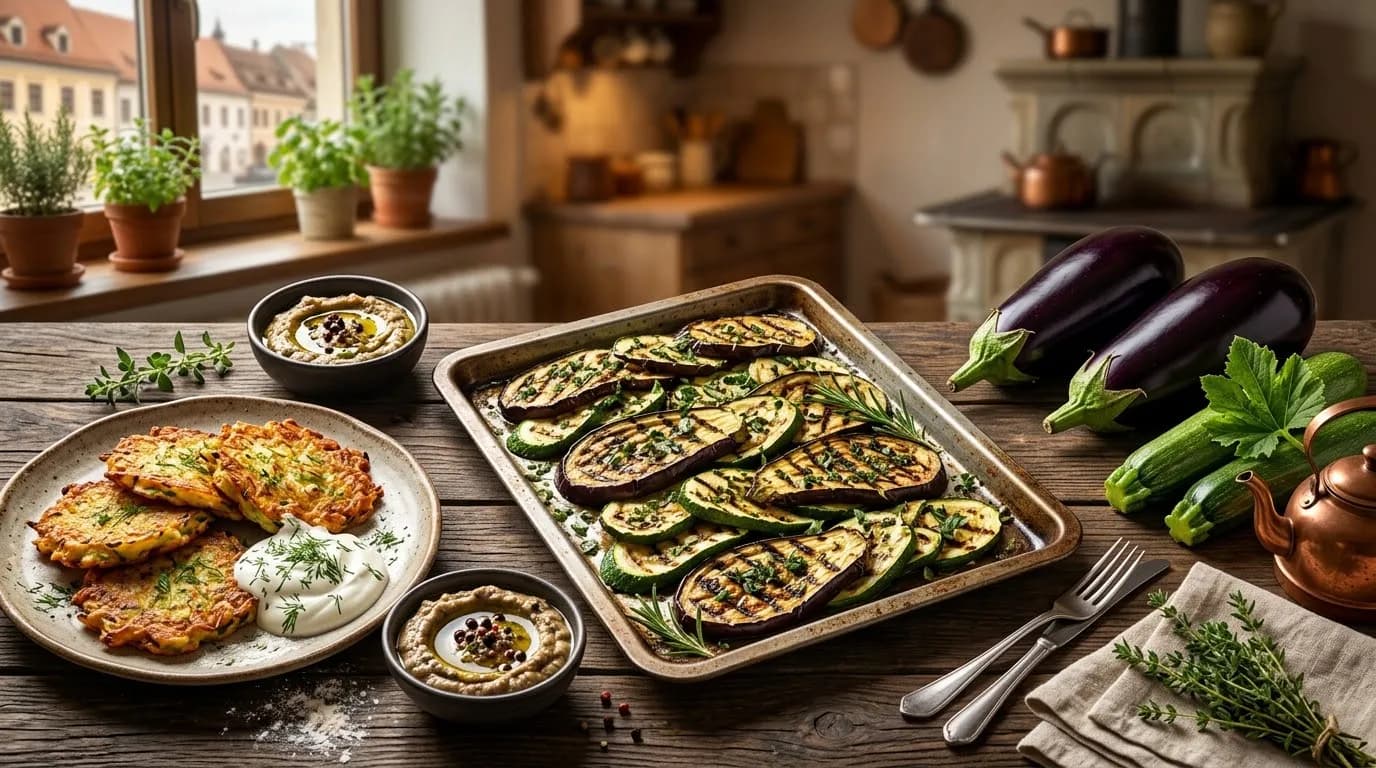
Courgettes and aubergines: no bitterness, no soaked-up oil and no watery mush
How to pick young ones, whether you really need to salt aubergines, why they soak up oil like a sponge and how to stop it, frying, roasting and grilling, courgette fritters that hold together, vegetable caviar and storage.
Read the article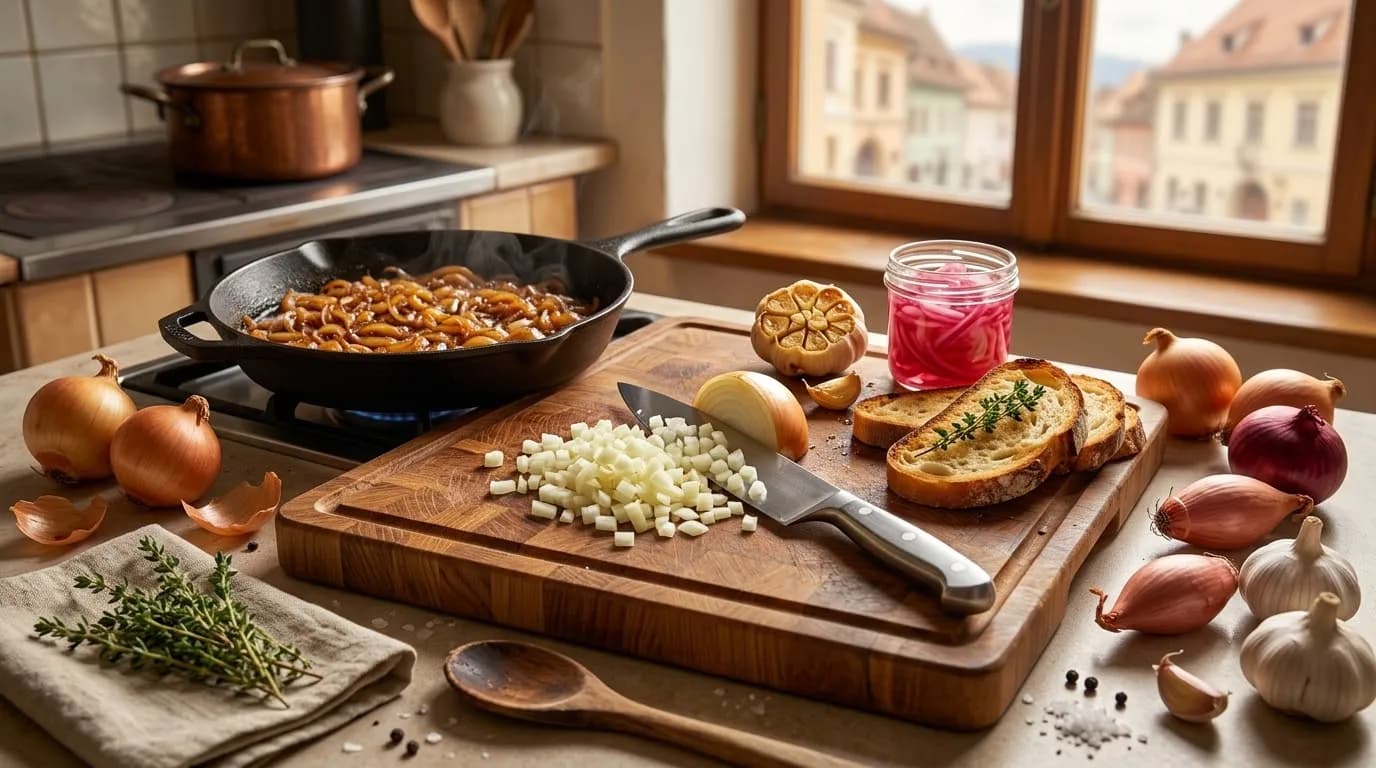
Onions and garlic: cutting without tears, caramelising and not burning them
Which onion for what, why onions make you cry and what actually helps, fast dicing, sweating, browning and true caramelisation in 40 minutes, garlic — crush or slice and when to add it, pickled onions, roasted garlic and storage.
Read the article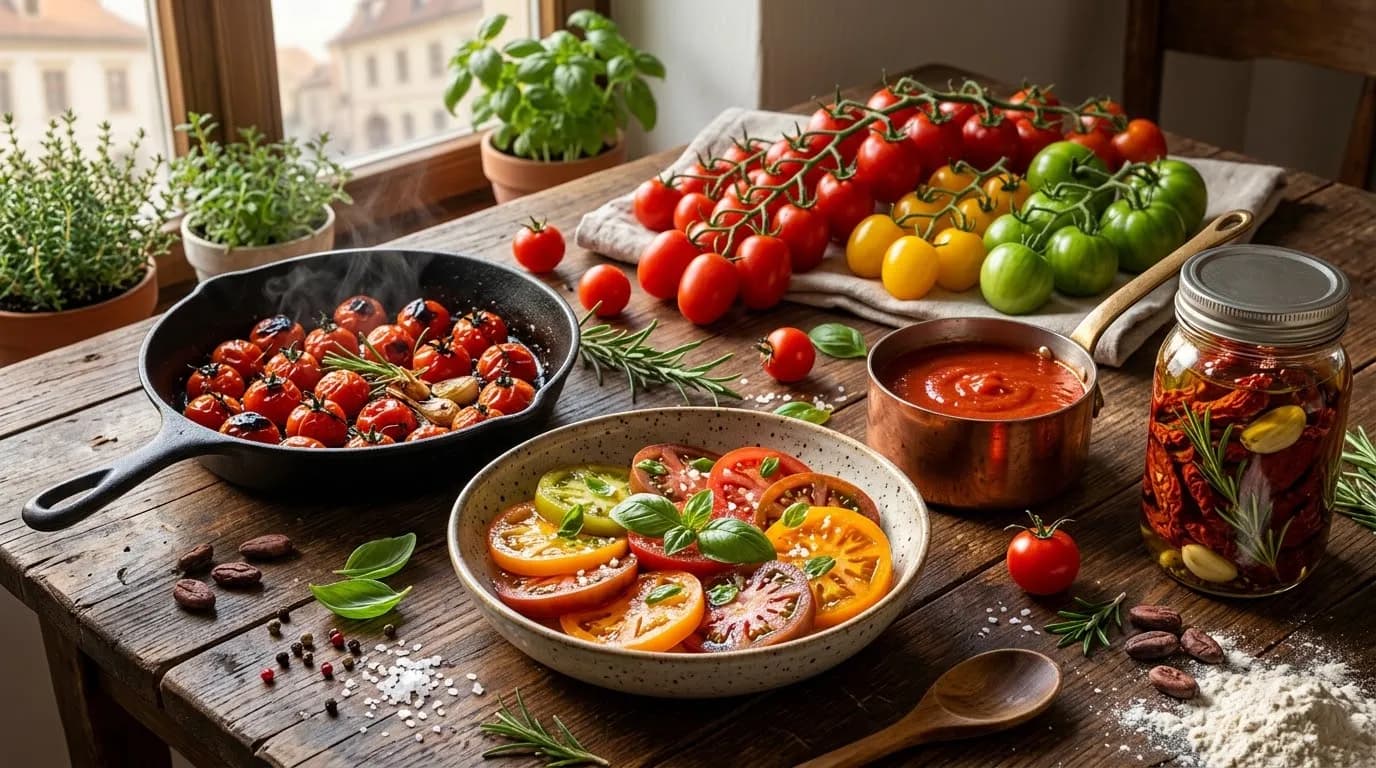
Tomatoes: how to pick tasty ones, peel them, make sauce and dry them
Which tomatoes for salad, sauce and roasting, why tomatoes don't belong in the fridge, how to peel them in a minute, sauce from fresh and tinned tomatoes, roasted cherry tomatoes, oven-dried tomatoes and what to do with green ones.
Read the article