Onions and garlic: cutting without tears, caramelising and not burning them
Which onion for what, why onions make you cry and what actually helps, fast dicing, sweating, browning and true caramelisation in 40 minutes, garlic — crush or slice and when to add it, pickled onions, roasted garlic and storage.
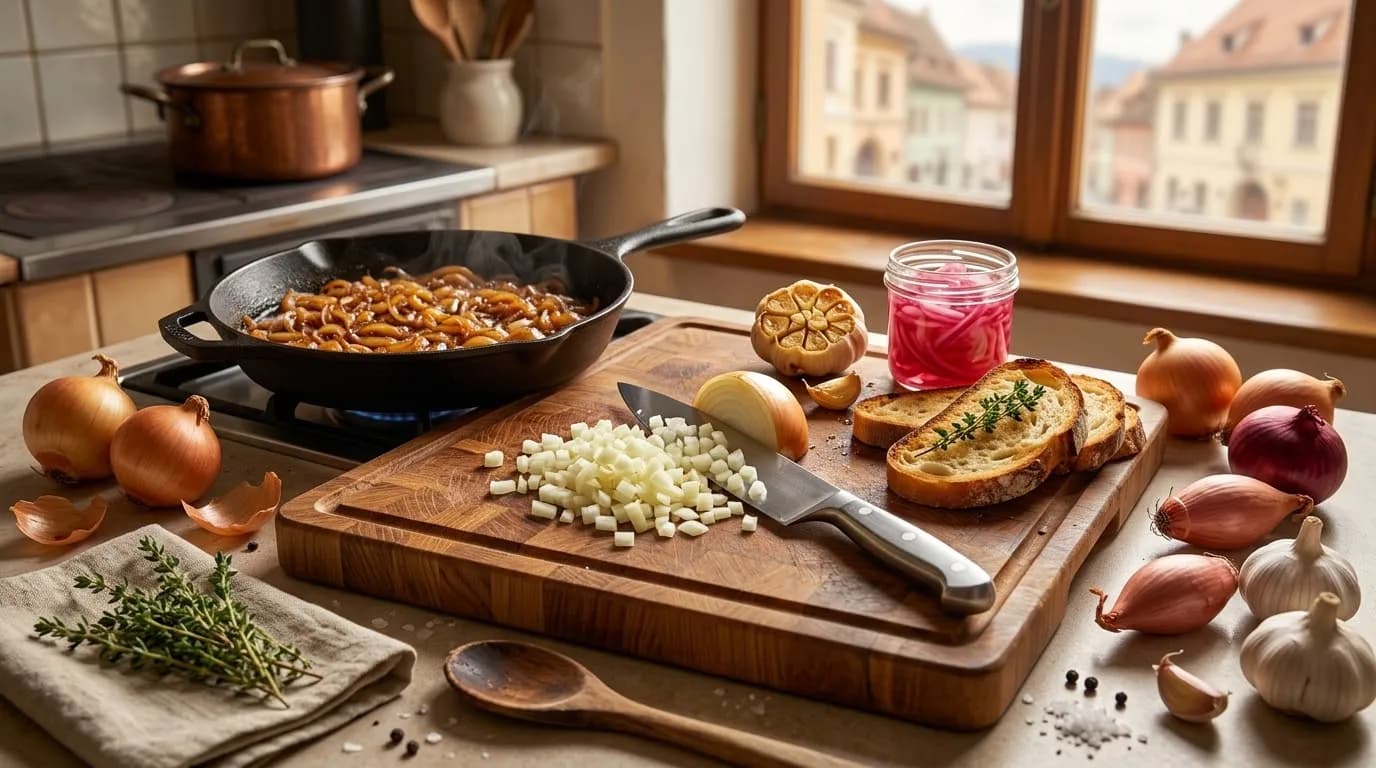
Which onion for what
Different onions vary in heat, sweetness and juiciness, and it matters for the result.
- Yellow onion — all-purpose: soups, frying, braising, mince.
- Red onion — milder, sweeter, lovely colour: salads, pickles, grilling.
- White onion — juicy, sharp, softens quickly: Mexican and Asian dishes, salsa.
- Shallot — delicate and refined: sauces, dressings, French cooking.
- Leek — mild, almost sweet: soups, pies, braises. Use the white and pale green part.
- Spring onion — fresh: whites into the pan, greens at the very end.
Why we cry and what helps
When a knife breaks onion cells, a volatile compound is released that irritates the eyes. The more damaged cells and the longer you're over the board, the more you cry.
- A sharp knife is the main remedy: it cuts cells rather than crushing them.
- Chill the onion in the freezer for 15–20 minutes — the irritant is released more slowly.
- Cut the root end last: it has the most irritant.
- Work under the extractor hood or next to an open window.
- Cut quickly and move the chopped onion into a bowl straight away.
Fast dicing
Halve the onion through the root, peel it and lay it cut side down. Make horizontal and vertical cuts, stopping 5–7 mm short of the root — the root holds the onion together. Then slice across: the dice fall away by themselves.
Dice size is time: fine onion melts into a sauce quickly, coarse onion stays noticeable in stews and salsa.
Sweating, browning, caramelising
The same onion gives three different flavours depending on heat and time.
- Sweating (5–8 minutes, medium-low, with salt): soft and translucent, no colour. The base for soups, sauces and risotto.
- Browning (8–12 minutes, medium): golden edges and a little sweetness. For burgers, sides and fillings.
- Caramelising (35–50 minutes, low): dark brown, jammy and very sweet. For French onion soup, burgers, tarts and pasta.
Truly caramelised onions
For 1 kg onions sliced into half-moons, use 2 tbsp butter or oil and a pinch of salt. No sugar needed — onions are sweet on their own.
For the first 10 minutes, keep the heat medium and the lid on so the onions soften and release their juice. Then take off the lid, lower the heat and stir every 3–5 minutes. When a brown film forms on the bottom, add 1–2 tbsp water and scrape it up — that's where the flavour is.
Repeat until the onions are evenly deep amber. Recipes that promise caramelised onions in 10 minutes just give you fried onions.
Garlic: crush, slice or grate
The finer garlic is cut, the stronger and sharper its flavour: breaking the cells produces pungent allicin.
- Whole cloves — mild and sweet: roasting, stocks, confit in oil.
- Slices — moderate: pasta, frying, stir-fries.
- Finely chopped — bold: sauces, marinades.
- Crushed or grated — strongest: dressings, aioli, tzatziki.
- The green sprout in old garlic is bitter — best removed.
When to add garlic
Chopped garlic burns in 30–60 seconds and turns bitter. So it goes into the pan after the onion and other vegetables, a minute before the liquid, or into warm rather than scorching oil.
For garlic-infused oil, put whole crushed cloves into cold oil and warm on low heat for 3–5 minutes until golden, then remove them.
Pickled onions and roasted garlic
Quick pickled onions: slice a red onion into thin half-moons and cover with 100 ml vinegar, 100 ml hot water, 1 tsp sugar and ½ tsp salt. They're ready in 30 minutes and keep 2 weeks in the fridge.
Roasted garlic: slice the top off a bulb, drizzle with oil, wrap in foil and roast at 200 °C for 40–45 minutes. The cloves turn soft and sweet and spread on bread like paste.
Storage
Keep onions and garlic somewhere dry, dark, cool and airy — in a net or basket, not in a plastic bag or the fridge: there they sprout and go mouldy.
Don't store onions next to potatoes: each speeds up the other's spoiling. Keep cut onion in a closed container in the fridge for up to 5 days, peeled garlic for up to a week.
Questions and answers
Why do my onions taste bitter when fried?+
The heat was too high and they burned before releasing their sweetness. Fry over medium heat and stir.
How do I take the edge off raw onion in a salad?+
Soak sliced onion in iced water for 10 minutes, or splash it with vinegar and a pinch of sugar.
Why did my garlic turn green or blue?+
It's a harmless reaction between garlic and acid or metal, for example in a pickle. It doesn't affect taste or safety.
What can replace fresh garlic?+
1 clove ≈ ⅛ tsp garlic powder or ½ tsp granulated garlic. The flavour will be milder.
How do I get onion and garlic smell off my hands?+
Rub your hands on stainless steel under cold water, or wash them with salt and lemon juice.
Try it in practice

More kitchen secrets
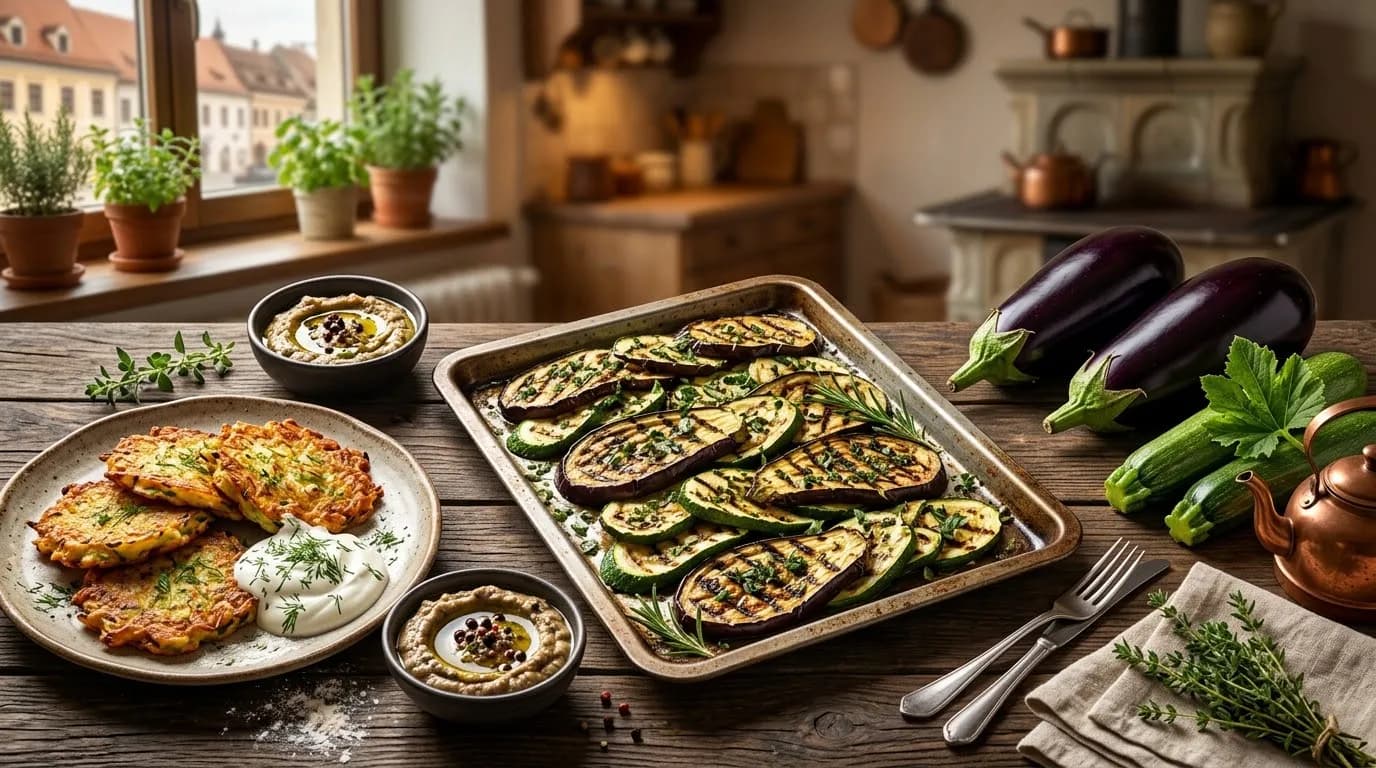
Courgettes and aubergines: no bitterness, no soaked-up oil and no watery mush
How to pick young ones, whether you really need to salt aubergines, why they soak up oil like a sponge and how to stop it, frying, roasting and grilling, courgette fritters that hold together, vegetable caviar and storage.
Read the article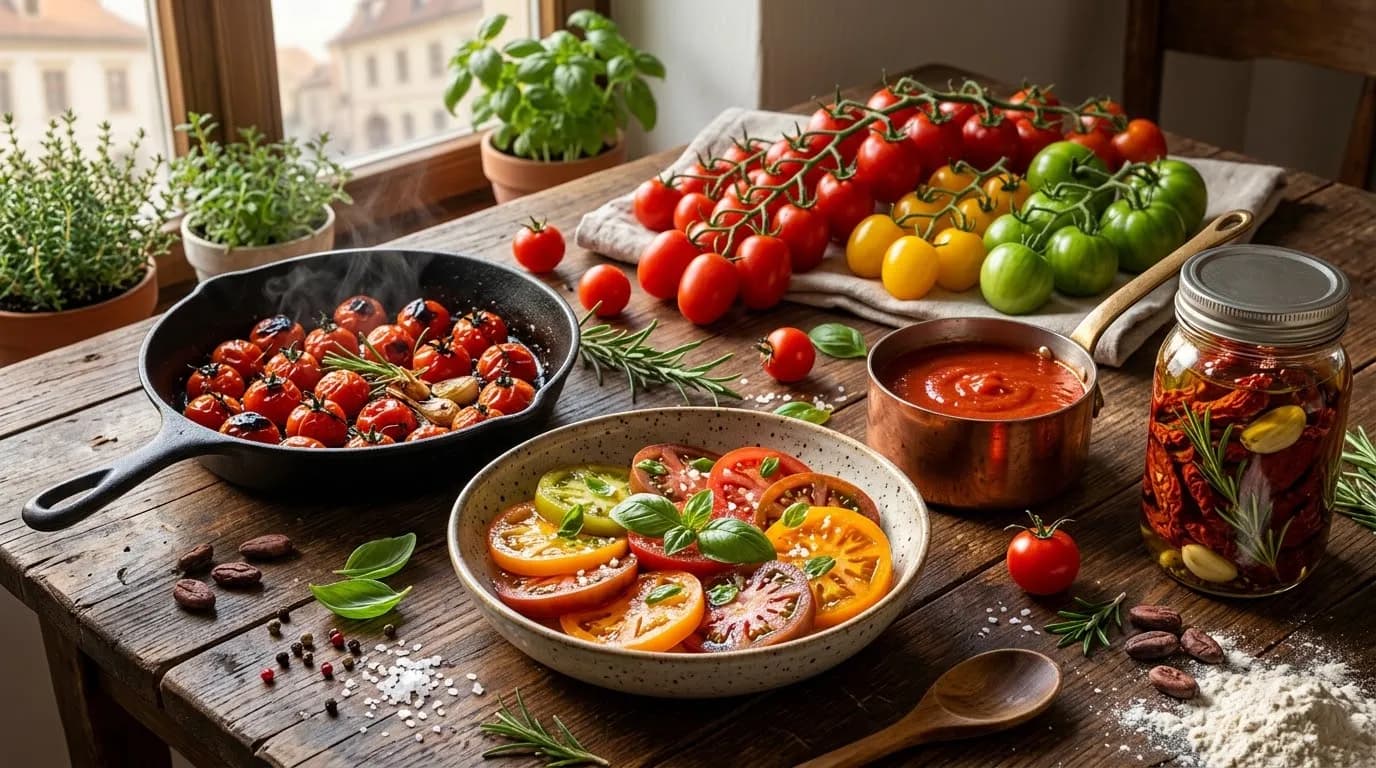
Tomatoes: how to pick tasty ones, peel them, make sauce and dry them
Which tomatoes for salad, sauce and roasting, why tomatoes don't belong in the fridge, how to peel them in a minute, sauce from fresh and tinned tomatoes, roasted cherry tomatoes, oven-dried tomatoes and what to do with green ones.
Read the article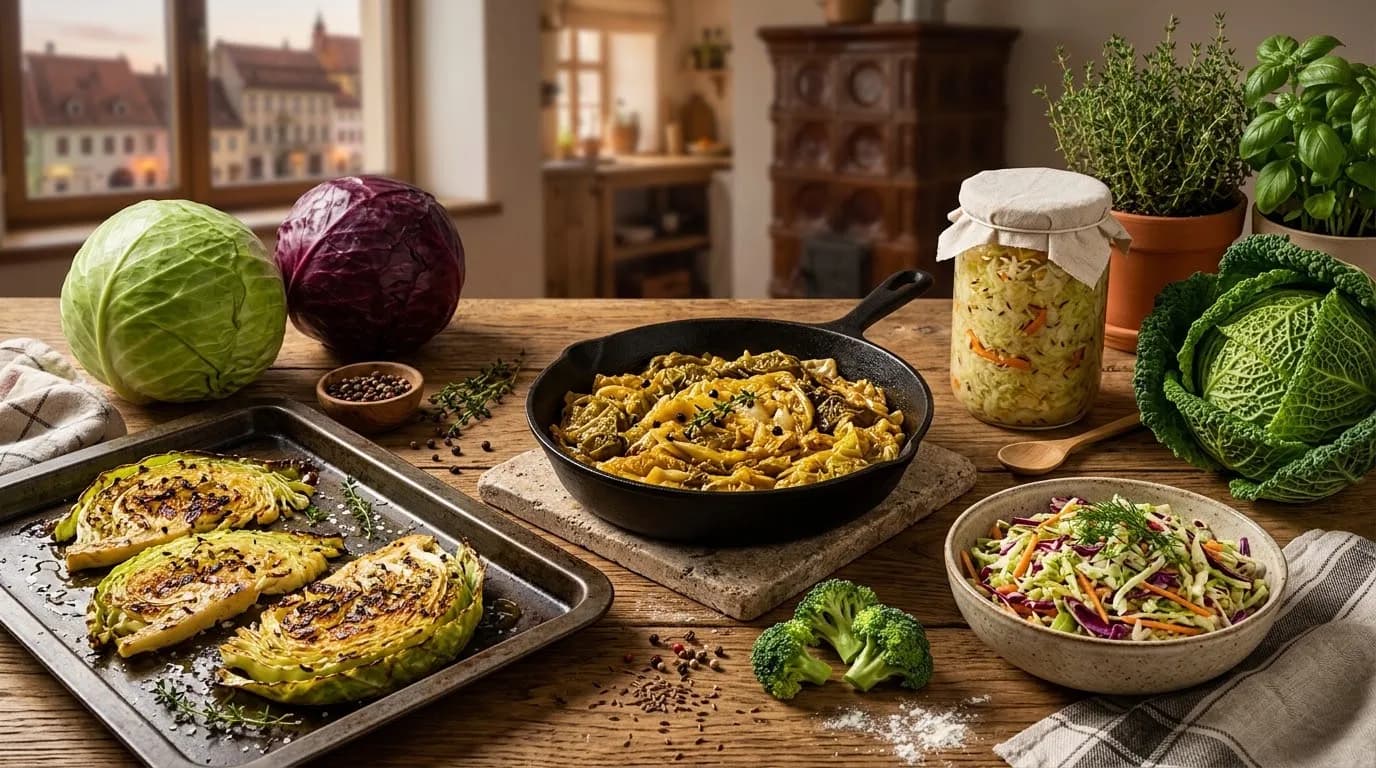
Cabbage: fermented, braised, roasted — and without the unpleasant smell
White, red, napa and savoy cabbage, broccoli and cauliflower — what's for what, where the smell comes from and how to avoid it, sauerkraut at a 2 % ratio, braised cabbage, roasted cabbage steaks, a slaw that doesn't go watery, and storage.
Read the article