Courgettes and aubergines: no bitterness, no soaked-up oil and no watery mush
How to pick young ones, whether you really need to salt aubergines, why they soak up oil like a sponge and how to stop it, frying, roasting and grilling, courgette fritters that hold together, vegetable caviar and storage.
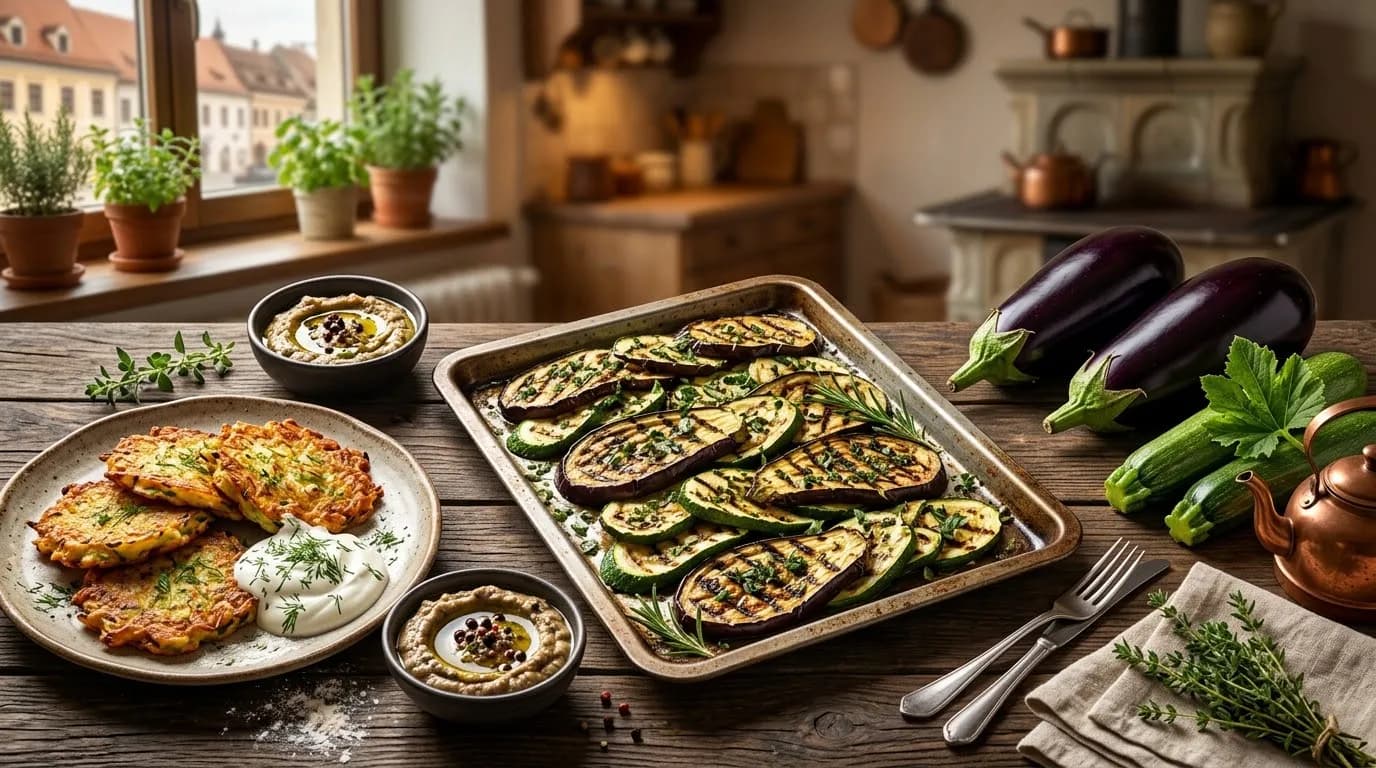
How to choose
Both courgettes and aubergines taste best young: thin skin, small soft seeds and dense flesh without hollows.
- Courgette — 15–20 cm long, heavy for its size, with glossy skin you can pierce with a fingernail.
- Aubergine — firm and shiny with a fresh green stem. If a finger dent slowly springs back, it's ripe but not overripe.
- Large, dull, light ones are overgrown: lots of seeds, little flavour and more bitterness.
Should you salt aubergines?
Modern aubergine varieties are hardly bitter, so salting them for bitterness usually isn't necessary. But salt helps for another reason: it draws out water, the flesh becomes denser and soaks up far less oil.
Cut the aubergines, sprinkle with salt (about 1 tsp per medium aubergine), leave in a colander for 20–30 minutes, then pat dry. No need to rinse — just don't add more salt to the dish.
Why aubergine drinks oil
Aubergine flesh is a sponge of air pockets. In a cold pan it sucks up oil immediately, before it has a chance to brown. Adding more oil once it's absorbed is the worst move: the dish turns greasy and the aubergine still won't colour.
- Preheat the pan and oil first.
- Brush the slices with oil rather than pouring it into the pan.
- Roast instead of frying: 220 °C, 20–25 minutes, slices brushed with oil.
- Salt or pre-cook the aubergine as described above.
- Give it time: at first it absorbs oil, but as it keeps cooking and the cells collapse, it releases it again.
Courgettes: avoiding watery mush
Courgettes are 95 % water. On low heat in a crowded pan they stew in their own juice and turn to mush.
Cut them large — 1–1.5 cm rounds or batons — fry on high heat in a single layer without crowding, and salt at the very end: salt draws out the juice straight away.
Roasting and grilling
The oven and grill give the best flavour with the least oil. Cut courgettes lengthways into 1 cm slices or halves, aubergines into 1.5 cm rounds or halves scored in a crosshatch.
- Oven: 200–220 °C, 20–30 minutes, turning halfway.
- Grill or griddle pan: 3–4 minutes a side until marked.
- A whole aubergine charred black over a flame or roasted at 230 °C for 40 minutes is the base for baba ganoush and smoky vegetable caviar.
- After roasting, drizzle with lemon juice and olive oil and scatter with garlic and herbs.
Courgette fritters that hold together
Coarsely grate 500 g courgettes, mix with ½ tsp salt and leave for 10 minutes. Then squeeze as hard as you can by hand or in a towel — 100–150 ml juice will come out. That's the main secret.
Add 1 egg, 3–4 tbsp flour, garlic, herbs and 50 g grated cheese if you like. Fry spoonfuls in hot oil over medium heat for 3–4 minutes a side.
Vegetable caviar and stews
For courgette or aubergine "caviar", first roast or fry the vegetables separately until browned, then stew them together with onion, carrot, pepper and tomato for 30–40 minutes and blend or chop with a knife.
Browning them separately matters: each vegetable cooks at its own pace, and that's the only way the caviar comes out thick and flavourful rather than boiled.
Storage
Courgettes and aubergines keep in the fridge for 5–7 days in a paper bag, ideally in the salad drawer. Aubergines dislike cold below 7–8 °C: dark spots appear, so buy them shortly before cooking.
To freeze, dice courgettes or grate and squeeze them; roast or fry aubergines first. Raw aubergine turns rubbery after freezing.
Questions and answers
Do I need to peel courgettes?+
Not young ones — their skin is thin and tasty. On large overgrown marrows, remove the skin and seeds.
Why are my aubergines bitter?+
Overgrown ones with large dark seeds are bitter. Choose young aubergines; if there is bitterness, salt them for 30 minutes.
Can I eat courgettes raw?+
Yes, young courgettes are great in salad: shave them into ribbons with a peeler and dress with lemon, oil and mint.
What's the difference between zucchini and courgette?+
They're the same vegetable — "zucchini" in American English, "courgette" in British. Larger mature ones are called marrows.
Why do my courgette fritters fall apart?+
Too much juice is left in the mixture. Always salt the grated courgettes and squeeze them hard before adding the egg and flour.
Try it in practice
More kitchen secrets
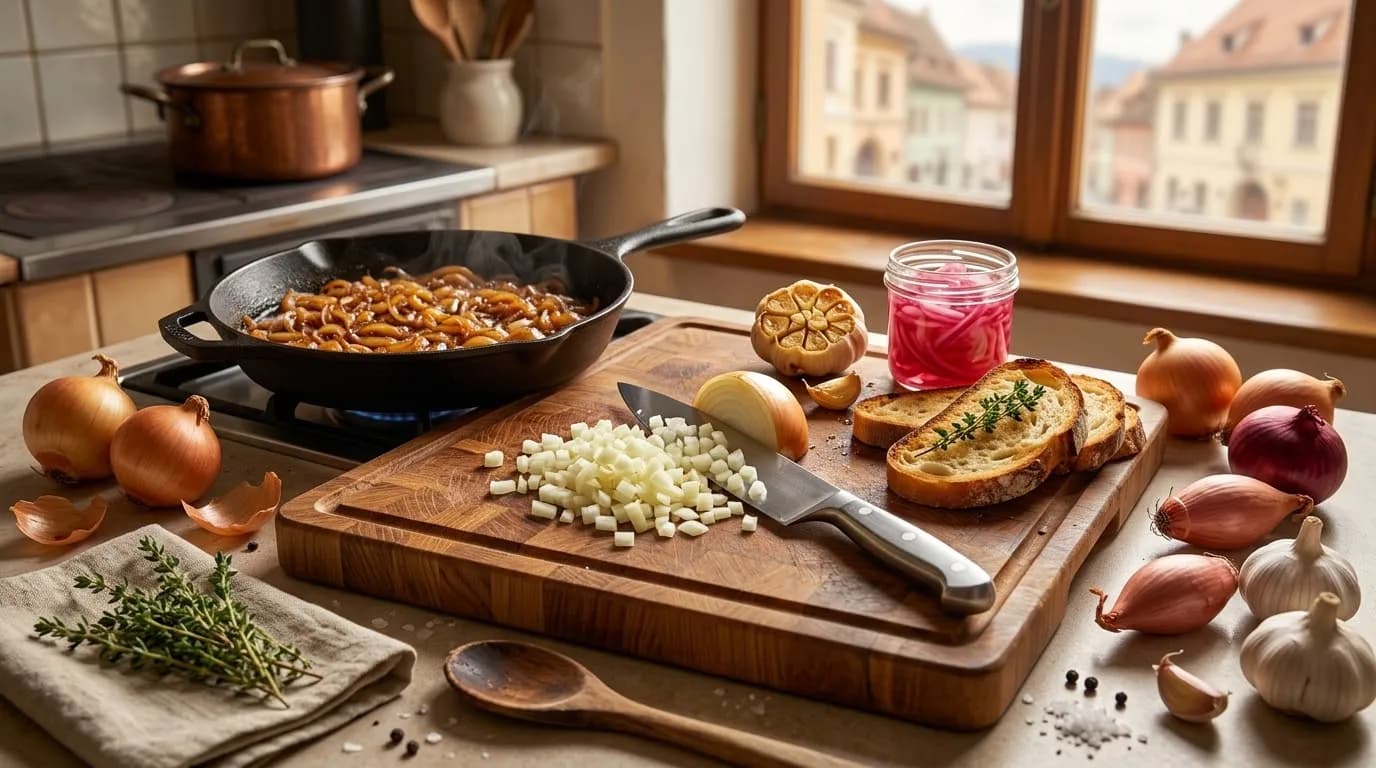
Onions and garlic: cutting without tears, caramelising and not burning them
Which onion for what, why onions make you cry and what actually helps, fast dicing, sweating, browning and true caramelisation in 40 minutes, garlic — crush or slice and when to add it, pickled onions, roasted garlic and storage.
Read the article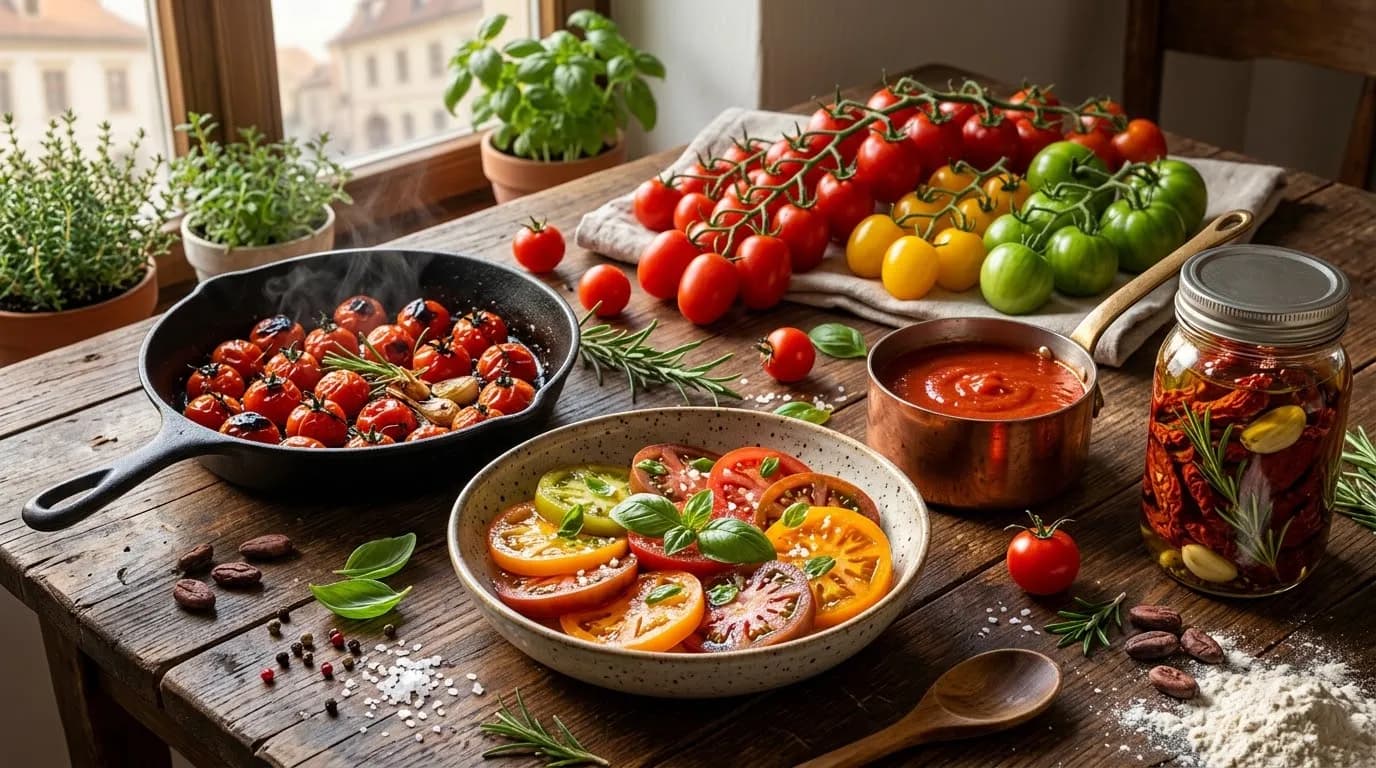
Tomatoes: how to pick tasty ones, peel them, make sauce and dry them
Which tomatoes for salad, sauce and roasting, why tomatoes don't belong in the fridge, how to peel them in a minute, sauce from fresh and tinned tomatoes, roasted cherry tomatoes, oven-dried tomatoes and what to do with green ones.
Read the article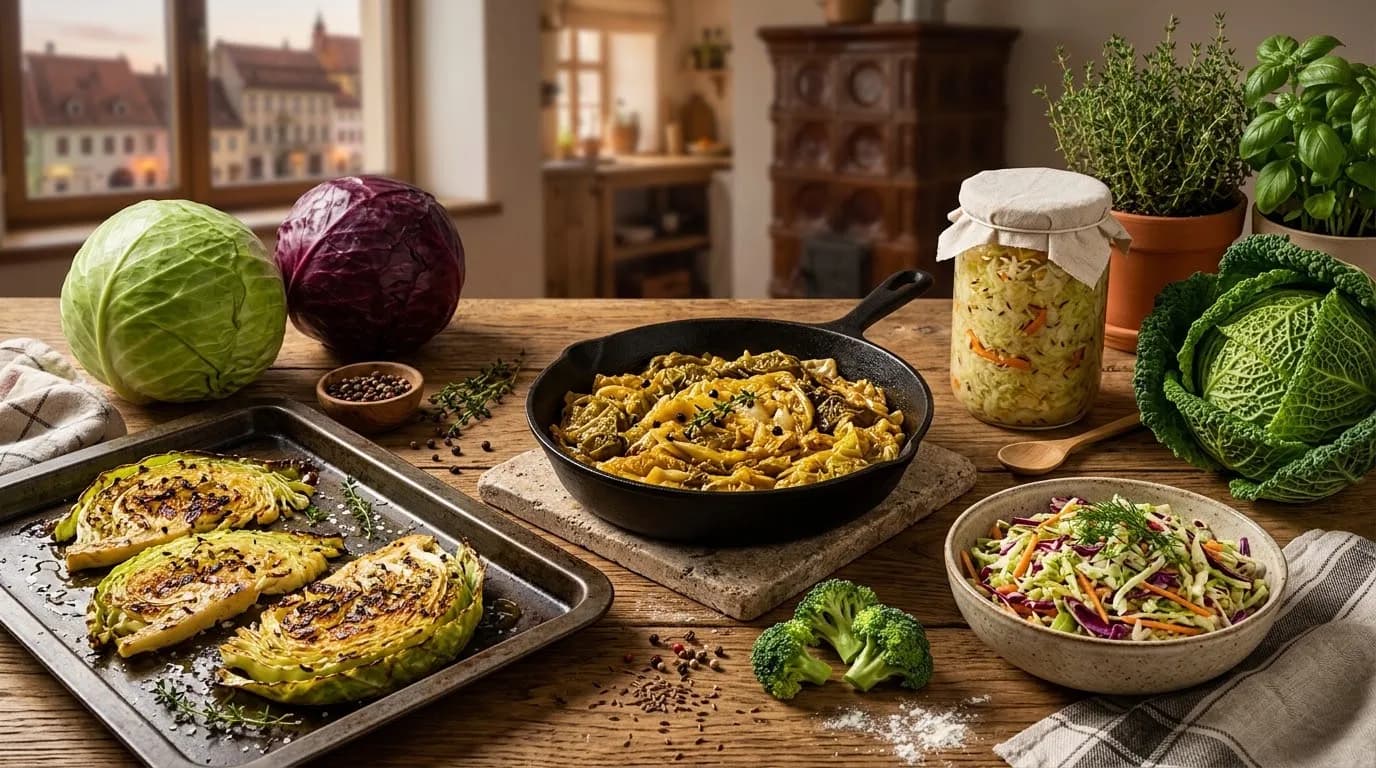
Cabbage: fermented, braised, roasted — and without the unpleasant smell
White, red, napa and savoy cabbage, broccoli and cauliflower — what's for what, where the smell comes from and how to avoid it, sauerkraut at a 2 % ratio, braised cabbage, roasted cabbage steaks, a slaw that doesn't go watery, and storage.
Read the article