Pumpkin and squash: how to choose, cut and cook them — from soup to pie
Butternut, pumpkin and hard-skinned winter squash — what's the difference, how to cut and peel a hard one safely, roasting with caramelised edges, a velvety soup, purée for baking, porridge, toasted seeds and keeping it until spring.
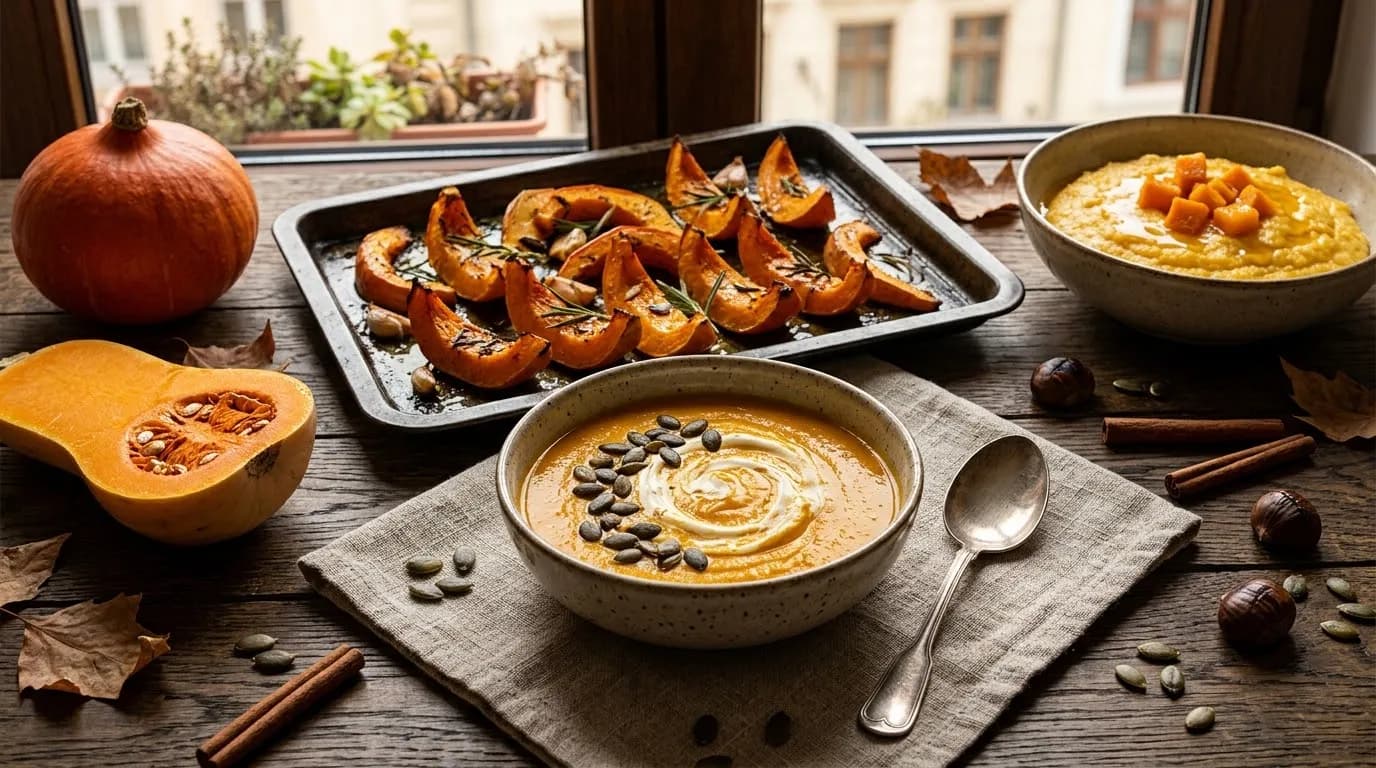
Which squash for what
All pumpkins and winter squash are edible, but their flavour and texture vary a lot. The choice decides whether a soup is velvety and a pie is bright and dense.
- Butternut — the sweetest, densest and most aromatic, with almost no fibres. The best choice for soup, purée, roasting and baking.
- Large round pumpkins — sweet and juicy but watery. Good for porridge, juice and braising.
- Small hard-skinned squash (acorn, delicata, spaghetti squash) — dense and nutty, handy for roasting in halves.
- Halloween carving pumpkins — edible, but stringy and bland. Keep them for the lantern.
Cutting it without cutting yourself
A hard squash is one of the riskiest jobs in the kitchen. The knife sticks, slips, and the squash rolls around the board.
- Put a damp towel under the board so it doesn't slide.
- Slice a thin piece off one side so the squash sits steady on the flat cut.
- Use a large heavy knife and press down on the spine with your palm rather than sawing.
- Pierce a very hard squash in a few places and microwave it for 2–3 minutes — the skin will soften.
- Cut butternut across at the neck first: the cylinder and the bulb are easier to peel separately.
- Peel with a vegetable peeler or a knife from top to bottom, once the pieces are stable.
Roast squash with caramelised edges
This is the simplest and tastiest method. Cut the squash into 2–3 cm cubes or 1.5–2 cm wedges and toss with 2 tbsp oil per kilo, salt and pepper.
Spread in a single layer so the pieces don't touch — otherwise they steam instead of roasting. Roast at 200–220 °C for 25–35 minutes, turning once, until tender with dark caramelised edges.
- Sweet: honey or maple syrup, cinnamon, a pinch of salt.
- Savoury: smoked paprika, garlic, rosemary or thyme.
- Middle Eastern: cumin, coriander, chilli, finished with yoghurt and coriander leaves.
- No need to peel butternut or small squash — the skin is soft and edible after roasting.
Velvety soup
The best base for soup is roasted rather than boiled squash: the flavour is deeper and sweeter. For 1 kg squash, fry an onion and 2 garlic cloves, add the roast squash and 700–800 ml hot stock, simmer for 10 minutes and blend until smooth.
Add 100 ml cream or coconut milk, salt, pepper and a pinch of nutmeg. If the soup is thick, thin it with stock; if it's thin, simmer uncovered.
Purée for pies and baking
Baking needs dense, not watery, flesh. Roast butternut halves cut side down at 190 °C for 40–50 minutes until completely soft, scoop out the flesh and blend.
If the purée is runny, drain it in a cheesecloth-lined sieve for 1–2 hours or cook it down in a pan, stirring. Wet purée is the main reason for a soggy pumpkin pie and muffins that won't bake through.
- Pumpkin spice for baking: cinnamon, ginger, nutmeg and cloves in a ratio of roughly 4:2:1:0.5.
- Purée keeps 5 days in the fridge and up to 6 months frozen in portions.
Pumpkin porridge
Dice 400 g pumpkin small, add 200 ml water and simmer covered for 10–15 minutes until soft. Add 500 ml milk, bring to the boil and stir in 100 g rinsed millet or rice.
Cook on low heat for 20–25 minutes, stirring, then add salt, sugar or honey and a knob of butter. Let it stand covered for 10 minutes — it becomes more tender.
The seeds: don't throw them away
Separate the seeds from the strings, rinse and dry them well on a towel. Toss with a teaspoon of oil and salt, plus paprika or cinnamon if you like.
Toast in the oven at 160–170 °C for 15–20 minutes, stirring every 5 minutes, until golden and crunchy. Butternut seeds are smaller — 10–12 minutes is enough.
How to store squash
A whole squash with undamaged skin and stem keeps for 2 to 6 months somewhere cool and dry at 10–15 °C. The fridge is too damp for a whole one.
Once cut, scrape out the seeds, wrap in cling film and keep in the fridge for up to a week. To freeze, cut into cubes, freeze on a tray and bag them — up to 10 months. Frozen squash can go straight into soup, porridge or the oven without thawing.
Questions and answers
Should I peel squash for roasting?+
Not butternut or small squash — their skin is soft after roasting. Peel large pumpkins: their skin stays tough.
Why is my squash soup watery and bland?+
The squash was boiled rather than roasted, or you used a watery large pumpkin. Roast it first, add less stock and finish with a drop of acid.
Can I eat squash raw?+
Yes, young butternut can be grated into a salad with carrot and apple. Large pumpkins are stringy and unpleasant raw.
What can replace pumpkin purée in baking?+
Sweet potato or roast carrot purée — they're very close in texture and sweetness.
Why does my squash taste bitter?+
Squash can sometimes build up bitter compounds, especially when grown near ornamental varieties. Don't eat a bitter squash at all — cooking won't fix it.
Try it in practice

More kitchen secrets
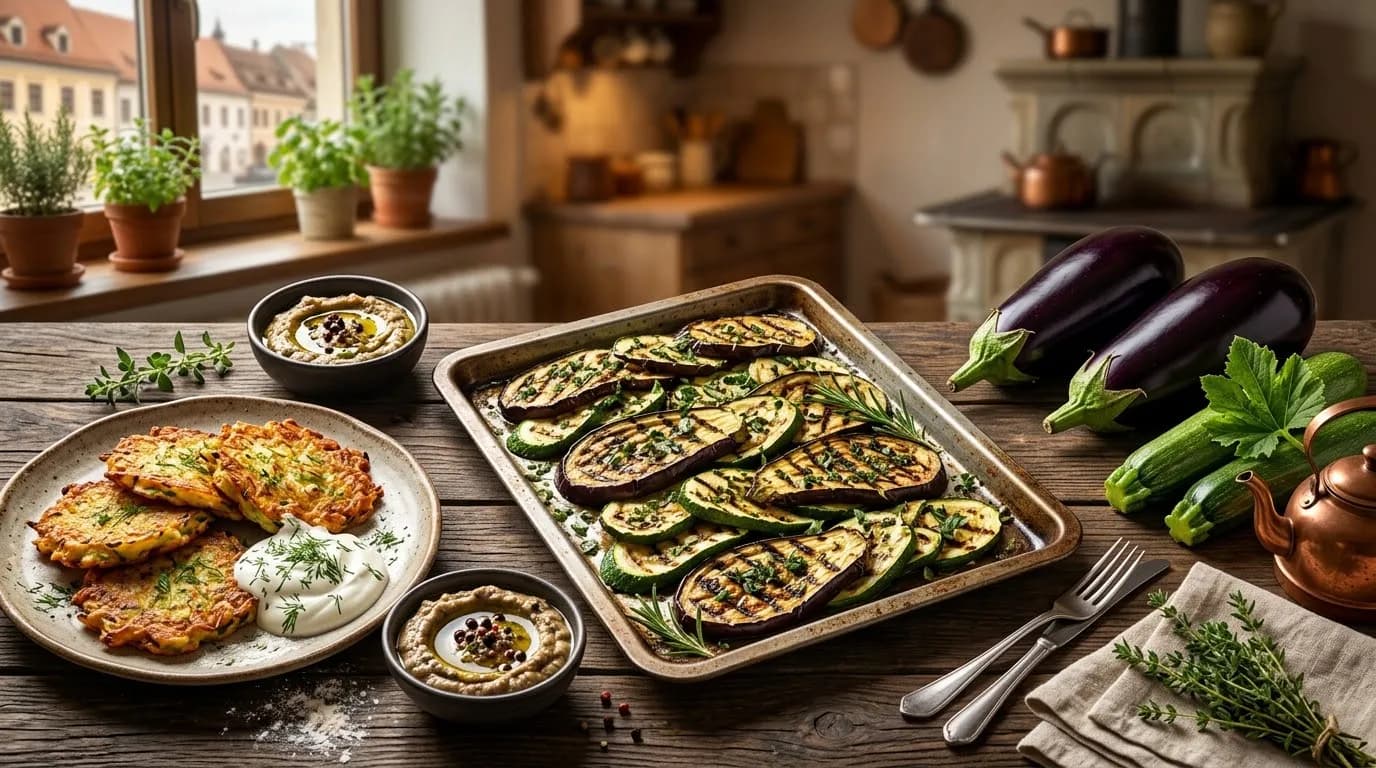
Courgettes and aubergines: no bitterness, no soaked-up oil and no watery mush
How to pick young ones, whether you really need to salt aubergines, why they soak up oil like a sponge and how to stop it, frying, roasting and grilling, courgette fritters that hold together, vegetable caviar and storage.
Read the article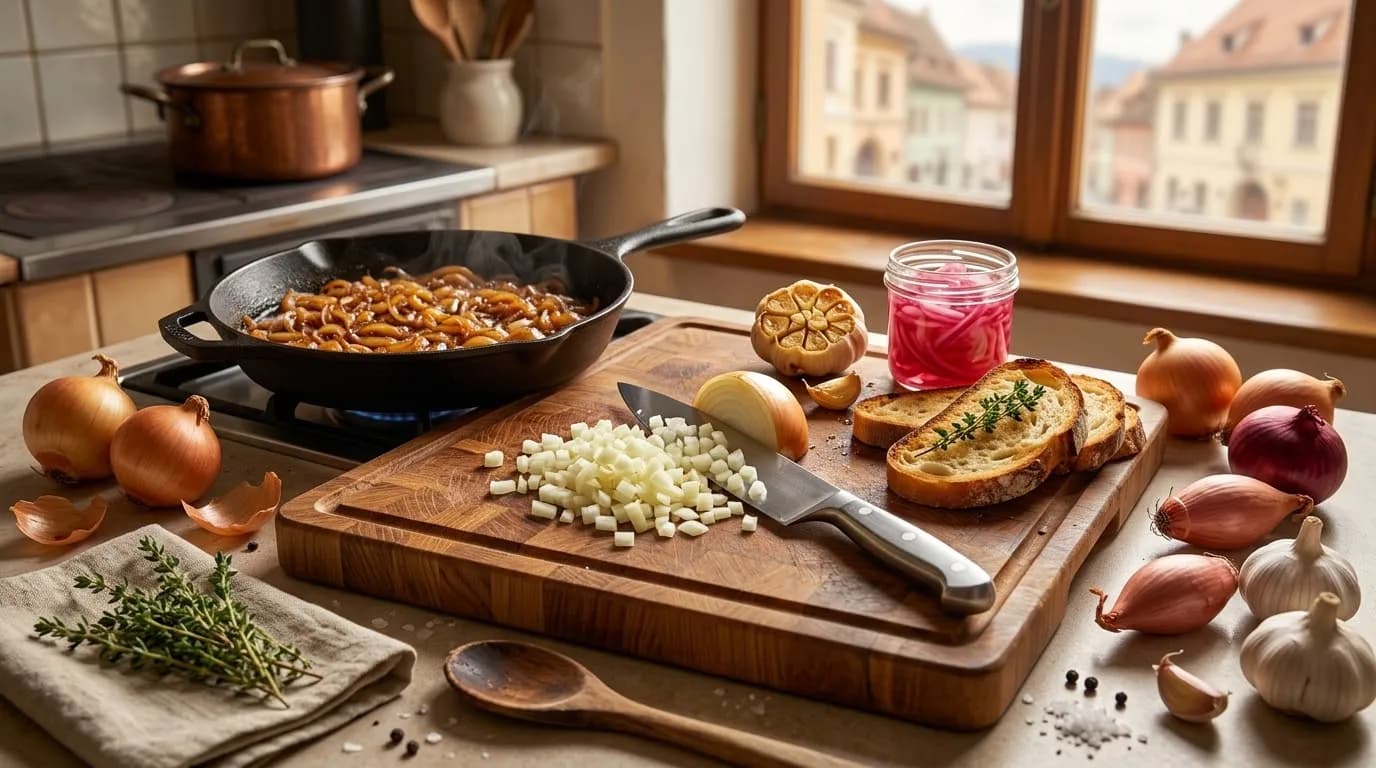
Onions and garlic: cutting without tears, caramelising and not burning them
Which onion for what, why onions make you cry and what actually helps, fast dicing, sweating, browning and true caramelisation in 40 minutes, garlic — crush or slice and when to add it, pickled onions, roasted garlic and storage.
Read the article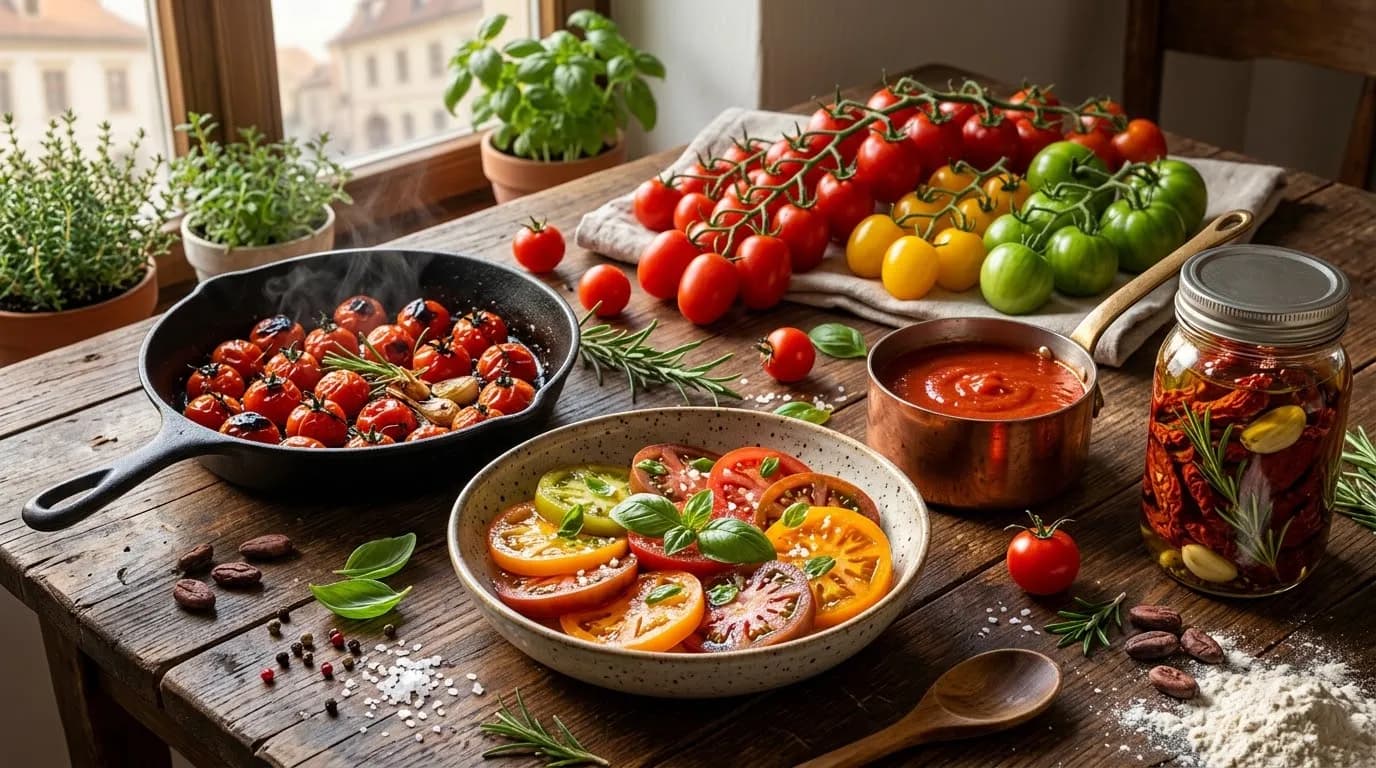
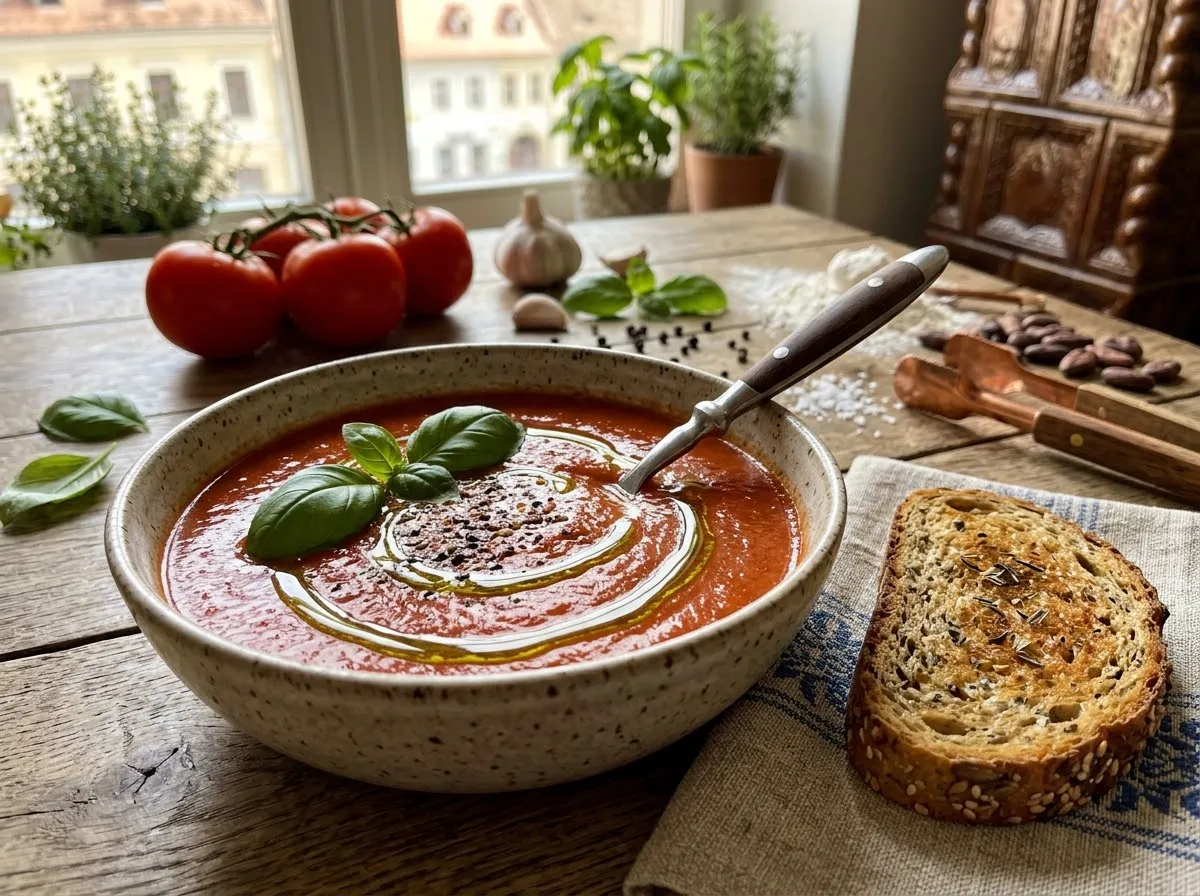
Tomatoes: how to pick tasty ones, peel them, make sauce and dry them
Which tomatoes for salad, sauce and roasting, why tomatoes don't belong in the fridge, how to peel them in a minute, sauce from fresh and tinned tomatoes, roasted cherry tomatoes, oven-dried tomatoes and what to do with green ones.
Read the article