Nuts and seeds: how to toast, peel and store them, and make nut butter
Why toasted nuts taste better than raw, pan and oven toasting times, how to skin hazelnuts and almonds, soaking, homemade nut butter and milk, nut flour, storing them without going rancid, and where nuts shine in savoury dishes.
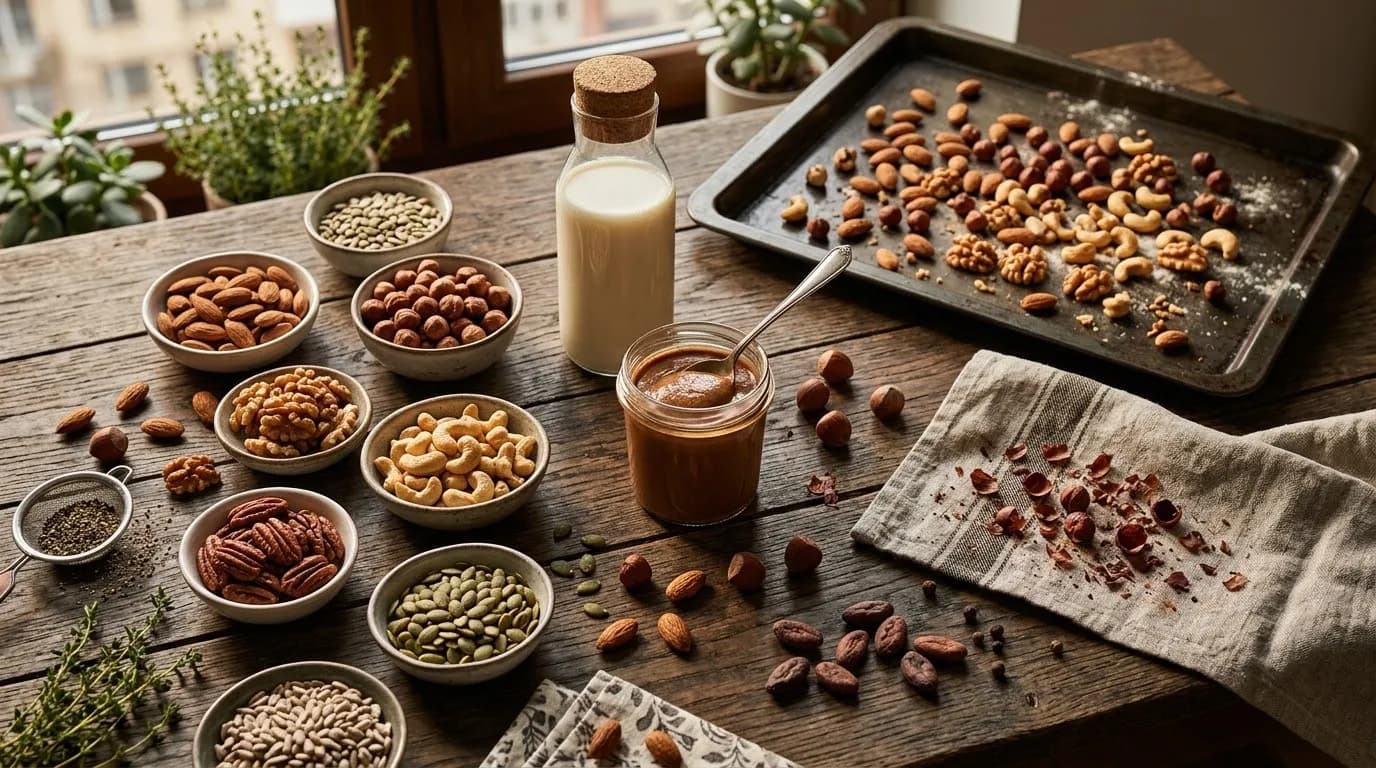
Why toast nuts
Raw nuts taste mild and slightly waxy. Heat sets off the same reactions as in a bread crust: sugars and proteins turn into hundreds of aroma compounds and the oils rise to the surface. The nut turns crunchy and tastes properly "nutty".
Toasting takes a few minutes and makes any dish with nuts noticeably better — from salads to cookies. The exception is nuts for delicate nut-flour baking and for nut milk: there a milder flavour is sometimes what you want.
Toasting in a pan and in the oven
A pan is handy for a small amount: dry, no oil, medium heat, constant stirring. As soon as you smell them and they take on a little colour, tip them onto a cold plate, or the heat of the pan will burn them.
The oven gives more even results for a larger batch. Spread the nuts in a single layer on a tray and toast at 170–180 °C, stirring halfway.
- Pine nuts, sesame, sunflower seeds — 3–6 minutes: they burn fastest.
- Flaked almonds, cashews — 5–8 minutes.
- Walnuts, pecans — 7–10 minutes.
- Whole almonds, hazelnuts — 10–14 minutes.
- Pumpkin and sunflower seeds — 8–12 minutes, until they start to pop.
How to skin them
Hazelnut and walnut skins are bitter, while almond skins are just tough and darken bakes. They come off easily once you know the trick.
- Hazelnuts: toast for 10–12 minutes at 180 °C, tip into a towel while hot and rub hard — the skins flake off.
- Almonds: cover with boiling water for 1–2 minutes, drain, rinse in cold water and squeeze each nut out of its skin.
- Walnuts: for desserts, cover with boiling water for 3 minutes and peel with a knife — slow, but all the bitterness goes.
- Peanuts: toast and rub between your palms or in a sieve — the husks come away and can be blown off.
Soaking: when it's needed
Nuts soaked for 6–12 hours turn softer and creamier — that's what you need for nut milk, creamy vegan sauces and cashew cream. For most people, soaking makes little difference to taste or digestion.
Don't soak nuts for crunchy snacks or baking. If you've soaked them anyway, dry them in the oven at 60–70 °C for a few hours until fully crisp.
Homemade nut butter
All you need is a powerful blender or food processor and 300–400 g warm toasted nuts. Warm nuts release their oil faster.
Blend for 8–15 minutes, scraping down the sides now and then. First you get crumbs, then a ball, and only then does it "let go" into a smooth butter. Don't stop at the ball stage — that's normal.
- For flavour — a pinch of salt, and honey, cocoa or cinnamon at the very end if you like.
- No oil needed; if the butter is very thick, add 1–2 tsp neutral oil.
- Keeps in a jar in the fridge for up to 2 months; just stir in any oil that separates.
Nut milk and nut flour
For milk, soak 100 g almonds or cashews overnight, drain, blend with 700–800 ml fresh water for 1–2 minutes and strain through cheesecloth. A pinch of salt and a little honey or dates to taste. Keeps 3–4 days in the fridge.
Nut flour is made from blanched almonds: grind the cold nuts in a blender in 2–3 second pulses with a spoon of the sugar or flour from the recipe. Blend continuously and you'll get butter rather than flour.
Nuts in savoury dishes
Nuts add crunch, richness and depth where you least expect them.
- Salads: a handful of toasted nuts or seeds turns plain leaves into a proper dish.
- Sauces: pesto, Georgian walnut sauce, satsivi, romesco with almonds and roast peppers.
- Coatings: chopped nuts with breadcrumbs for chicken and fish.
- Sides: buckwheat or bulgur with toasted almonds, green beans with hazelnuts.
- Soups: a spoon of tahini or toasted seeds on a smooth soup.
Storage: rancidity is the enemy
Nuts and seeds are 50–70 % fat, which oxidises in heat, light and air. You can spot a rancid nut at once — it smells like old paint and leaves a bitter aftertaste. Don't eat them.
- In the shell, nuts keep longer: up to a year somewhere cool and dry.
- Shelled — in a tightly closed jar in the fridge for up to 6 months.
- In the freezer — up to a year, no need to thaw.
- Toasted nuts go rancid faster than raw — toast small batches as you need them.
- Pine nuts and walnuts are the most delicate: straight into the fridge.
Questions and answers
Why do my nuts taste bitter?+
Either they've gone rancid with age, they're over-toasted, or it's the skins — walnuts and hazelnuts. Skin them and keep nuts in the fridge.
Can I toast nuts in the microwave?+
Yes: in a single layer on a plate, 1 minute at a time on full power with a stir in between, usually 3–5 minutes. The colour changes less, so go by smell.
Why won't my nut butter turn smooth?+
The nuts are cold or the blender is weak. Warm the nuts in the oven and be patient — sometimes it takes 15 minutes. Only add oil as a last resort.
Should I wash nuts?+
Nuts for toasting and baking don't need washing. Loose nuts from a market can be rinsed and then dried well in the oven.
How many nuts a day is healthy?+
The usual advice is a handful, about 30 g: healthy fats and protein, but also 180–200 kcal.
Try it in practice


More kitchen secrets
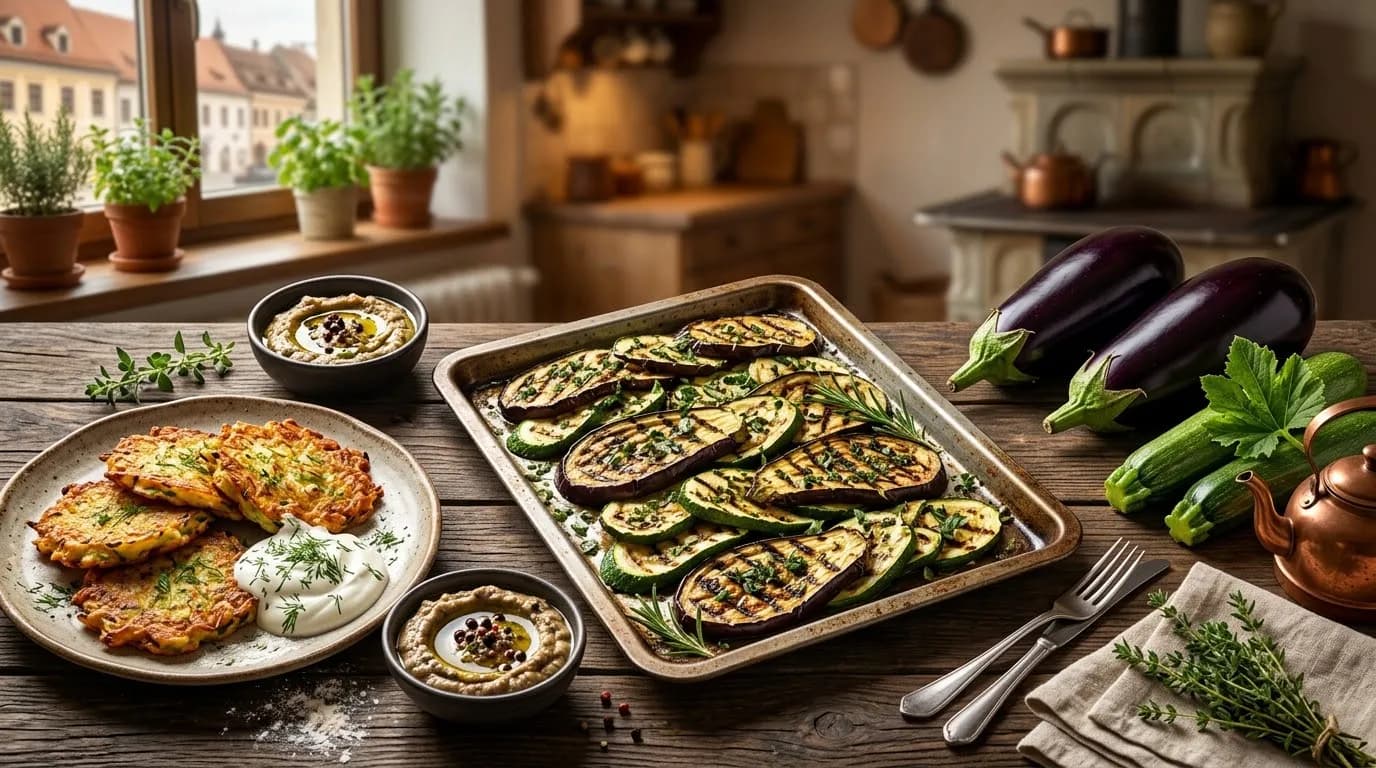
Courgettes and aubergines: no bitterness, no soaked-up oil and no watery mush
How to pick young ones, whether you really need to salt aubergines, why they soak up oil like a sponge and how to stop it, frying, roasting and grilling, courgette fritters that hold together, vegetable caviar and storage.
Read the article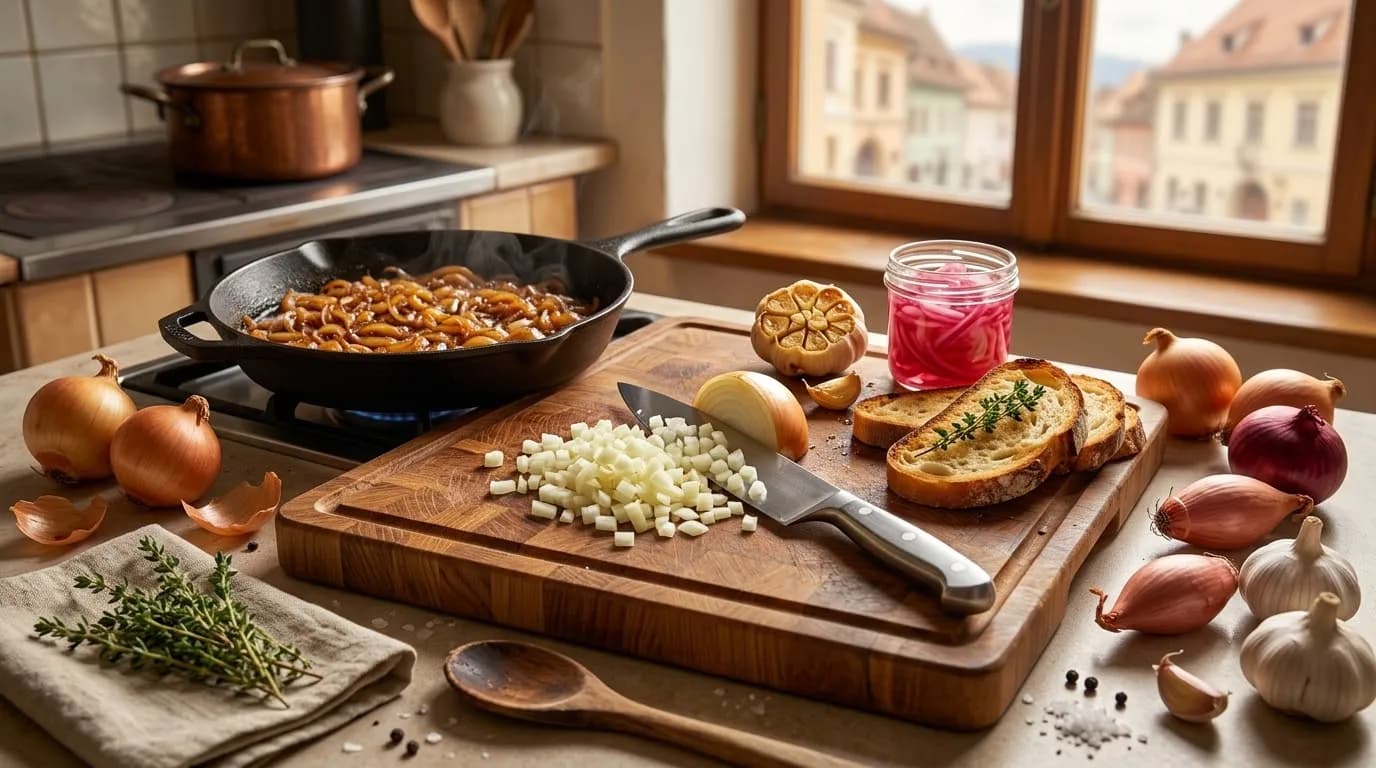
Onions and garlic: cutting without tears, caramelising and not burning them
Which onion for what, why onions make you cry and what actually helps, fast dicing, sweating, browning and true caramelisation in 40 minutes, garlic — crush or slice and when to add it, pickled onions, roasted garlic and storage.
Read the article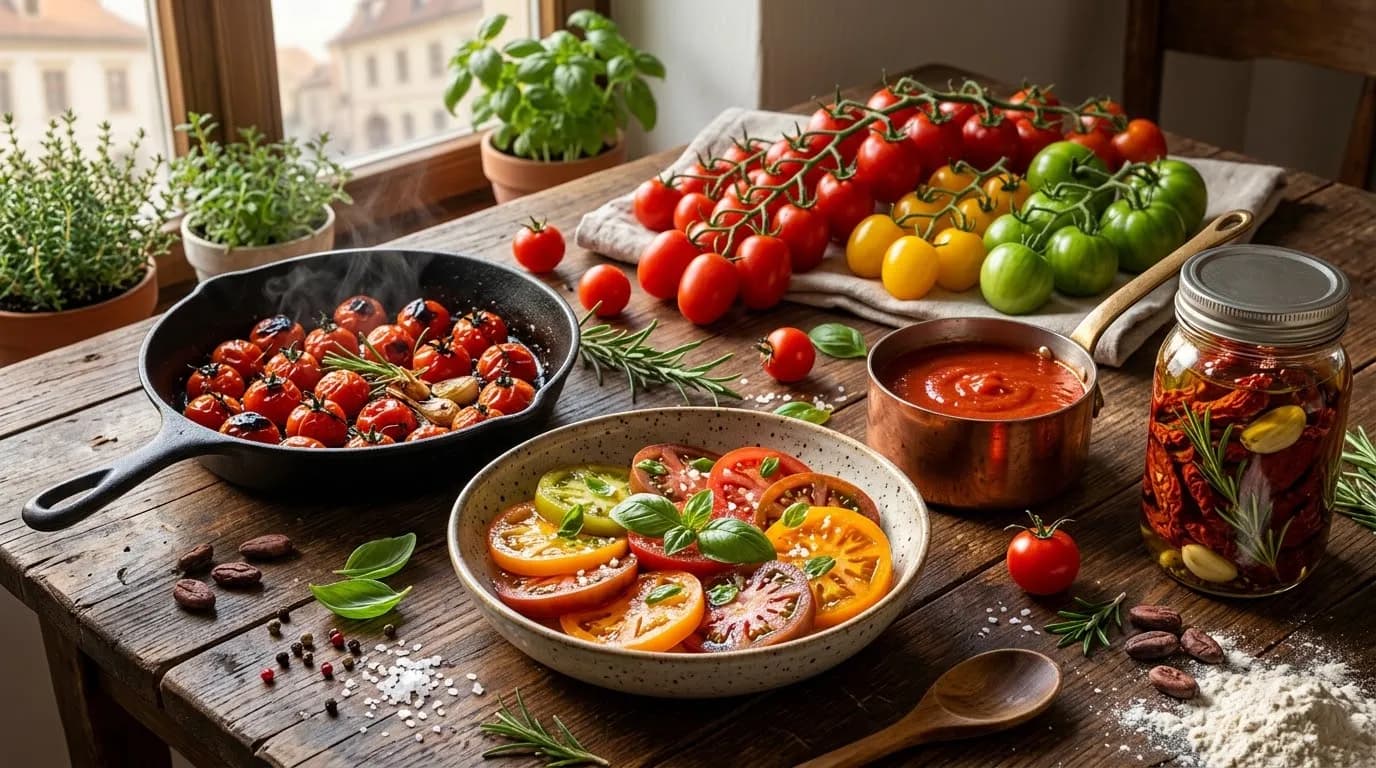
Tomatoes: how to pick tasty ones, peel them, make sauce and dry them
Which tomatoes for salad, sauce and roasting, why tomatoes don't belong in the fridge, how to peel them in a minute, sauce from fresh and tinned tomatoes, roasted cherry tomatoes, oven-dried tomatoes and what to do with green ones.
Read the article