Casseroles, lasagna and gratin: no raw middle, no puddle underneath
Which vegetables to pre-cook, the ratio for an egg custard, a classic béchamel per litre of milk, lasagna and gratin dauphinois step by step, when to add the cheese, why a bake must rest before cutting and how to freeze it.
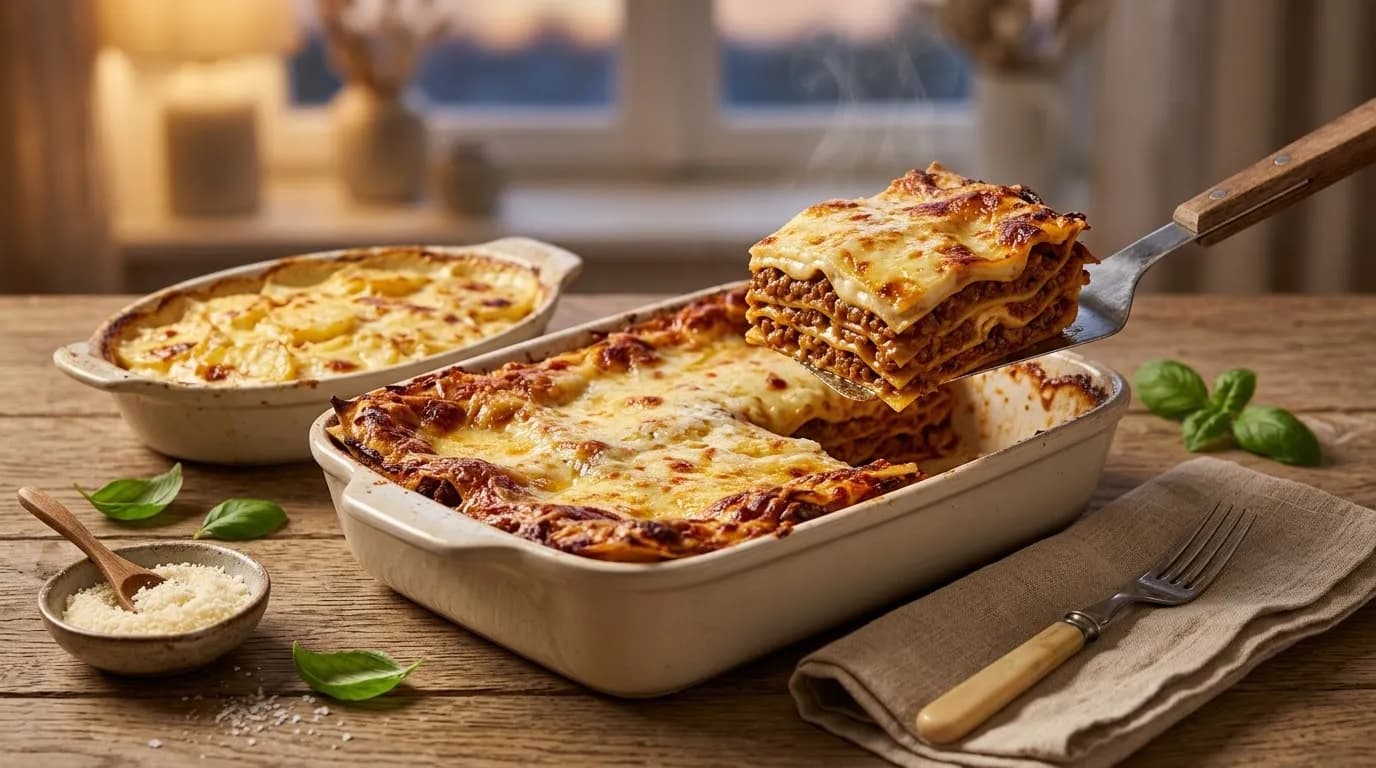
Three rules for any bake
A casserole isn't just "everything in a dish and into the oven". It combines ingredients with different cooking times, and at 180 °C the middle of a dish heats up slowly. Hence the three classic problems: raw potato inside, a puddle of liquid underneath and burnt cheese on top.
- Pre-cook anything hard: blanch or roast potatoes, carrots, squash and broccoli until almost tender.
- Dry out anything watery: fry courgettes, aubergines, mushrooms and spinach, or salt and squeeze them — or they'll release juice into the dish.
- Cheese goes on last: in the final 10–15 minutes, or it dries out and turns rubbery.
The binder: egg custard and sauces
For a bake to cut into squares, something has to hold it together. The simplest option is an egg and milk custard: 3 eggs per 300 ml milk or cream, salt, pepper and a pinch of nutmeg. That's enough for a 20×30 cm dish.
Egg sets at 80–85 °C, so the custard is done when the centre no longer wobbles and a knife comes out clean. If the top is brown but the inside is runny, cover with foil and keep baking.
- Sour cream binder: 200 g sour cream + 2 eggs — for potato and meat bakes.
- Tomato: passata with garlic — for pasta and vegetable bakes.
- Béchamel — for lasagna, moussaka and macaroni cheese.
Lump-free béchamel
The basic ratio per litre of milk: 50 g butter and 50 g flour. Melt the butter, add the flour and stir for 1–2 minutes to cook out the raw taste while keeping it pale.
Add the milk warm and in stages, whisking hard until smooth each time. Simmer on low heat for 5–7 minutes until it's as thick as pouring cream. Season with salt, a pinch of nutmeg and white pepper.
Lasagna step by step
You need: 12 lasagna sheets, 1 l bolognese (500 g mince, tomatoes, onion, carrot, celery, simmered for at least an hour), 1 l béchamel and 150 g grated parmesan or another hard cheese.
Assemble in a 20×30 cm dish: a little sauce on the bottom, then sheets, bolognese, béchamel and a sprinkle of cheese — four layers in all. Finish with sheets, béchamel and cheese.
Bake at 180 °C for 40–45 minutes: the first 25 under foil, then uncovered until golden.
- "No pre-cook" sheets need a loose sauce: don't reduce the bolognese to a paste.
- Sauce must reach the edges of the sheets, or the edges stay hard.
- Let the lasagna rest for 20 minutes: the layers set and the slice won't slump.
Gratin dauphinois
The classic French potato gratin: 1 kg potatoes, 400 ml cream (20–33 % fat), 200 ml milk, 2 garlic cloves, salt, pepper and nutmeg.
Slice the potatoes 2–3 mm thick and don't rinse them — the starch thickens the cream. Warm the potatoes in the cream, milk and garlic for 5–7 minutes until almost boiling, then tip into a dish rubbed with garlic and butter and level out.
Bake at 160–170 °C for 1–1¼ hours, until a knife slides in without resistance and the top is golden.
Pasta bake
The main mistake is cooking the pasta fully beforehand: in the oven it soaks up the sauce and goes soft. Boil it 2–3 minutes less than the packet says.
You need more sauce than seems necessary, because the pasta keeps absorbing it. As a guide: 250 g dry pasta to 600–700 ml sauce. Bake at 190 °C for 20–25 minutes, cheese in the last 10.
Vegetable bake
A mix of textures works best: potato or squash as the base, courgette or aubergine for juiciness, onion and pepper for sweetness, tomatoes on top.
Cut everything to the same thickness so it's done at the same time. Roast the hard vegetables with oil for 15 minutes, add the rest, pour over the binder and bake another 25–30 minutes at 190 °C.
- Salt courgette and aubergine for 15 minutes and pat dry.
- Wilt spinach in a pan and squeeze it hard.
- Add fresh herbs after it comes out of the oven.
Resting and cutting
A hot bake is still liquid inside: starch and egg set as it cools. Cut it straight away and the slice falls apart, leaving a puddle on the plate.
Let it stand: 10 minutes for vegetable and pasta bakes, 15–20 for lasagna and gratin. Cut with a sharp knife, wiping it between cuts, and lift each piece with a spatula.
Make-ahead and freezing
Lasagna, moussaka and pasta bakes freeze very well. Assemble in a freezer-safe dish, wrap tightly in cling film and foil and keep for up to 3 months.
Bake straight from frozen: at 180 °C under foil for about 1 hour 15 minutes, then uncovered for another 15–20. Check with a thermometer — 70 °C in the centre.
- Potato bakes darken and turn grainy after freezing — eat them fresh.
- Egg custard freezes worse than sauce: some liquid separates.
- A cooked bake keeps 3–4 days in the fridge.
Questions and answers
Why is there water at the bottom of my bake?+
The vegetables released their juice: courgettes, aubergines, mushrooms, spinach and tomatoes need drying out or salting and squeezing first. Another cause is cutting it while hot.
What temperature should I bake at?+
Most bakes at 180–190 °C. Creamy potato ones like gratin go lower, at 160–170 °C, so the cream doesn't split and the potatoes have time to cook.
How do I know it's done?+
The middle doesn't wobble, a knife comes out clean and the edges pull away slightly from the dish. A thermometer is most reliable: 70–75 °C in the centre.
Can I assemble lasagna the night before?+
Yes, assemble it and keep it covered in the fridge for up to 24 hours. Take it out 30 minutes before baking or add 10–15 minutes to the baking time.
What can I use instead of béchamel?+
Ricotta mixed with egg and grated cheese, or sour cream with egg. The flavour changes, but the layers will hold.
Try it in practice


More kitchen secrets
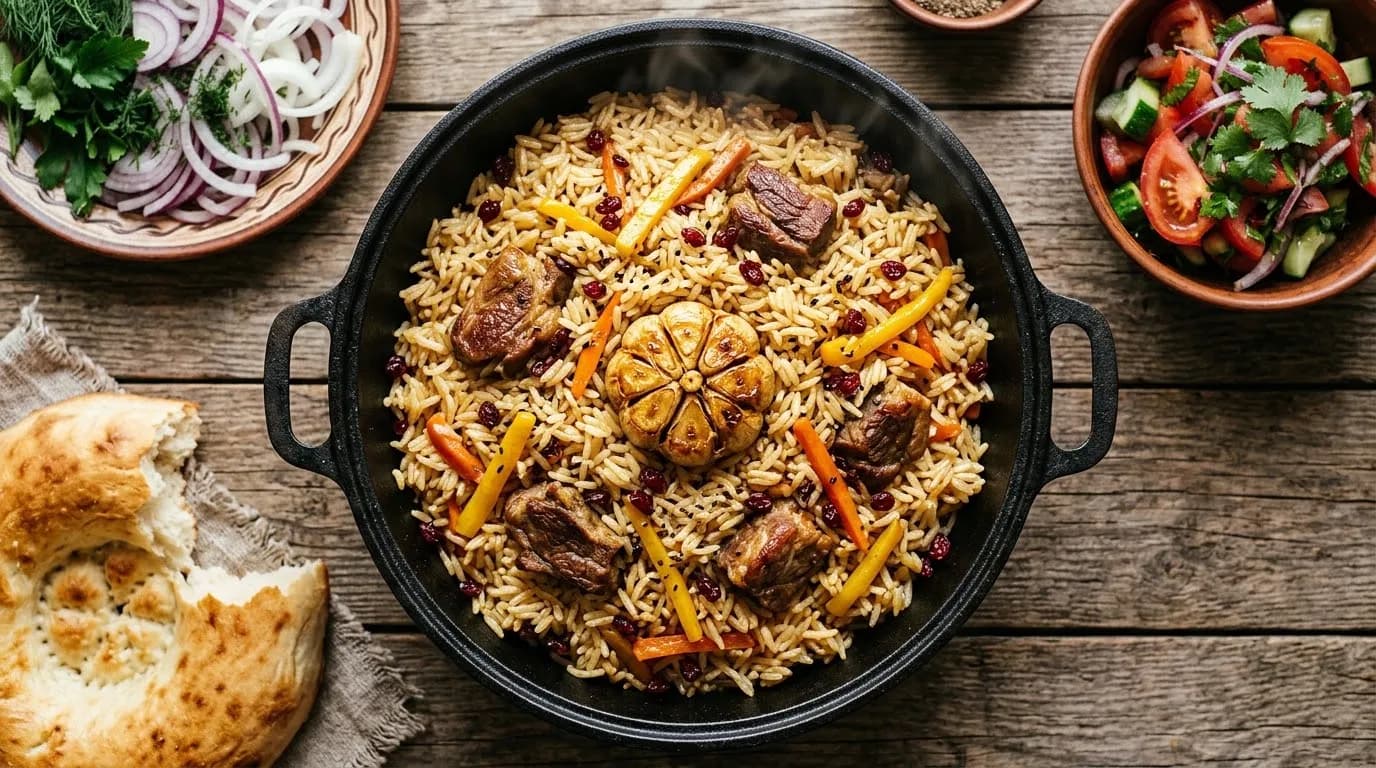
Fluffy plov: zirvak, the right rice and a kazan — step by step
The 1:1:1 meat, rice and carrot ratio, why carrots are cut by hand into batons, how to make the zirvak and when to salt it, which rice to use and how to soak it, how much water to add and how to steam plov so it comes out fluffy rather than mushy.
Read the article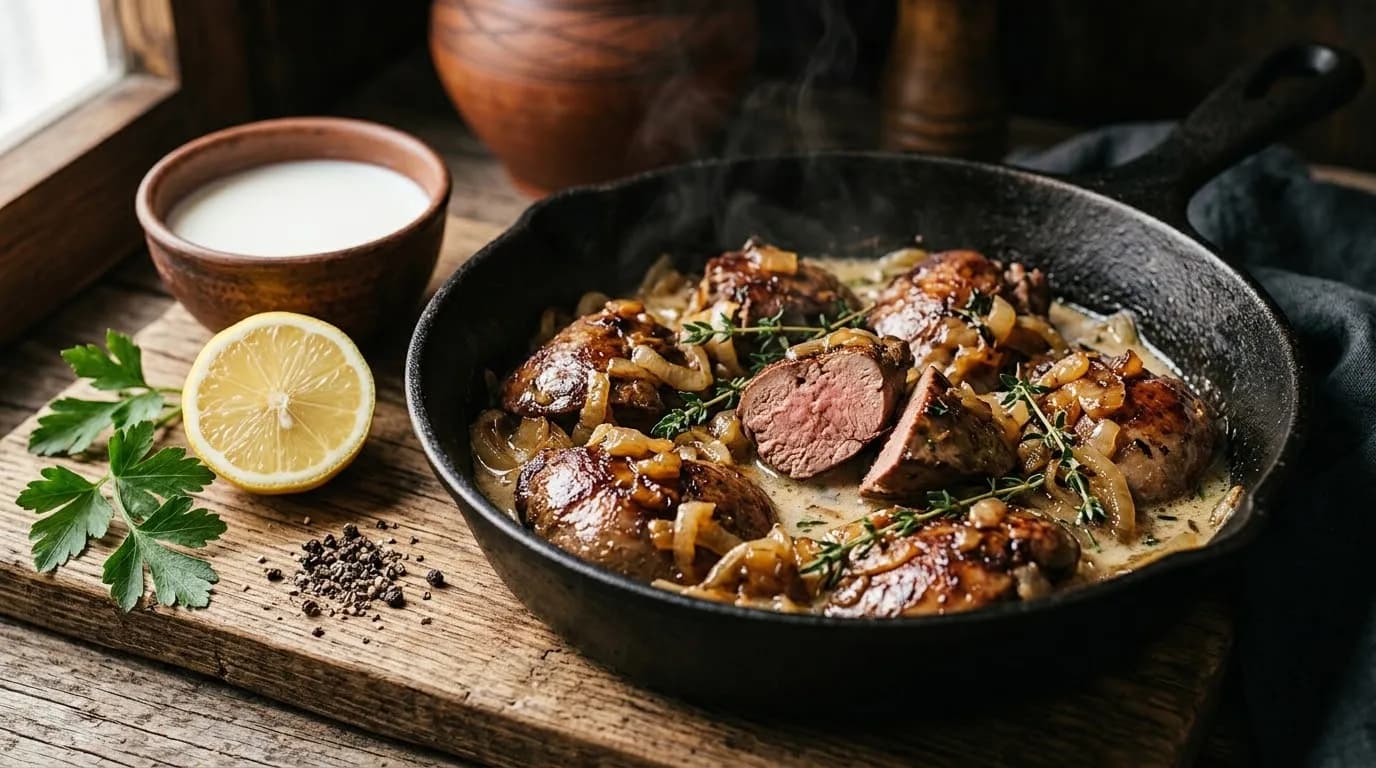
Liver and offal: tender liver without bitterness, pâté, tongue and heart
How to choose liver, remove the membrane and draw out bitterness with milk, why liver turns rubbery and when to salt it, how long to fry chicken and beef liver. Silky pâté, tongue, heart, gizzards and kidneys — how long to boil and braise them, plus important safety rules.
Read the article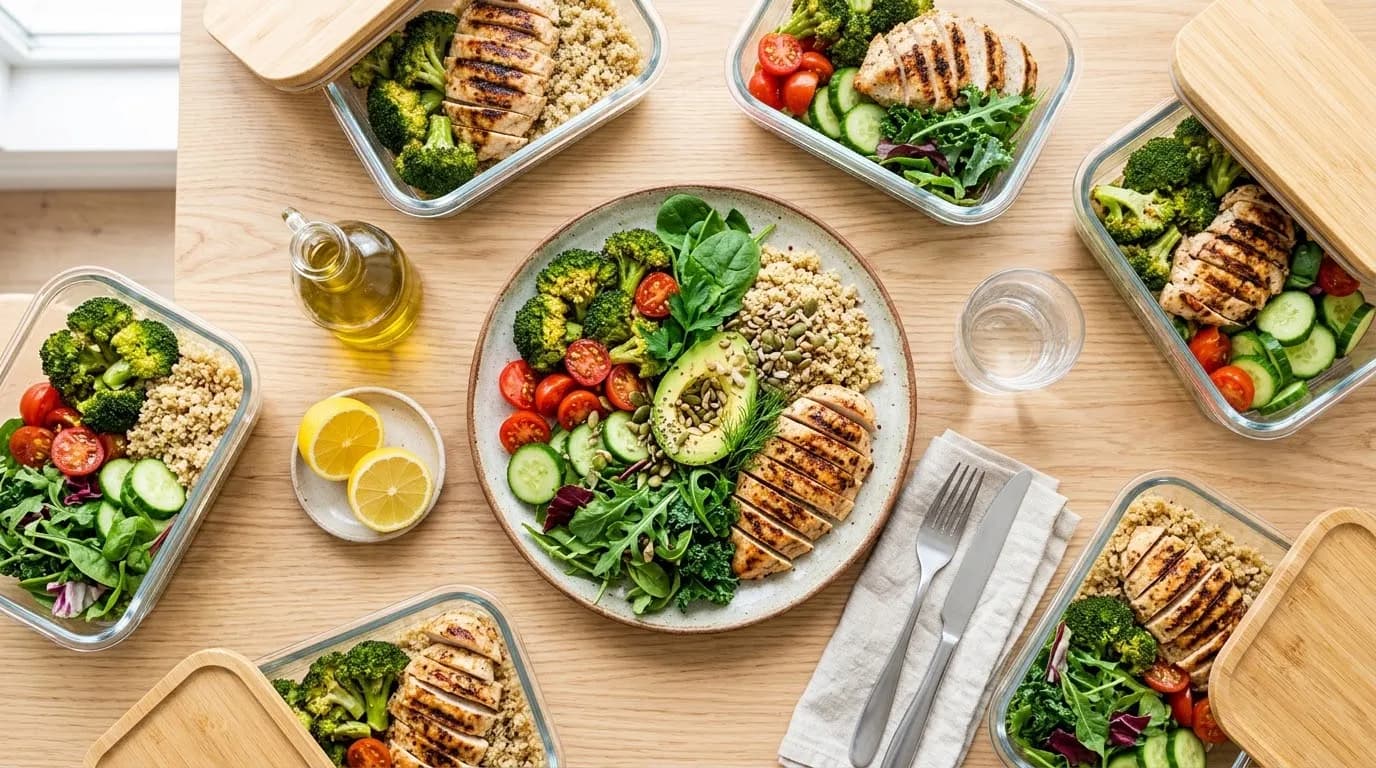
Healthy cooking without the boredom: lighter food that still tastes good
Cooking methods that save oil, where hidden calories lurk, healthier swaps for mayonnaise, cream and sugar, the plate rule, how much protein each meal needs and how to use less salt without losing flavour. No strict diets or bans.
Read the article