Liver and offal: tender liver without bitterness, pâté, tongue and heart
How to choose liver, remove the membrane and draw out bitterness with milk, why liver turns rubbery and when to salt it, how long to fry chicken and beef liver. Silky pâté, tongue, heart, gizzards and kidneys — how long to boil and braise them, plus important safety rules.
Why cook offal
Liver, heart, tongue and gizzards are among the most nutritious and yet inexpensive foods. Liver is rich in iron, vitamin A, B12 and folate; heart in protein and iron with little fat.
Many people dislike liver because of bitterness and a tough, rubbery texture. Both problems are easy to solve if you know a few rules.
How to choose liver
- Colour: beef is red-brown, pork darker with a grainy surface, chicken an even brown-burgundy, calf's liver paler than beef.
- The surface is smooth, glossy and springy, with no stains or slime.
- The smell is fresh and slightly sweet. A sour or ammonia smell means it isn't fresh.
- Calf's and chicken liver are tender and hardly bitter. Beef and pork liver are firmer and need preparation.
- Frozen liver shouldn't have a thick layer of ice or signs of refreezing.
Preparation: membrane, ducts, milk
Beef and pork liver are covered in a thin membrane. Leave it on and it shrinks when fried, making the pieces tough. Nick it at the edge and peel it off with your fingers. It's easier if the liver is slightly frozen or dipped in boiling water for 10–15 seconds.
Cut out large vessels and ducts — they're tough and bitter. On chicken livers, trim white sinews and any green bile stains: they're very bitter.
Soak sliced beef or pork liver in milk for 1–2 hours in the fridge. Milk draws out bitterness and makes the liver more tender. Then pat dry with kitchen paper.
The main secret: don't overcook
Liver turns tough and dry when it's fried too long. Its proteins tighten very fast, and an extra couple of minutes turns a tender slice into rubber.
- Slice about 1 cm thick.
- Heat the pan well and use a little oil. Dusting the pieces in flour gives a crust and holds in the juices.
- Beef and pork liver: 2–3 minutes per side.
- Chicken liver: 3–4 minutes per side, until fully cooked inside.
- Doneness: a cut releases clear, not bloody, juice and the inside is an even colour.
- Salt at the very end, on the plate or a minute before it comes off the heat: salt draws out moisture and toughens liver.
Liver in sour cream and alla veneziana
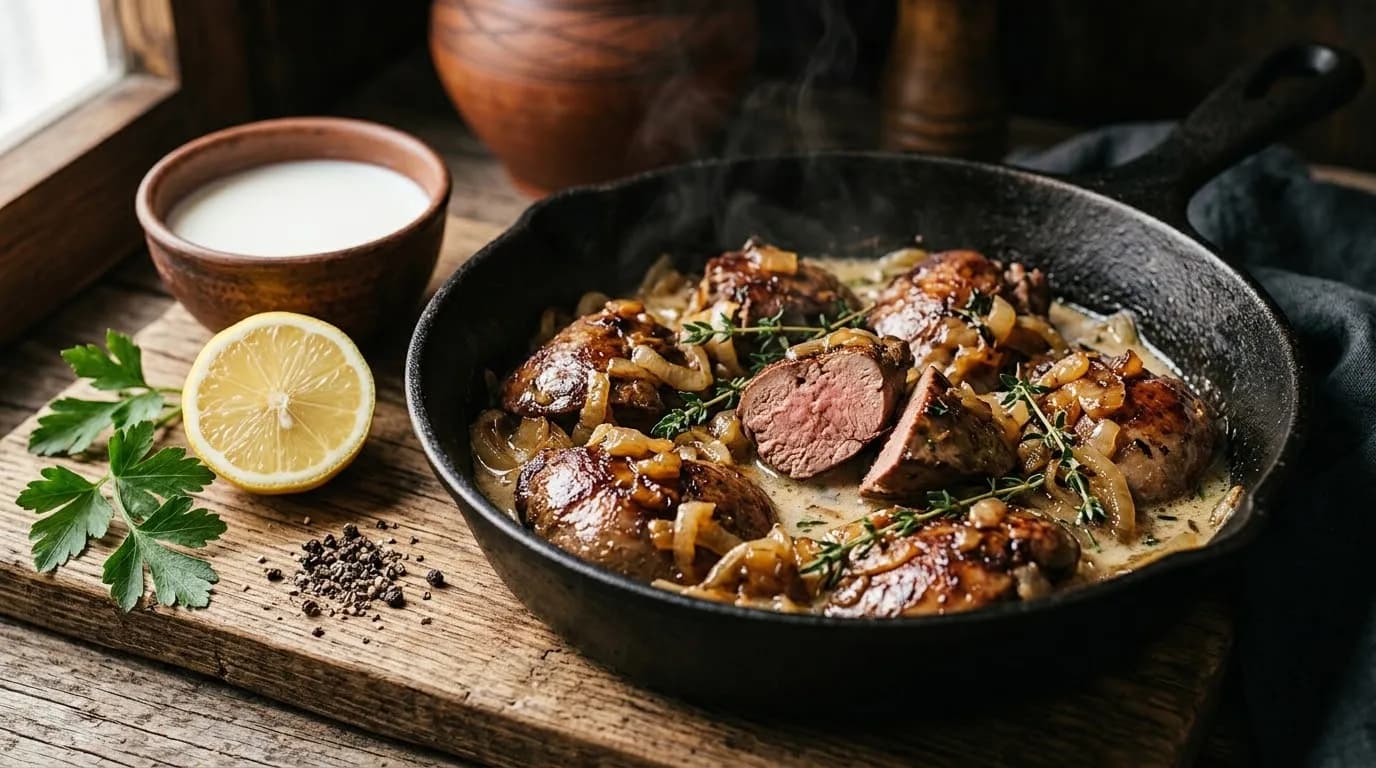
Liver in sour cream: fry the liver 2 minutes per side and remove. In the same pan fry onions until golden, add 200 g sour cream and 50 ml water and heat through. Return the liver and simmer 3–4 minutes on low heat. Salt at the end.
Alla veneziana: slowly cook 500 g thinly sliced onions in butter for 20–25 minutes until soft and golden. Add thin slices of calf's or beef liver, fry 1–2 minutes over high heat, add 2 tbsp white wine or balsamic vinegar, season and scatter with parsley.
Silky pâté
For 500 g chicken livers: 1 onion, 1 carrot, 100 g butter, 50–100 ml cream, salt, pepper, a pinch of nutmeg and 1 tbsp brandy if you like.
- Soften the finely chopped onion and carrot in half the butter for 10 minutes.
- Add the livers and fry 6–8 minutes until cooked with no pink inside. Add the brandy and cook it off.
- Blend everything with the cream and remaining soft butter until smooth. For a perfect texture, push through a sieve.
- Season, spoon into jars and cover with a thin layer of melted butter — it stops the pâté darkening.
- Chill for at least 3–4 hours. It keeps 3–4 days in the fridge.
Tongue
Tongue is one of the most tender cuts of offal. Rinse it, cover with cold water, bring to the boil and skim. Simmer: beef tongue 2.5–3 hours, pork 1.5–2 hours, veal 1.5 hours. An hour before the end add onion, carrot, bay leaf and peppercorns; salt 30 minutes before.
Plunge the cooked tongue straight into iced water for 1–2 minutes — the skin peels off easily with your fingers. If you don't peel it hot, it sticks fast later.
Slice thinly across and serve with horseradish and mustard, in aspic or in salads. Keep it in its stock in the fridge for 3–4 days.
Heart, gizzards and kidneys
- Heart: remove vessels, fat and blood clots and slice. Braise beef heart 1.5–2 hours until tender, pork heart 1–1.5 hours, chicken hearts 30–40 minutes. Excellent in a sour cream or tomato sauce.
- Chicken gizzards: peel off the yellow lining and fat and rinse. Boil for 30–40 minutes, then braise with onion and sour cream for another 20–30 minutes — they turn tender.
- Kidneys: halve and remove the white ducts and fat. Soak for 2–3 hours in cold water, changing it every 30–40 minutes. Then bring to the boil, drain and repeat once more. That removes the distinctive smell. Then braise or fry.
Storage and safety
Offal spoils faster than ordinary meat. Keep raw liver, heart and kidneys in the fridge for no more than 1–2 days, or freeze them straight away — up to 3 months.
Thaw only in the fridge. Cook offal through, especially chicken, and don't leave cooked dishes at room temperature for more than 2 hours.
Questions and answers
Why is my liver bitter?+
Ducts, membrane or traces of bile (green stains on chicken liver) were left in. Remove them and soak beef or pork liver in milk for 1–2 hours.
Why is my liver tough?+
It was overcooked or salted at the start. Fry 2–3 minutes per side in a well-heated pan and salt at the very end.
What can replace milk for soaking?+
Kefir diluted half and half with water, or a weak brine (1 tsp salt per litre). Milk works best.
Can I freeze pâté?+
Yes, for up to 2 months in jars under a layer of butter. Thaw in the fridge. The texture becomes slightly less smooth — stir before serving.
How long to cook chicken hearts?+
No need to boil them separately: braise in sauce for 30–40 minutes. If cooking for a salad, 30 minutes after they come to the boil.
More kitchen secrets
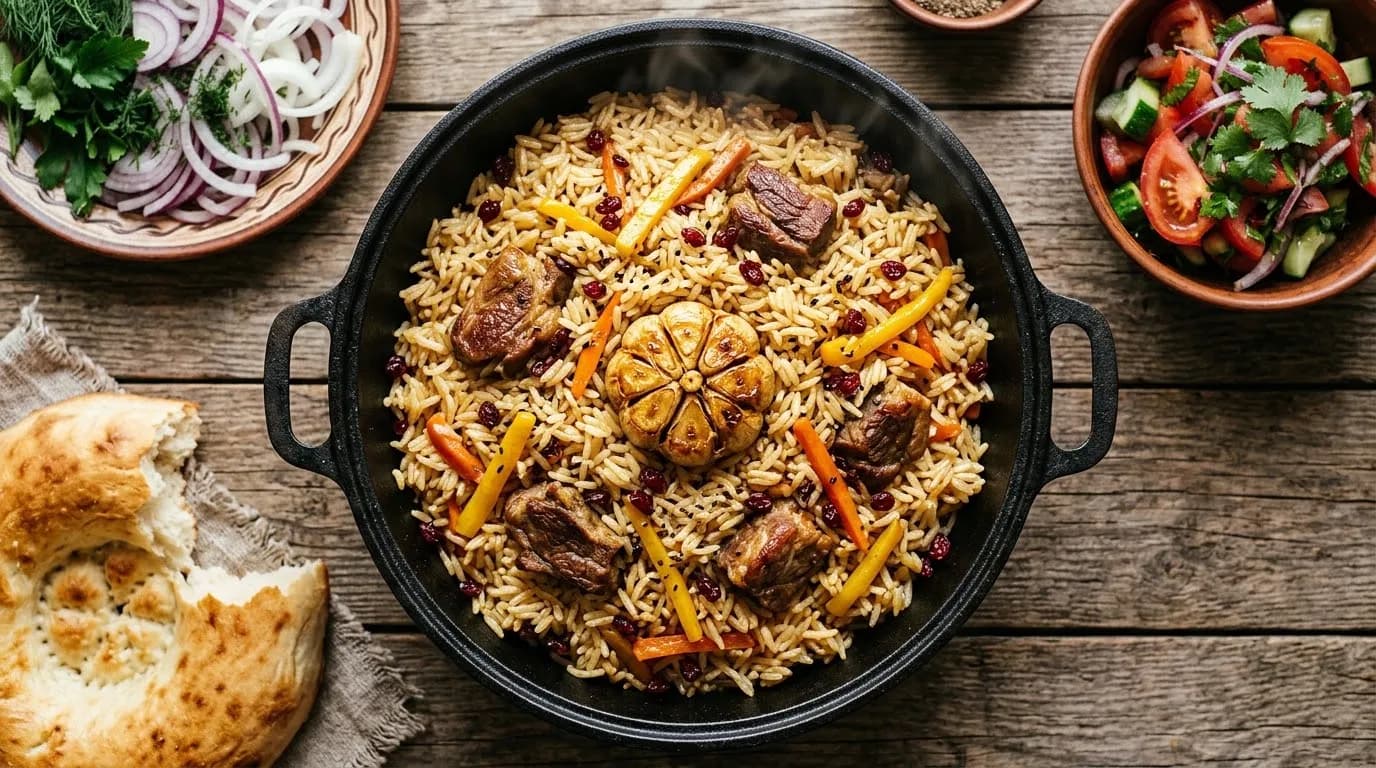
Fluffy plov: zirvak, the right rice and a kazan — step by step
The 1:1:1 meat, rice and carrot ratio, why carrots are cut by hand into batons, how to make the zirvak and when to salt it, which rice to use and how to soak it, how much water to add and how to steam plov so it comes out fluffy rather than mushy.
Read the article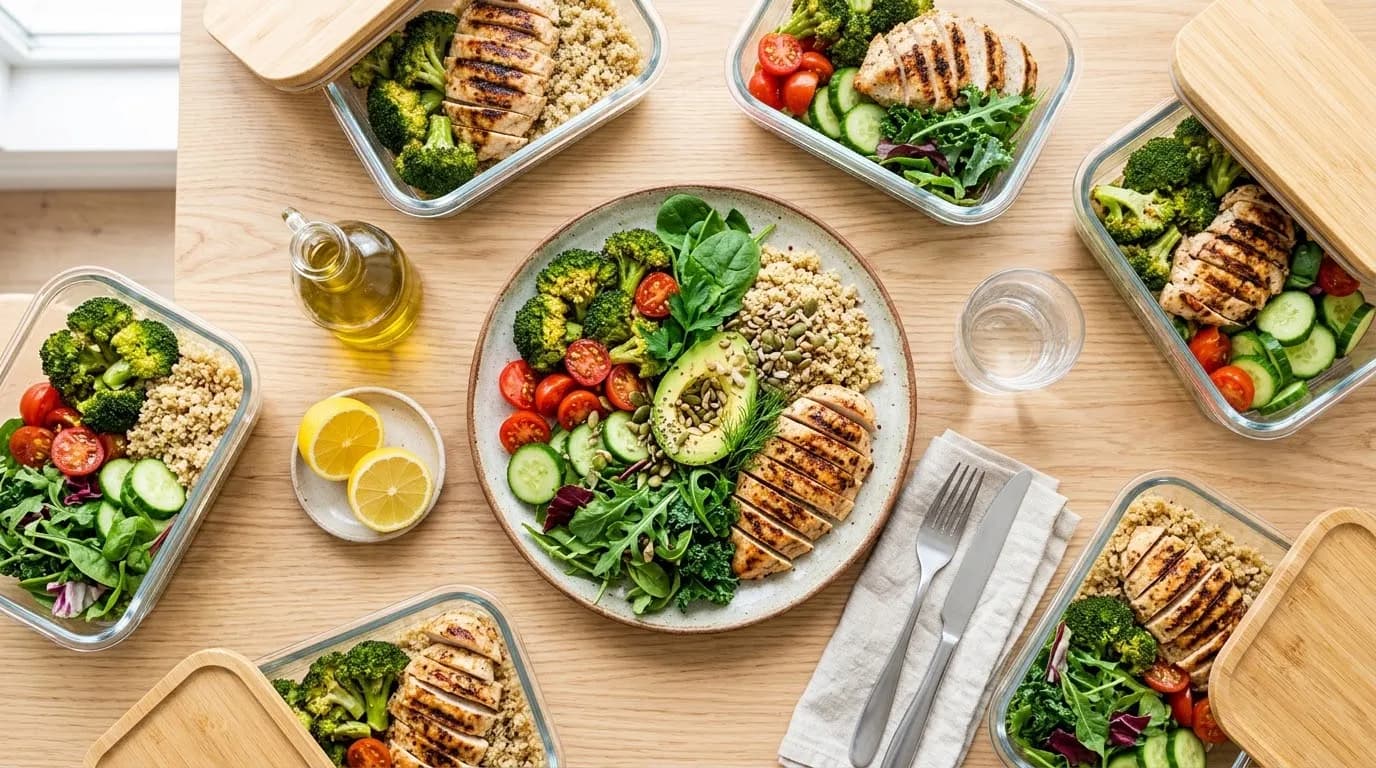
Healthy cooking without the boredom: lighter food that still tastes good
Cooking methods that save oil, where hidden calories lurk, healthier swaps for mayonnaise, cream and sugar, the plate rule, how much protein each meal needs and how to use less salt without losing flavour. No strict diets or bans.
Read the article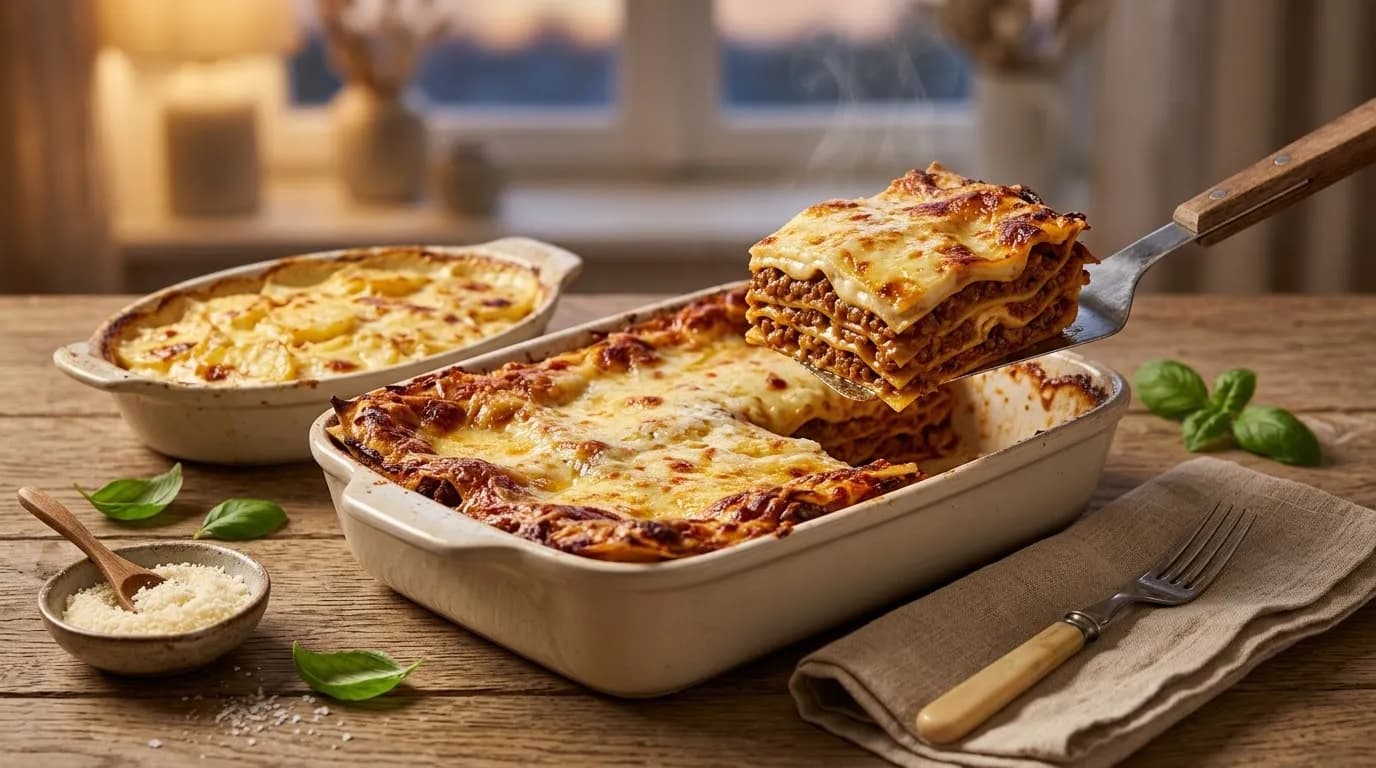
Casseroles, lasagna and gratin: no raw middle, no puddle underneath
Which vegetables to pre-cook, the ratio for an egg custard, a classic béchamel per litre of milk, lasagna and gratin dauphinois step by step, when to add the cheese, why a bake must rest before cutting and how to freeze it.
Read the article