Apples in the kitchen: which variety for what, baked apples and a charlotte with no soggy middle
Tart, sweet, firm and mealy: which apple to use for pies, baking, purée and salads, how to stop cut apples browning, why a charlotte sinks and goes soggy, stuffed baked apples, fruit leather and crisps, and how to keep a harvest until spring.
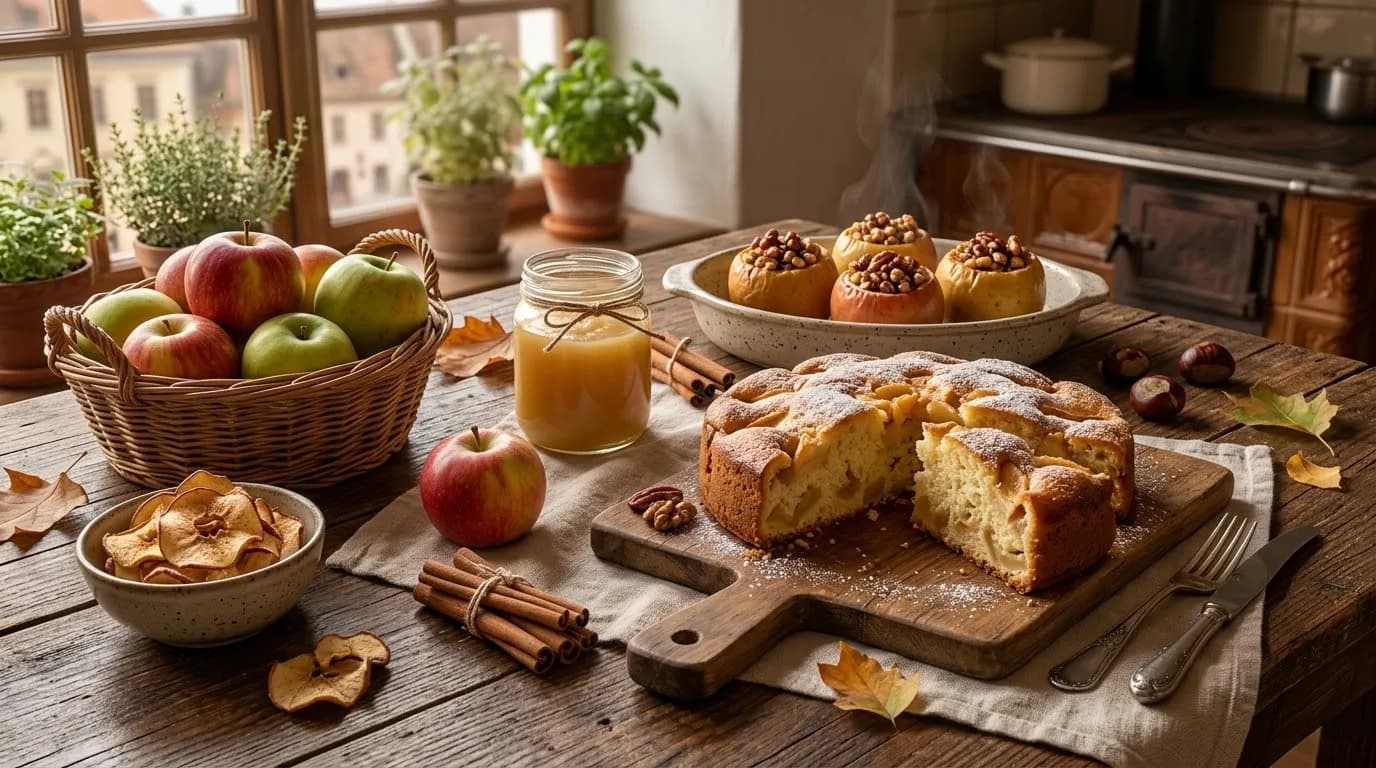
The two qualities that decide everything
Variety names differ from country to country, so it's more useful to look past the label at two things: acidity and flesh density.
Firm apples hold their shape when heated — use them in pies and tarts and for baking whole. Soft, mealy apples collapse quickly and make a silky purée or apple butter. Acidity gives a bright flavour and stops bakes being cloying.
- Firm and tart (Bramley, Granny Smith, Antonovka) — charlotte, tarts, baked apples, pickling.
- Firm and sweet-tart (Honeycrisp, Braeburn, Pink Lady, Jonagold) — pies, salads, strudel.
- Sweet and juicy (Gala, Fuji, Golden Delicious) — raw, in salads, smoothies, baby purée.
- Mealy (Red Delicious, McIntosh, early summer apples) — purée, apple butter, sauce for meat; in a pie they turn to mush.
Keeping cut apples from browning
Apples brown because an enzyme oxidises compounds in the flesh when it meets air. You can stop the reaction with acid, cold, or water that keeps the air out.
- Sprinkle slices with lemon juice or drop them into water with the juice of half a lemon per litre.
- A weak brine — ½ tsp salt per cup of water, 5 minutes, then rinse. No salty taste remains.
- For a pie, cut the apples at the last moment — they'll darken in the batter anyway, but it won't show.
- For a lunchbox, reassemble the slices into a "whole apple" and hold it with a rubber band: almost no air gets in.
Charlotte: why it sinks and goes soggy
A classic Russian charlotte is a butterless sponge batter: 4 eggs, 200 g sugar, 160 g flour and about 1 kg apples for a 22–24 cm tin. It all rests on the air in the whipped eggs, so the main mistakes are under-whipped eggs and too much apple juice.
Whip the eggs and sugar for 7–10 minutes until pale and thick enough to hold a trail. Fold in the flour by hand with a spatula in two or three additions, no mixer. Cut the apples into 1.5–2 cm cubes, and toss juicy ones with a spoon of flour or starch — the juice goes into that, not the batter.
Bake at 175–180 °C for 40–50 minutes and don't open the oven for the first 30. It's done when a skewer comes out dry and the crust springs back.
Baked apples
For baking you want firm, sweet-tart, medium-sized apples. Core them without cutting through the bottom so you get a "cup" for the filling. Score the skin around the middle so the apple doesn't burst.
Bake at 180 °C for 20–35 minutes depending on the variety and size. Add a little water to the dish so the juices don't burn. A finished apple is soft but still holds its shape.
- Cottage cheese with honey and raisins — the classic.
- Nuts, cinnamon and a knob of butter — the winter version.
- Oats with butter and brown sugar — like a crumble.
- Lingonberries or cranberries with sugar — for tartness.
Purée, apple butter and sauce for meat
For purée, peel and chop soft apples, add 50–100 ml water per kilo and simmer covered for 15–20 minutes until tender, then blend. Sugar is optional — it often isn't needed.
Apple butter is the same purée cooked down slowly until a spoon drawn across the pan leaves a clear track. That takes 1–2 hours, with more frequent stirring towards the end.
Unsweetened purée with a pinch of salt, mustard and thyme makes an excellent sauce for pork, duck and sausages.
Apples in savoury dishes
A tart apple freshens anything rich or sweet. In a salad it stands in for lemon, in braised cabbage it adds gentle acidity, and in a stuffing for duck or goose it soaks up the fat.
- Coleslaw with apple, carrot and spring onion.
- Pork roasted with apples and onions.
- Duck or goose stuffed with apples.
- Rocket with apple, walnuts and blue cheese.
- Sauerkraut fermented with tart apples.
Dried apples, crisps and fruit leather
For crisps, slice apples as thinly as you can — 1–2 mm, ideally on a mandoline — and dry them on baking paper at 90–100 °C for 1½–2 hours, turning once. They crisp up as they cool.
For fruit leather, cook apple purée down until thick, spread it 3–5 mm thick on baking paper and dry at 60–70 °C with the door ajar for 5–7 hours, until the sheet is no longer sticky.
How to store apples
Apples give off ethylene, a gas that speeds up ripening in everything around them. Keep them away from other fruit and vegetables, especially potatoes and leafy greens.
At home, the bottom drawer of the fridge is best: at 1–4 °C firm late varieties keep for 1–3 months. In a cellar, in crates with paper between layers, winter varieties keep until spring. Summer varieties don't keep long — use them straight away.
- Store only whole apples with no bruises and the stem attached.
- One rotten apple spoils its neighbours: sort through them every 2 weeks.
- Don't wash apples before storing — only before eating.
Questions and answers
Should I peel apples for a charlotte?+
Not necessarily. With the skin on, apples hold their shape better and add more aroma. Peel them if the skin is thick and tough.
Why is my charlotte raw in the middle?+
Too many juicy apples, under-whipped eggs or too low a temperature. Toss the apples with starch and bake longer, covering the top with foil if it's already brown.
Which apples are healthiest?+
The difference between varieties is small. What matters is eating the skin: that's where most of the fibre and antioxidants are.
Can I freeze apples?+
Yes — slices frozen on a tray, then bagged, for up to 8 months. They're soft after thawing, so use them for baking, purée and smoothies rather than snacking.
Why do baked apples split?+
Steam inside bursts the skin. Score the skin around the middle before baking and keep the oven at no more than 180 °C.
Try it in practice


More kitchen secrets
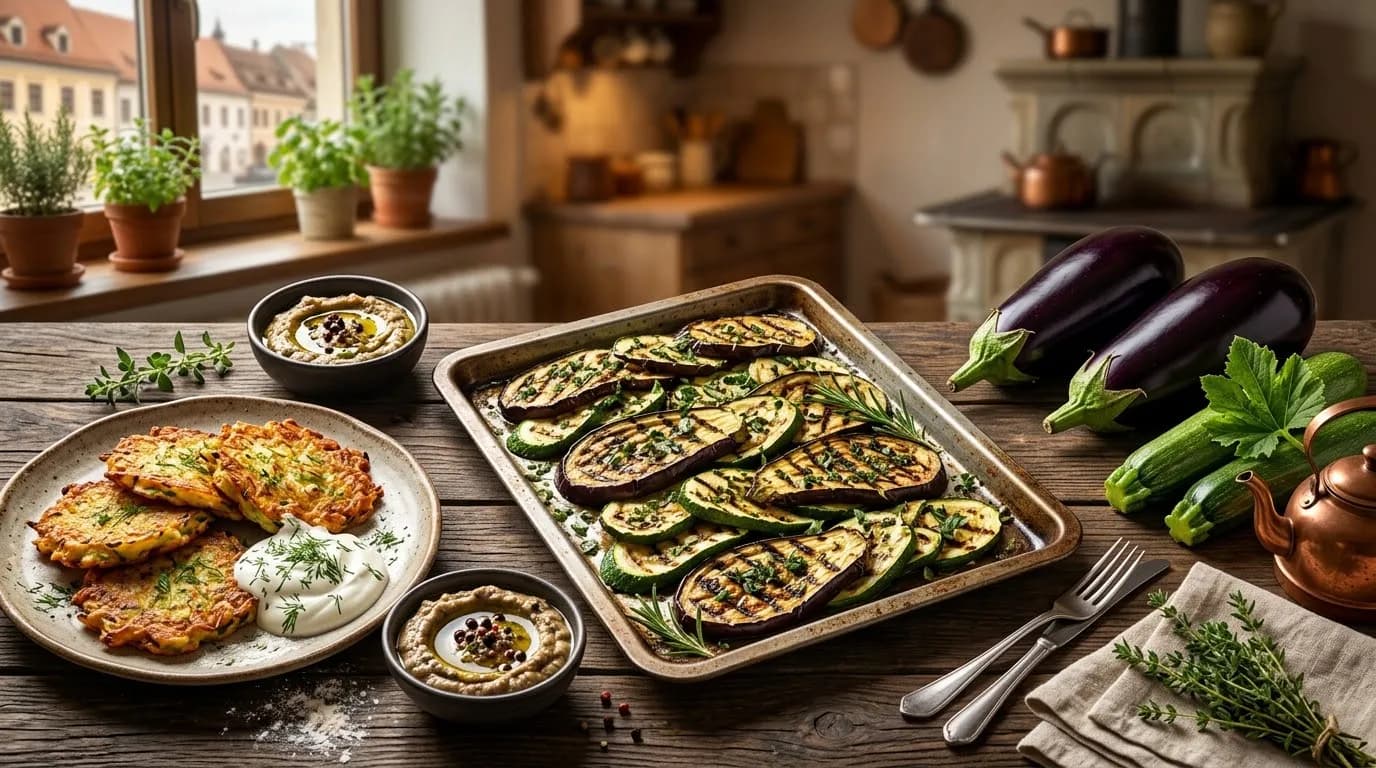
Courgettes and aubergines: no bitterness, no soaked-up oil and no watery mush
How to pick young ones, whether you really need to salt aubergines, why they soak up oil like a sponge and how to stop it, frying, roasting and grilling, courgette fritters that hold together, vegetable caviar and storage.
Read the article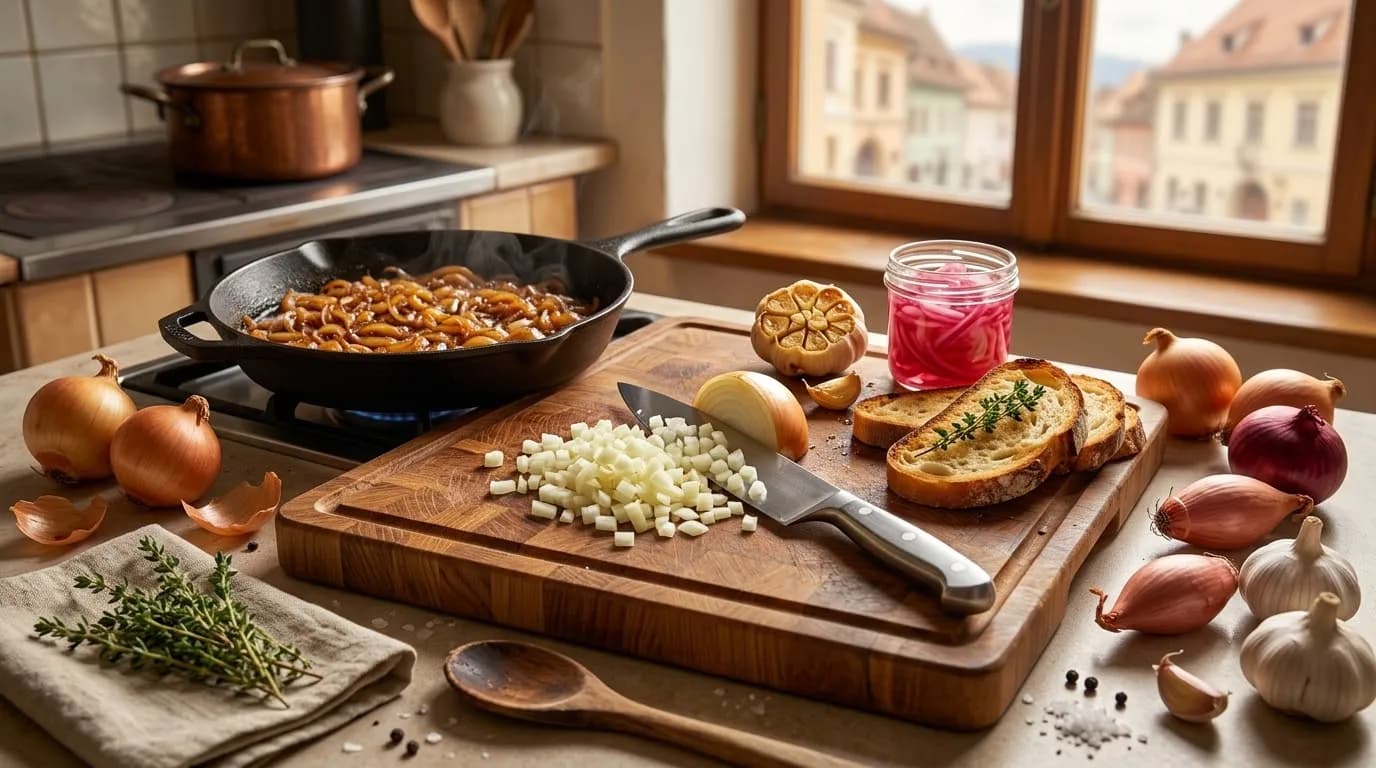
Onions and garlic: cutting without tears, caramelising and not burning them
Which onion for what, why onions make you cry and what actually helps, fast dicing, sweating, browning and true caramelisation in 40 minutes, garlic — crush or slice and when to add it, pickled onions, roasted garlic and storage.
Read the article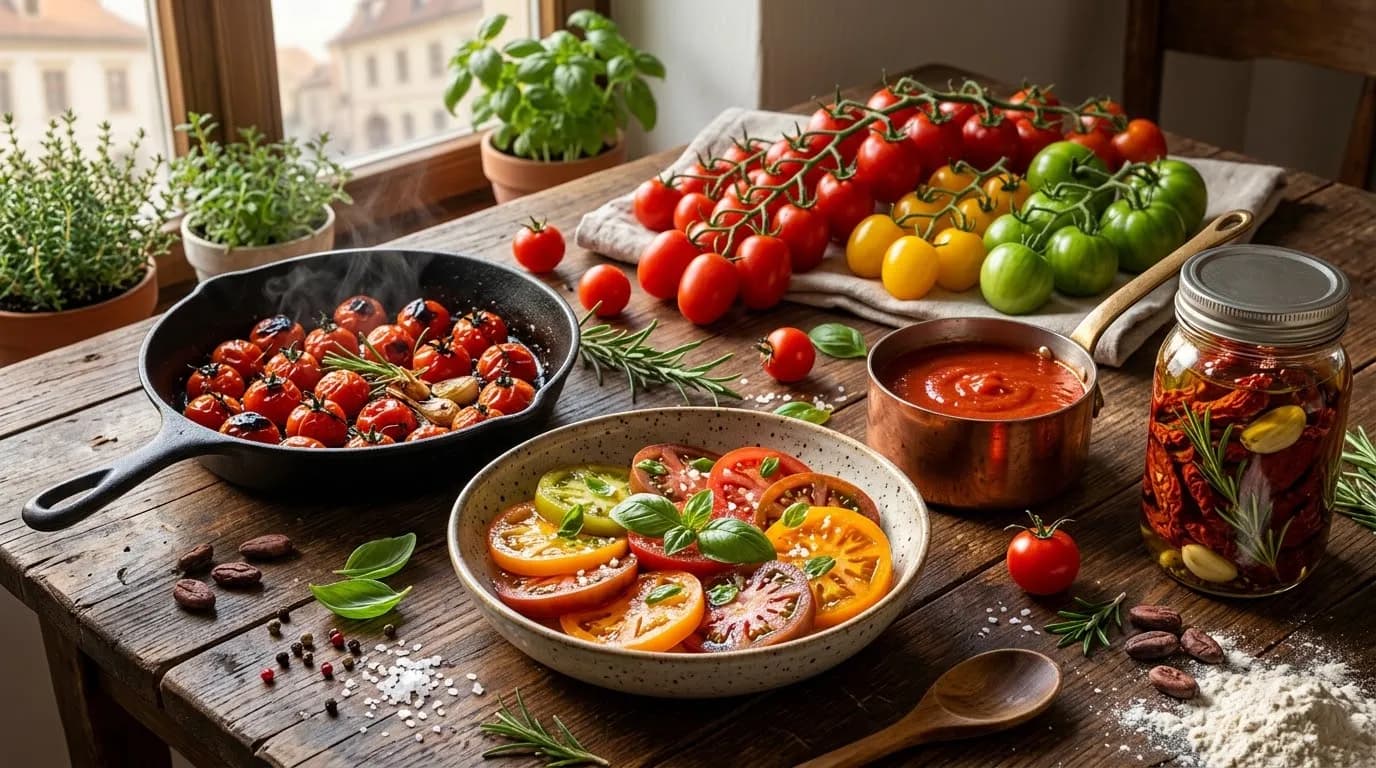
Tomatoes: how to pick tasty ones, peel them, make sauce and dry them
Which tomatoes for salad, sauce and roasting, why tomatoes don't belong in the fridge, how to peel them in a minute, sauce from fresh and tinned tomatoes, roasted cherry tomatoes, oven-dried tomatoes and what to do with green ones.
Read the article