Packed lunches: how to build a lunchbox that's tasty and safe by midday
A formula for a filling lunch in a box, which dishes survive a night in the fridge and which go soggy, how long food can stay unrefrigerated, microwaving without a cold centre, containers, and prepping a week's lunches in an hour and a half.
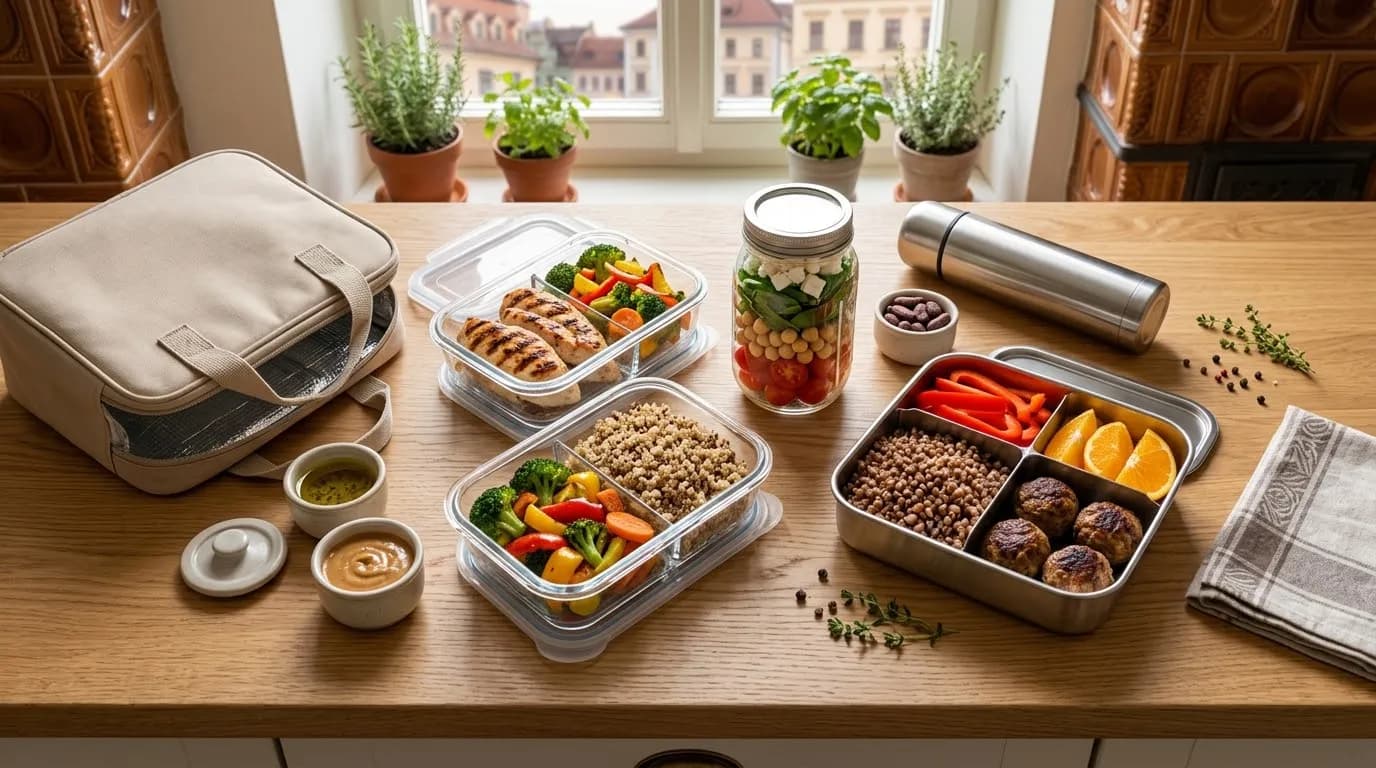
A formula for a filling lunch
A lunch that doesn't make you sleepy or send you looking for snacks an hour later is built from four parts.
- Protein (100–150 g): chicken, turkey, fish, eggs, tofu, beans, chickpeas, cottage cheese.
- Complex carbs (150–200 g cooked): buckwheat, brown rice, bulgur, quinoa, potatoes, wholegrain pasta.
- Vegetables (150–200 g): fresh, roasted or braised — the more colours, the better.
- Sauce or fat: dressing, hummus, yoghurt, nuts, avocado — without them food feels dry.
What survives a night in the fridge
Some dishes taste even better the next day — the flavours have time to meld. Others lose their texture.
- Great: stews, curries, braised meat, plov, buckwheat with meat, meatballs and patties, roast vegetables, bean and grain salads.
- Good: pasta with tomato sauce, roast chicken, omelette and frittata, syrniki.
- Poor: anything battered or breaded (goes soft), delicate dressed leaf salads, pasta in cream sauce (thickens and separates), steamed fish (dries out and smells when reheated).
Safety: the two-hour rule
Bacteria multiply fastest in the "danger zone" from 5 to 60 °C. Cooked food shouldn't sit at room temperature for more than 2 hours, or more than an hour when it's above 30 °C.
- Cool food quickly: divide it into shallow containers and refrigerate within 1–2 hours of cooking.
- If there's no fridge at work, use an insulated bag with an ice pack.
- A frozen bottle of water in the bag works as an ice pack, and you can drink it by lunchtime.
- Carry hot soup or porridge in a flask pre-warmed with boiling water.
- Keep cooked dishes in the fridge for no more than 3–4 days.
Reheating without a cold centre
Microwaves heat unevenly: the edges boil while the middle stays cold. That's not only unpleasant but unsafe — food should reach 75 °C all the way through.
- Arrange the food in a ring around the edge of the container, leaving the centre empty or thin.
- Cover with a lid left slightly open or a damp paper towel — the steam heats more evenly.
- Heat in two stages, stirring in between.
- Sprinkle rice and grains with a spoon of water before reheating so they don't dry out.
- Let it stand for a minute after heating: the heat evens out.
Containers
A good container saves more time than you'd think: it doesn't leak, reheats and washes up easily.
- Glass with an airtight lid — doesn't absorb smells and can be heated without the lid, but it's heavier.
- Plastic — light; for reheating choose microwave-safe ones and don't heat scratched containers.
- Divided containers — so the sides and sauce don't mix.
- Jars — for layered salads, overnight oats and soups.
Salads that don't go soggy
The secret is the order of layers: at the bottom whatever doesn't mind the dressing, delicate things on top. In a jar: dressing → sturdy vegetables (cucumber, carrot, pepper) → grains or pulses → protein → cheese → leaves.
For salads that last several days, choose a base that doesn't wilt: cabbage, kale, carrot, beetroot, pulses, bulgur, quinoa. Add lettuce and rocket on the day.
A week's prep in an hour and a half
You don't need five identical lunches. It's easier to cook "building blocks" and combine them differently each day.
- Oven: a tray of chicken or turkey and a tray of vegetables at the same time — 30–40 minutes.
- Hob: a big pot of grains and a dozen hard-boiled eggs.
- Sauces: 2 dressings in jars — say, a yoghurt one and a sesame-soy one.
- Prep: cucumbers, peppers, herbs — in a container lined with paper towel.
- Each morning: 3 minutes to assemble a box from different blocks.
What to freeze ahead
The freezer is a lunchbox's best friend. Portioned meals save the day when there's no time to cook.
- Soups and stews — in portion containers, up to 3 months.
- Patties, meatballs, cabbage rolls — up to 3 months.
- Plov, buckwheat with meat, chilli — up to 2 months.
- Thaw overnight in the fridge and pack it in the morning.
Questions and answers
Is it safe to reheat rice?+
Yes, if it was cooled quickly after cooking and kept in the fridge for no more than a day or two. Reheat it once, until piping hot throughout.
How long can a lunchbox go without a fridge?+
No more than 2 hours at room temperature and no more than an hour in hot weather. With an insulated bag and ice pack, up to 4–6 hours.
How do I stop a sandwich going soggy?+
Spread the bread thinly with butter or cream cheese — it acts as a barrier. Put tomatoes and cucumbers between the cheese and meat, not straight onto the bread.
What if there's no microwave at work?+
Grain and bean salads, wraps, cold chicken, roast vegetables, syrniki — or something hot in a flask.
Can I eat food cold straight from the fridge?+
Yes, if it was cooked properly and kept cold. Many dishes — grain salads, roast vegetables, chicken — taste good cold.
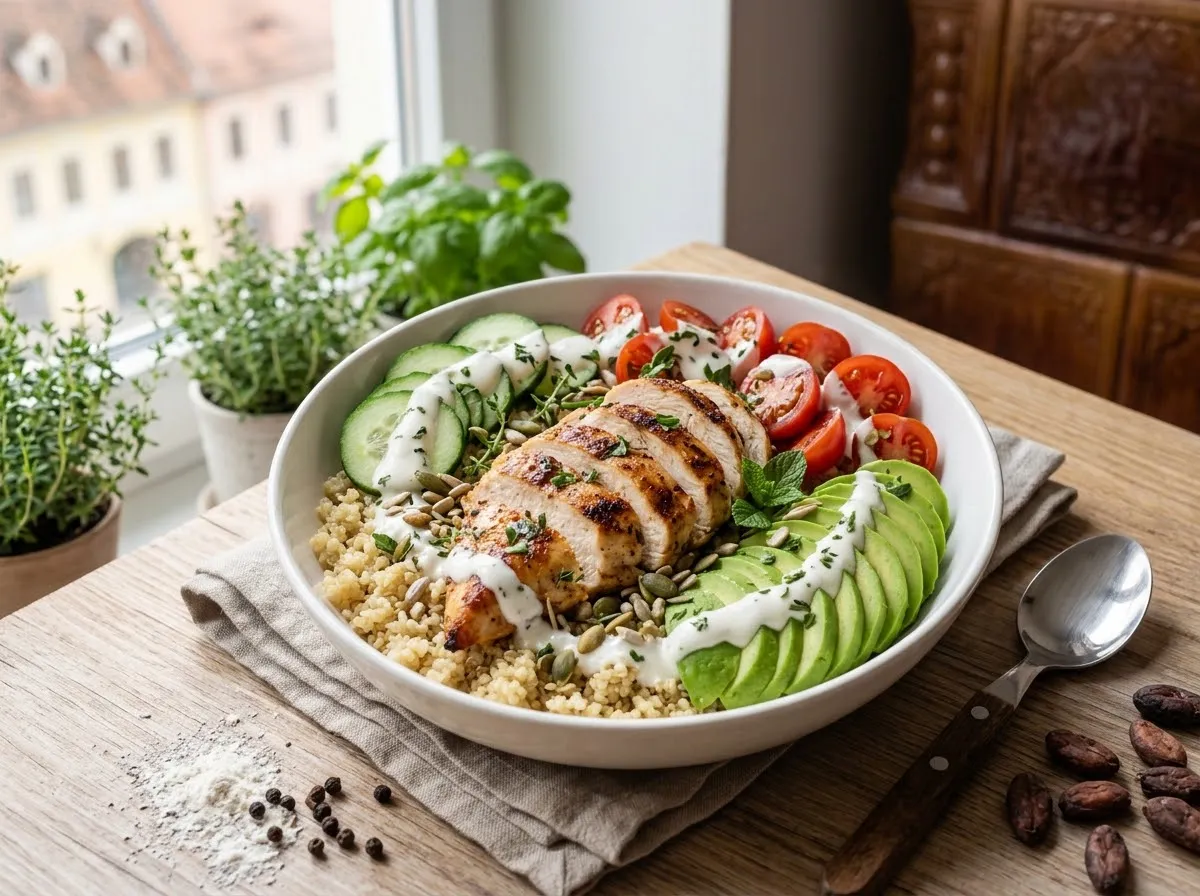
Try it in practice


More kitchen secrets
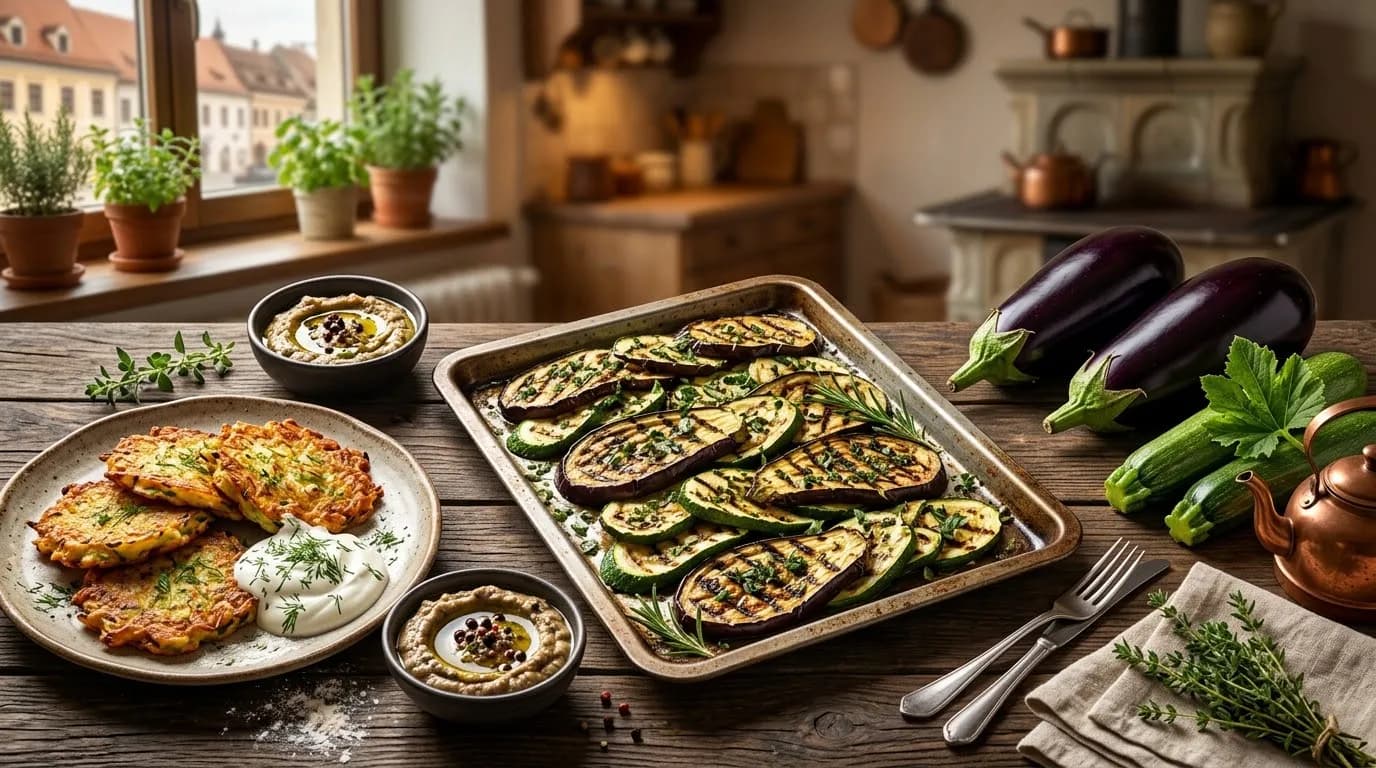
Courgettes and aubergines: no bitterness, no soaked-up oil and no watery mush
How to pick young ones, whether you really need to salt aubergines, why they soak up oil like a sponge and how to stop it, frying, roasting and grilling, courgette fritters that hold together, vegetable caviar and storage.
Read the article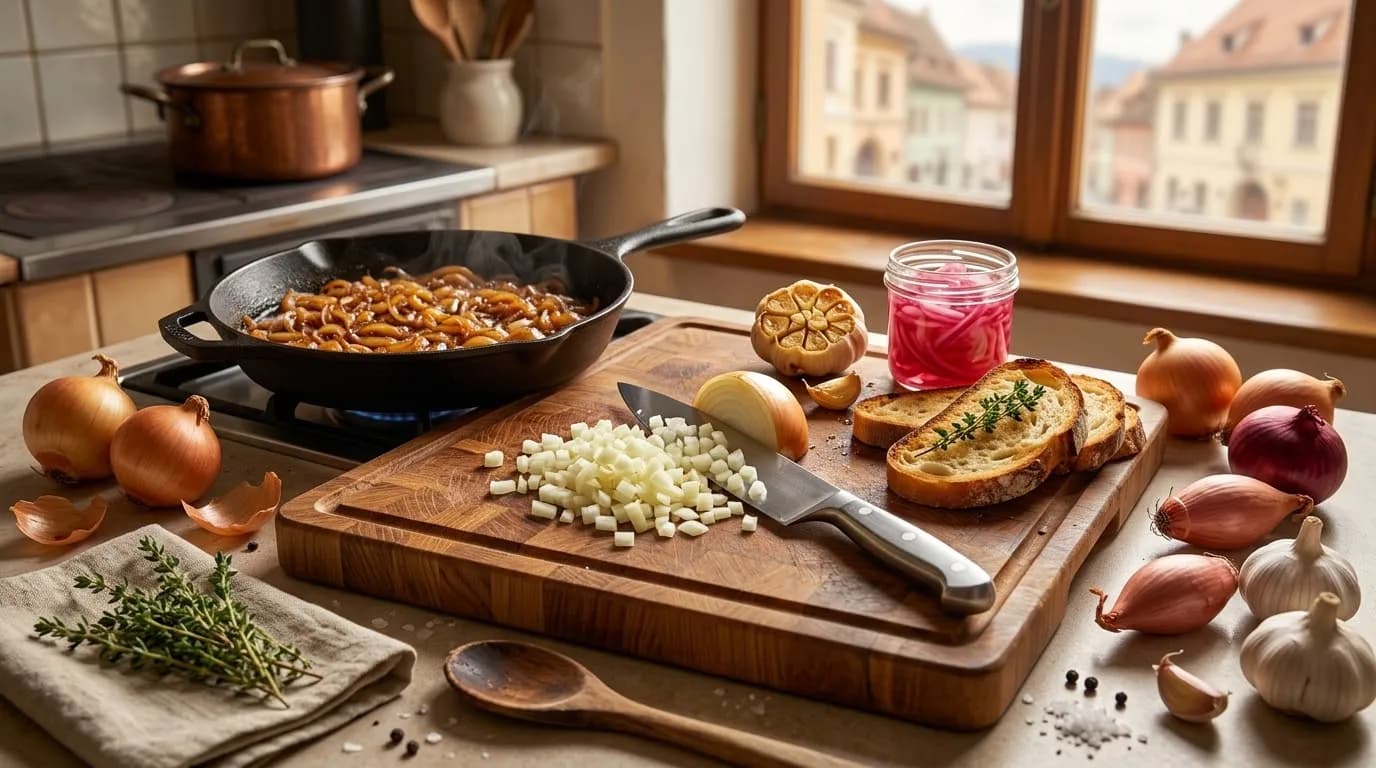
Onions and garlic: cutting without tears, caramelising and not burning them
Which onion for what, why onions make you cry and what actually helps, fast dicing, sweating, browning and true caramelisation in 40 minutes, garlic — crush or slice and when to add it, pickled onions, roasted garlic and storage.
Read the article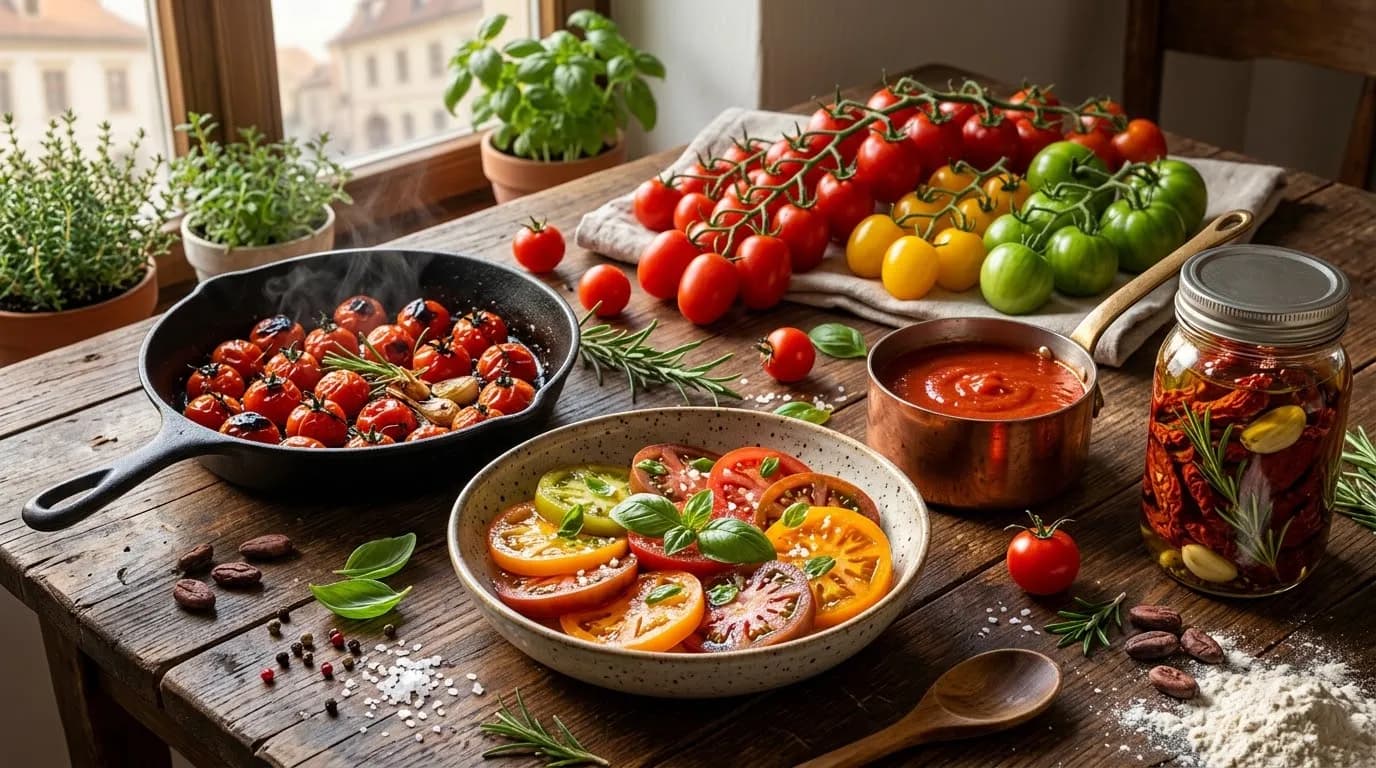
Tomatoes: how to pick tasty ones, peel them, make sauce and dry them
Which tomatoes for salad, sauce and roasting, why tomatoes don't belong in the fridge, how to peel them in a minute, sauce from fresh and tinned tomatoes, roasted cherry tomatoes, oven-dried tomatoes and what to do with green ones.
Read the article