Caramel and sugar syrups: salted caramel, glazes and why sugar crystallises
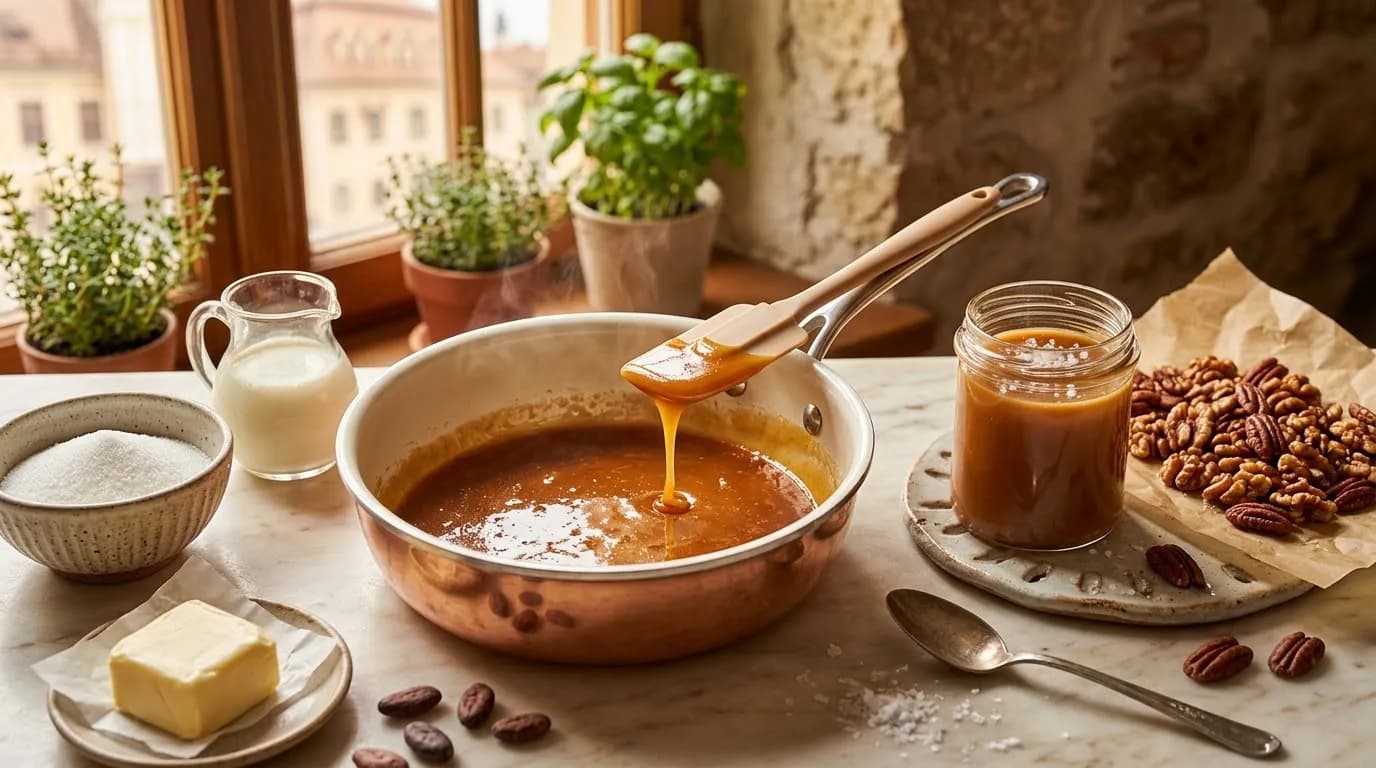
Dry and wet caramel, the stages of cooked sugar by temperature, how to stop syrup crystallising, salted caramel with cream, soaking syrup for cakes, a honey-garlic glaze for wings, caramelised nuts and staying safe with hot sugar.
Safety first
Molten sugar reaches 170–190 °C and sticks to skin — caramel burns are among the worst in a home kitchen. A few rules remove almost all the risk.
- Use a heavy pan with a light-coloured base: you can't see the caramel's colour in a dark one.
- Keep a bowl of cold water nearby — if a drop lands on your hand, plunge it straight in.
- Add cream and butter to hot caramel carefully and at arm's length: it will foam up violently.
- Never taste caramel from the pan with a finger or spoon.
- Keep children and pets away from the stove.
Dry and wet caramel
Dry method: spread the sugar evenly in the pan and melt it over medium heat with no water. It's quick but needs attention: the edges darken before the centre. Don't stir with a spoon — swirl the pan so the melted sugar spreads.
Wet method: add water to the sugar — about a third of its weight — and boil the syrup until the water evaporates and the sugar starts to colour. It's slower but more even and easier for beginners.
Colour is your main guide: pale gold caramel is sweet and mild, amber has a slight bitterness and depth. Dark brown and smoky is already bitter — start again.
Why sugar crystallises
If the syrup suddenly clouds and turns to white sand, it has crystallised. Any "seed" can set it off: an undissolved grain of sugar on the side, a speck of dust, stirring with a spoon.
- Brush the sides of the pan with a wet pastry brush to wash crystals down.
- Don't stir a wet syrup once it boils — just swirl.
- Add an "interfering agent": 1 tbsp glucose syrup or honey, or ¼ tsp lemon juice per 200 g sugar — they stop crystals growing.
- Cover the pan with a lid for a minute after it boils: the steam washes crystals off the sides.
The stages of sugar syrup
As the water boils off, the syrup's temperature rises and its texture once cooled changes. A sugar thermometer is the most accurate guide.
- 103–105 °C — thread: soaking syrup and glazing fruit.
- 110–112 °C — thick thread: the base for Italian meringue and syrup-based buttercream.
- 115–118 °C — soft ball: fudge, fondant, soft toffees.
- 121–124 °C — hard ball: nougat, marshmallows.
- 150–155 °C — hard crack: boiled sweets, brittle.
- 160–180 °C — caramel: from light to deep amber.
Salted caramel sauce
You need: 200 g sugar, 60 ml water, 150 ml double cream, 50 g butter, ½–1 tsp sea salt.
Make a wet caramel to amber. Take it off the heat and pour in the warm cream in a thin stream, stirring hard with a spatula — it will bubble up. Return to low heat for 1–2 minutes to dissolve any set lumps, then stir in the butter and salt.
The hot sauce looks thin but thickens as it cools. It keeps in a jar in the fridge for up to 3 weeks; warm it in a bain-marie before serving.
- The cream must be warm: cold cream causes violent bubbling and lumps.
- If the sauce is too thick, add a spoon of cream; if too thin, simmer a couple more minutes.
Syrup for soaking sponges
The basic ratio is 1:1: 100 g sugar to 100 ml water. Bring to the boil to dissolve the sugar, cool and flavour it: vanilla, lemon zest, coffee, or a spoon of brandy or liqueur.
A moist sponge needs about 50–70 ml syrup per 22 cm layer. Brush warm syrup onto a cold sponge, or the other way round — but never hot onto hot, or the sponge goes soggy.
Glazes for meat, poultry and vegetables
A sweet glaze gives meat a gloss and a caramelised crust. The base is sugar, honey or syrup, plus something salty (soy sauce), something sour (vinegar, lemon) and aromatics (garlic, ginger, chilli).
The main rule is to apply the glaze in the last 10–15 minutes of cooking. Sugar starts to burn at 170–180 °C, and a glaze brushed on at the start will blacken before the meat is done.
- Honey garlic: 3 tbsp honey, 2 tbsp soy sauce, 3 garlic cloves, 1 tbsp oil.
- Teriyaki: soy sauce, mirin or sugar, ginger and garlic — reduced until thick.
- Maple mustard: 2 tbsp maple syrup, 1 tbsp wholegrain mustard — for carrots and squash.
- Balsamic: balsamic vinegar with honey, reduced by half — for beetroot, onions and duck.
Caramelised nuts
Melt 100 g sugar with 2 tbsp water in a frying pan, add 200 g nuts and stir over medium heat. First the sugar will crystallise and coat the nuts in white — keep stirring until it melts again into golden caramel.
Tip the nuts onto baking paper in a single layer, separate them with a fork and leave to set. A pinch of salt or cinnamon at the end brightens the flavour.
Cleaning up after caramel
Don't chip away at set caramel — fill the pan with water and bring it to the boil. The sugar dissolves in a couple of minutes and the pan just needs rinsing. Spatulas and whisks come clean the same way.
Questions and answers
Why did my caramel seize into lumps when I added the cream?+
The cream was cold. Put the pan back on low heat and stir for 1–2 minutes — the lumps will dissolve.
Can I make caramel with brown sugar?+
Yes, but it's hard to judge doneness by colour because it starts dark. Go by smell and a thermometer: 170–175 °C.
Why did the glaze on my chicken turn black?+
It went on too early, or the oven was above 200 °C. Brush the glaze on 10–15 minutes before the end.
What can I use instead of glucose syrup?+
Honey, invert syrup or a few drops of lemon juice — all of them hold back crystallisation.
How long does salted caramel keep?+
In a clean closed jar in the fridge, up to 3 weeks. It also freezes in portions for 3 months.
Try it in practice


More kitchen secrets
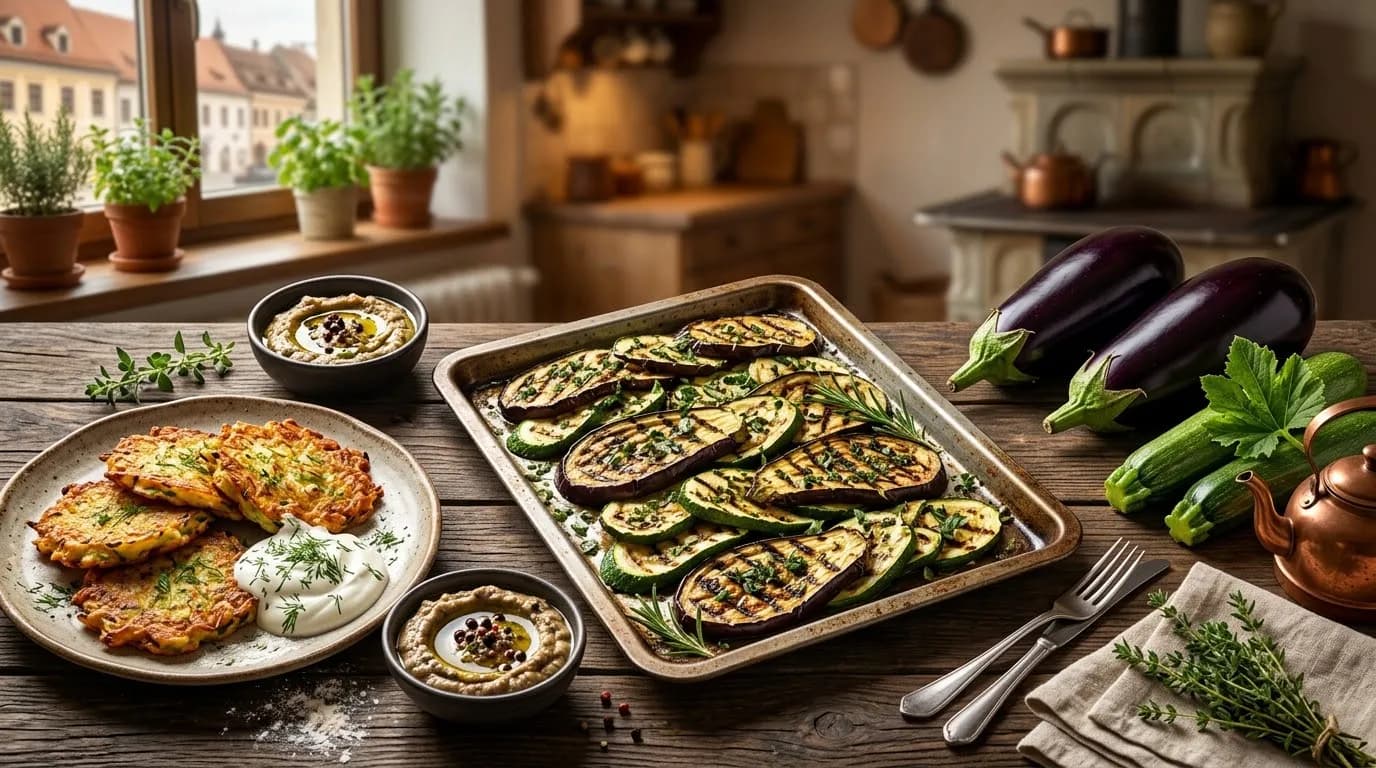
Courgettes and aubergines: no bitterness, no soaked-up oil and no watery mush
How to pick young ones, whether you really need to salt aubergines, why they soak up oil like a sponge and how to stop it, frying, roasting and grilling, courgette fritters that hold together, vegetable caviar and storage.
Read the article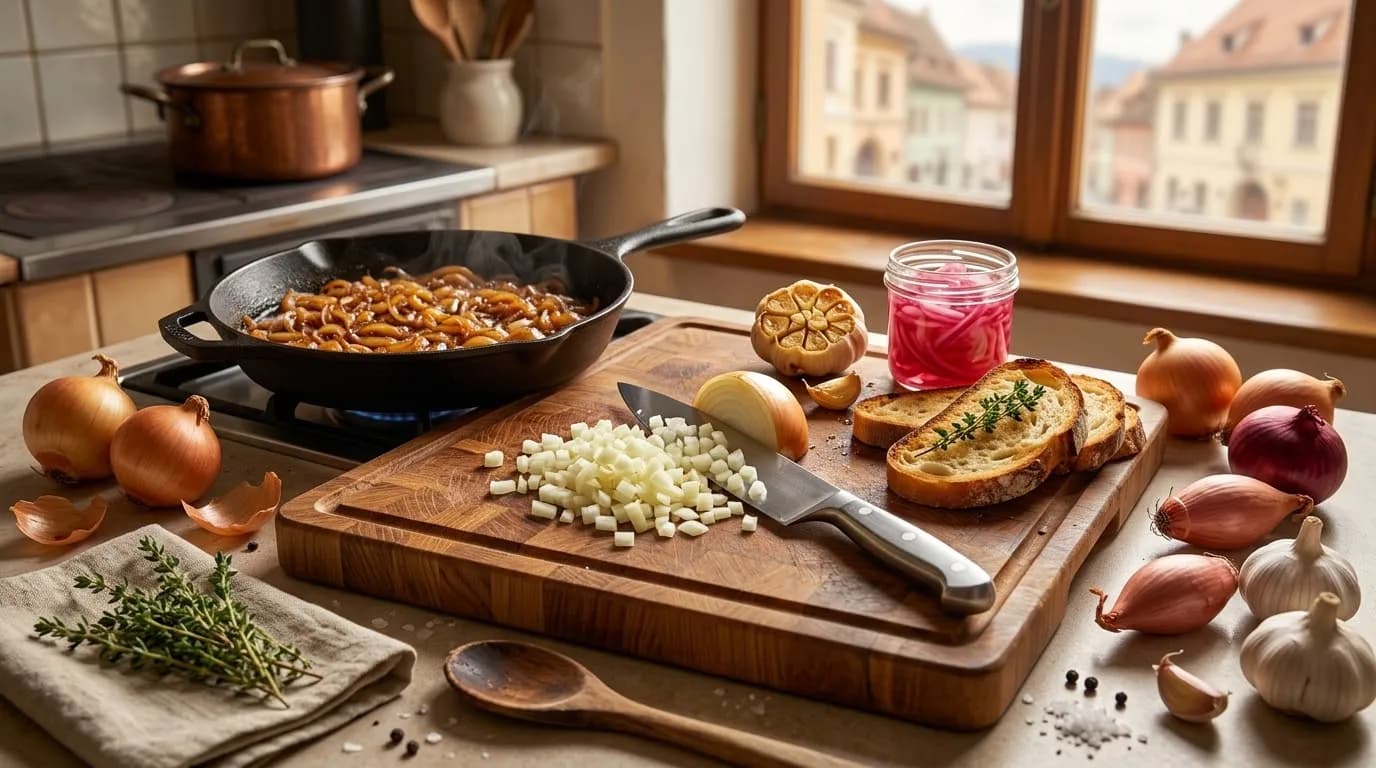
Onions and garlic: cutting without tears, caramelising and not burning them
Which onion for what, why onions make you cry and what actually helps, fast dicing, sweating, browning and true caramelisation in 40 minutes, garlic — crush or slice and when to add it, pickled onions, roasted garlic and storage.
Read the article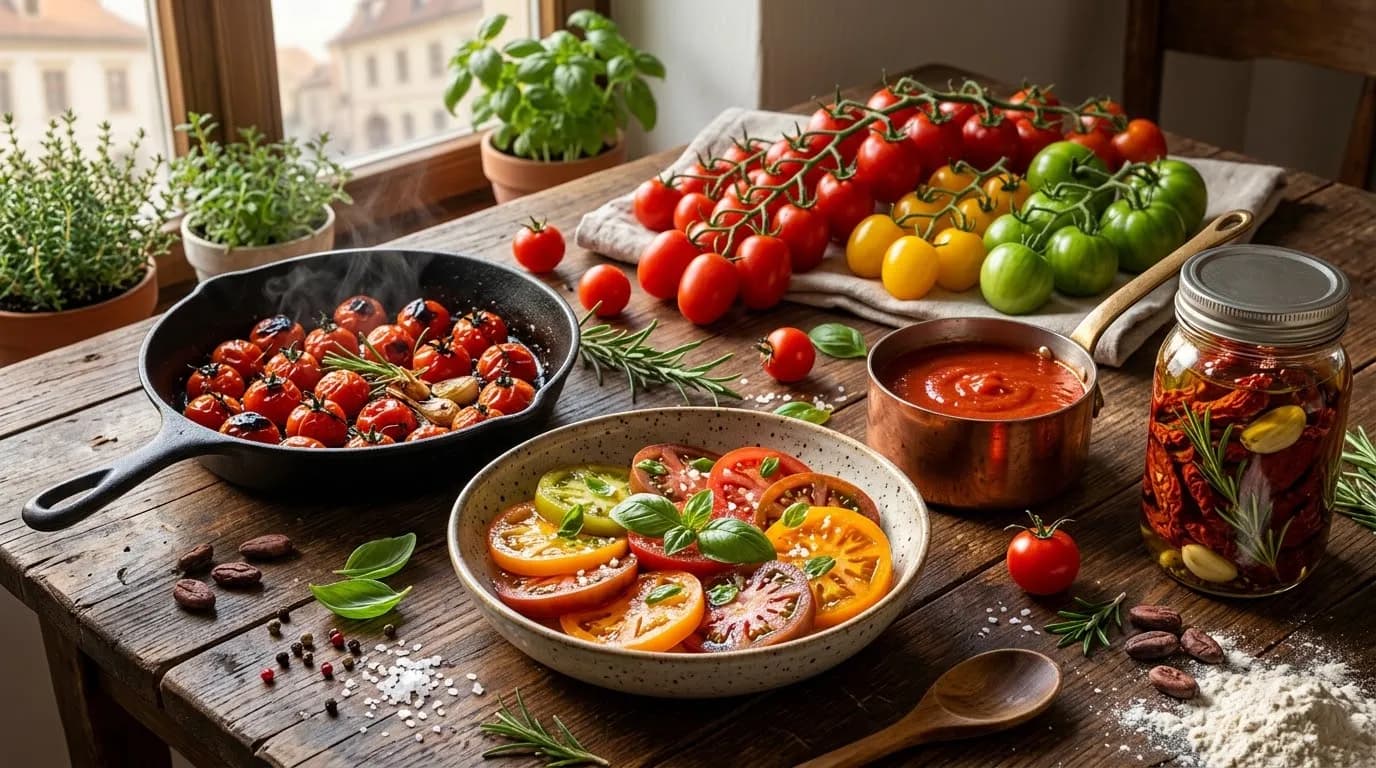
Tomatoes: how to pick tasty ones, peel them, make sauce and dry them
Which tomatoes for salad, sauce and roasting, why tomatoes don't belong in the fridge, how to peel them in a minute, sauce from fresh and tinned tomatoes, roasted cherry tomatoes, oven-dried tomatoes and what to do with green ones.
Read the article