How to build a salad without a recipe: a seven-part formula
A salad formula of base, body, protein, crunch, a sweet-sour accent, fat and dressing, why the leaves must be dry, how to salt tomatoes and tame raw onion, how much salad to make as a side or a main, and five proven combinations.
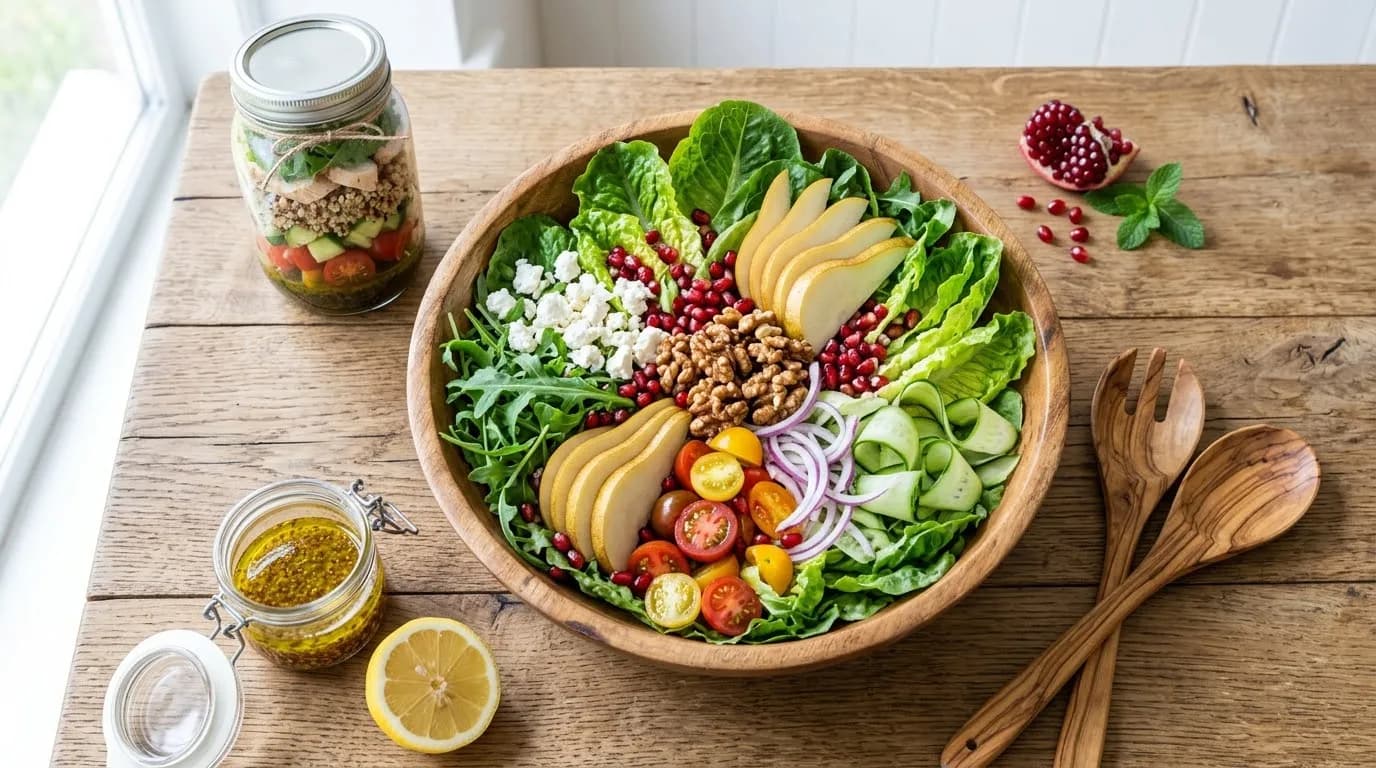
A seven-part formula
A good salad is almost always built to the same plan. You don't have to use every element, but the more you cover, the more interesting the result.
- Base — leaves: romaine, iceberg, rocket, spinach, cabbage, a mix.
- Body — vegetables: cucumber, tomatoes, peppers, carrot, radish, roast squash.
- Protein — chicken, egg, tuna, prawns, beans, chickpeas, cheese, tofu.
- Crunch — nuts, seeds, croutons, raw onion, apple, fresh cabbage.
- Sweet-sour accent — fruit, berries, dried fruit, pickled onion, capers, olives.
- Fat — avocado, cheese, olive oil, nuts.
- Dressing — ties it all together.
Contrasts: texture, temperature, taste
A salad of one texture gets tiresome fast. It's good when soft and crunchy meet on one fork: avocado and nuts, roast squash and rocket, cheese and raw onion.
Temperature contrast works too: warm chicken, roast vegetables or fried mushrooms on cold leaves. A salad like that feels like a proper meal.
Balance the flavours: salty (cheese, olives), sour (citrus, vinegar), sweet (fruit, honey), bitter (rocket, radicchio). Sweet softens bitter; sour freshens rich.
Leaves: dry and cold
Wet leaves are the main cause of a watery salad. An oil-based dressing won't cling to a wet surface and runs to the bottom, while the water dilutes the flavour.
Wash the leaves in cold water, dry them in a salad spinner or spread them on a towel and pat dry. If the leaves are limp, drop them into iced water for 10–15 minutes — they'll crisp back up.
- Tear large leaves by hand — knife-cut edges brown faster.
- Don't cut rocket or spinach at all.
- Keep washed, dry leaves in a container with a paper towel for up to 4–5 days.
Tomatoes, cucumbers and onion
Salt tomatoes 10 minutes before assembling and pour off the juice — the flavour gets brighter and the salad won't swim. Don't throw the juice away: add it to the dressing.
Cut large-seeded cucumbers lengthways and scoop out the centre with a spoon — that's where the water comes from.
Raw red onion turns milder if you slice it thinly and cover it with iced water for 10 minutes, or splash it with vinegar and a pinch of sugar and salt. The second option is a quick pickle that also adds an acidic note.
Dressing, and when to add it
The basic vinaigrette ratio is 3 parts oil to 1 part acid, plus salt, pepper and an emulsifier: a spoon of mustard or honey. Whisk with a fork or shake in a jar.
Dress delicate leaves right before serving: rocket and lettuce wilt within 5–10 minutes. Sturdy ones — cabbage, carrot, beetroot, beans — can and should be dressed ahead: 20–30 minutes lets them soak it up.
Don't use too much: the dressing should coat the leaves in a thin film, not pool at the bottom. Add half, toss, taste, and only then decide.
- Toss in a large bowl with your hands or two spoons, not in the serving dish.
- Season the salad, not just the dressing: a pinch of salt on the leaves just before serving.
- Add cheese and nuts on top after dressing — they keep their texture.
How much salad to make
A side salad is 150–200 g per person, about 50 g of it leaves. A main-course salad is 300–350 g and must include protein: 100–150 g chicken, fish, eggs or pulses.
To make a salad filling enough for lunch, add complex carbs: baked potato, quinoa, bulgur, buckwheat, beans or wholegrain croutons.
Five proven combinations
These combinations work almost every time — use them as a starting point and change them with the seasons.
- Rocket + pear + gorgonzola or feta + walnuts + balsamic with honey.
- Spinach + strawberries + goat's cheese + almonds + lemon dressing.
- Romaine + chicken + parmesan + croutons + Caesar dressing.
- Roast squash + quinoa + pomegranate + feta + pumpkin seeds.
- Cabbage + carrot + apple + spring onion + oil and vinegar dressing.
Salads to go, in a jar
A salad for work or a picnic is easy to layer in a tall jar. Order matters, from bottom to top: dressing, sturdy vegetables (cucumber, carrot, pepper), grains and pulses, protein, cheese, leaves on top. Pack nuts separately.
That way the leaves never touch the dressing and stay crisp for 2–3 days in the fridge. Before eating, shake the jar or tip everything into a bowl.
Common mistakes
Most disappointing salads are spoiled by the same few things.
- Wet leaves — the dressing runs off and the flavour is diluted.
- Dressing too early — delicate leaves wilt and go limp.
- Too many ingredients — the flavours blur together. Stick to 5–7 components.
- Everything cut to different sizes — no forkful gets the combination.
- No acid — the salad tastes flat and heavy.
- Cold tomatoes straight from the fridge — no aroma, no sweetness.
Questions and answers
How do I stop a salad going watery?+
Dry the leaves, salt tomatoes ahead and pour off the juice, scoop out the wet centre of cucumbers and dress just before serving.
Can I make salad ahead?+
Yes, if you keep the components separate: cut vegetables, dry leaves and dressing. Combine them a few minutes before serving. Cabbage and bean salads can be dressed in advance.
What can I use instead of mayonnaise?+
Greek yoghurt with mustard and lemon juice, sour cream with herbs, or an olive-oil vinaigrette.
Which oil is best for dressing?+
Extra-virgin olive oil for Mediterranean salads, unrefined sunflower oil for homely vegetable salads, sesame oil (a little, in a blend) for Asian ones.
Why is rocket bitter?+
Bitterness is its natural flavour, and stronger in large, older leaves. Soften it with something sweet — pear, honey in the dressing, balsamic — or mix it with milder lettuce.
Try it in practice

More kitchen secrets
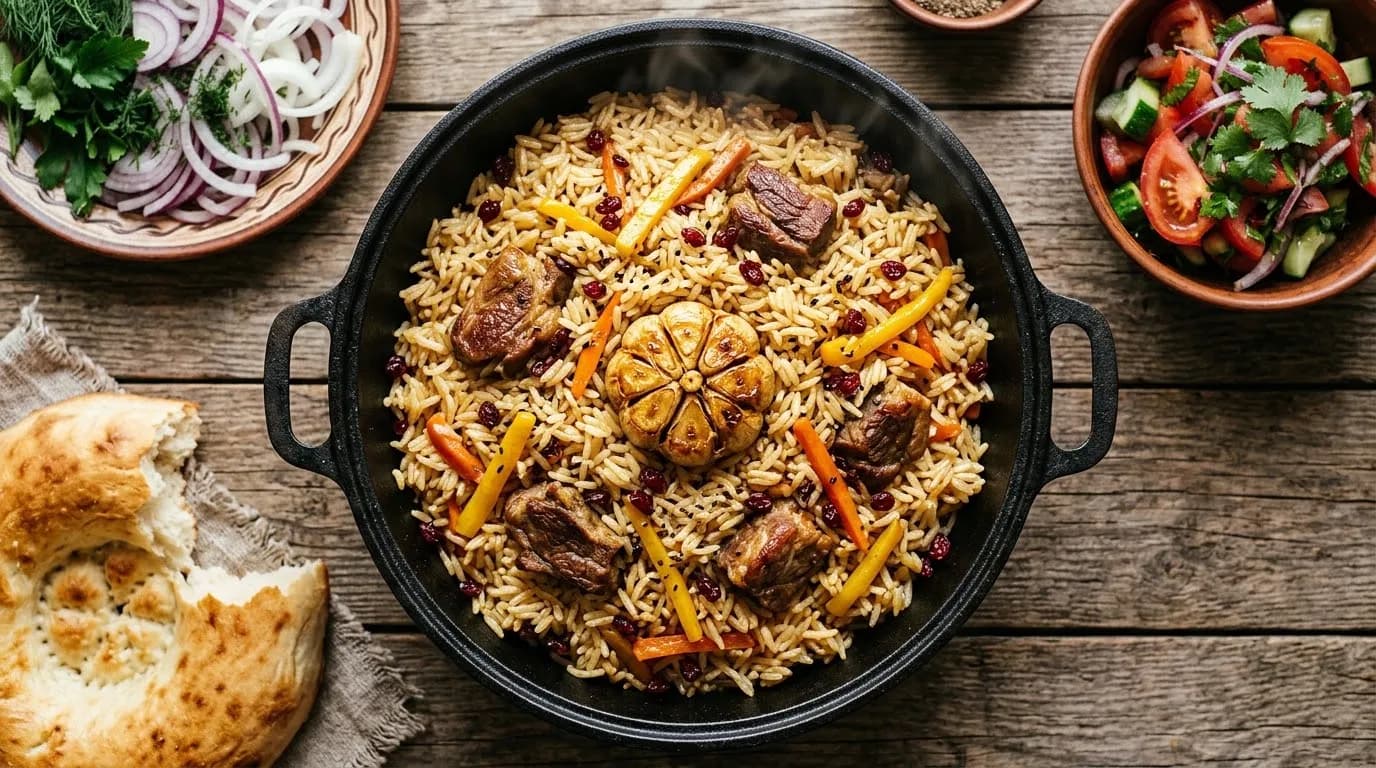
Fluffy plov: zirvak, the right rice and a kazan — step by step
The 1:1:1 meat, rice and carrot ratio, why carrots are cut by hand into batons, how to make the zirvak and when to salt it, which rice to use and how to soak it, how much water to add and how to steam plov so it comes out fluffy rather than mushy.
Read the article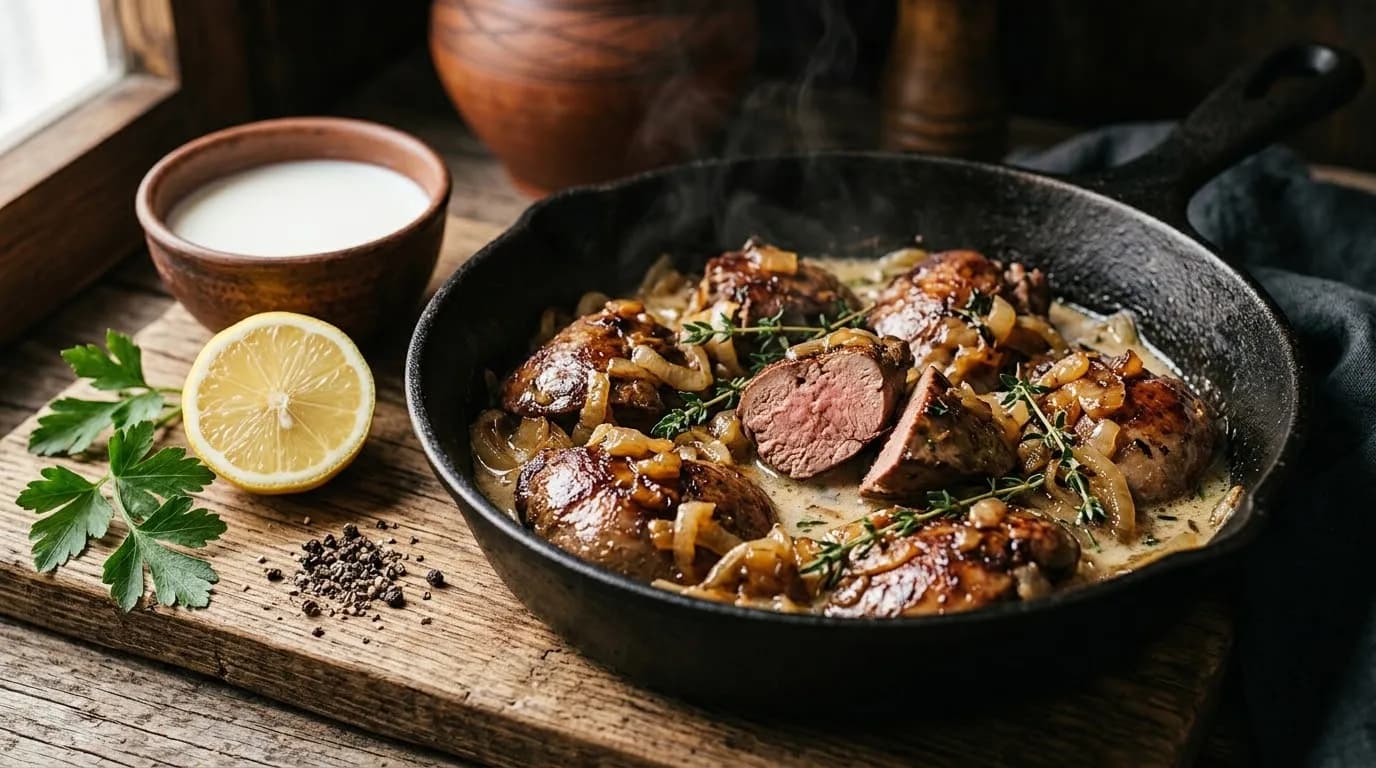
Liver and offal: tender liver without bitterness, pâté, tongue and heart
How to choose liver, remove the membrane and draw out bitterness with milk, why liver turns rubbery and when to salt it, how long to fry chicken and beef liver. Silky pâté, tongue, heart, gizzards and kidneys — how long to boil and braise them, plus important safety rules.
Read the article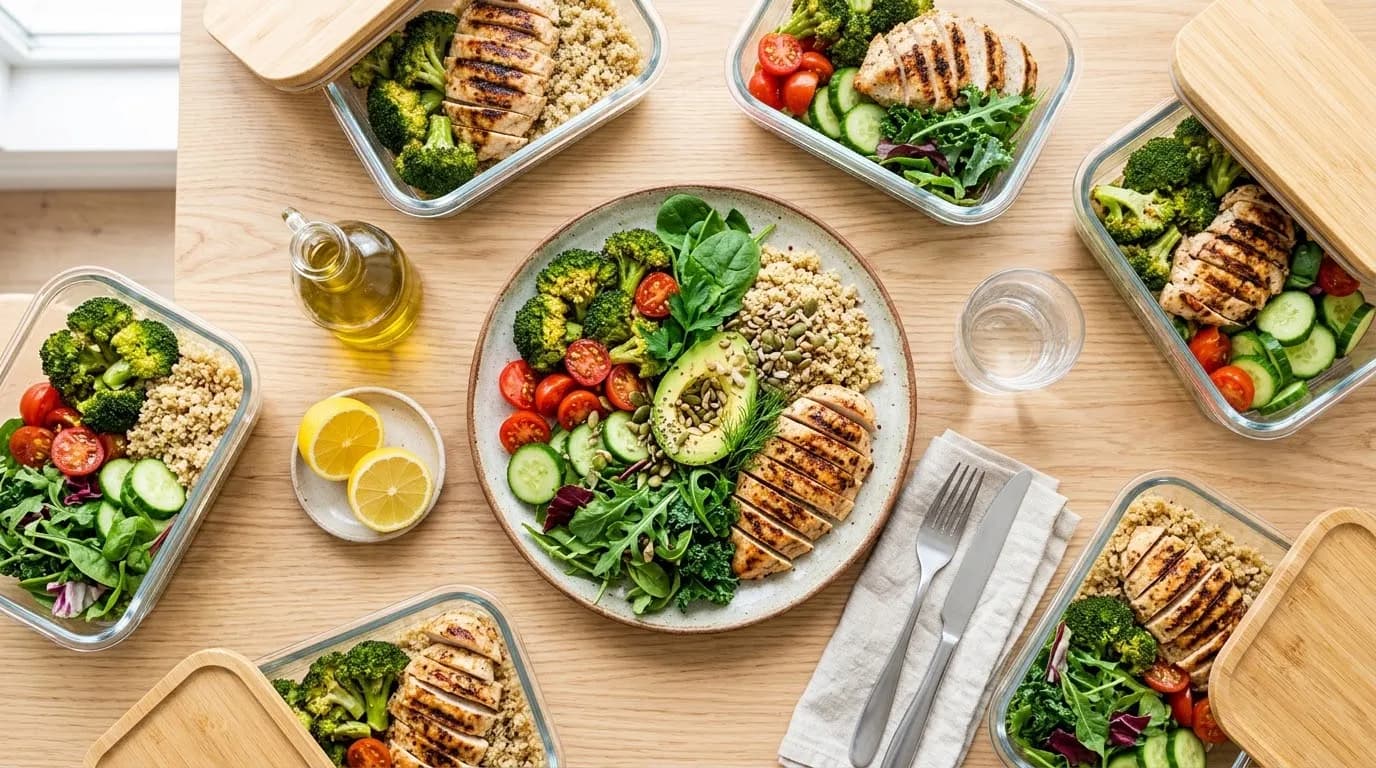
Healthy cooking without the boredom: lighter food that still tastes good
Cooking methods that save oil, where hidden calories lurk, healthier swaps for mayonnaise, cream and sugar, the plate rule, how much protein each meal needs and how to use less salt without losing flavour. No strict diets or bans.
Read the article